Back to Bizweek
SEARCH AND PRESS ENTER
Latest News
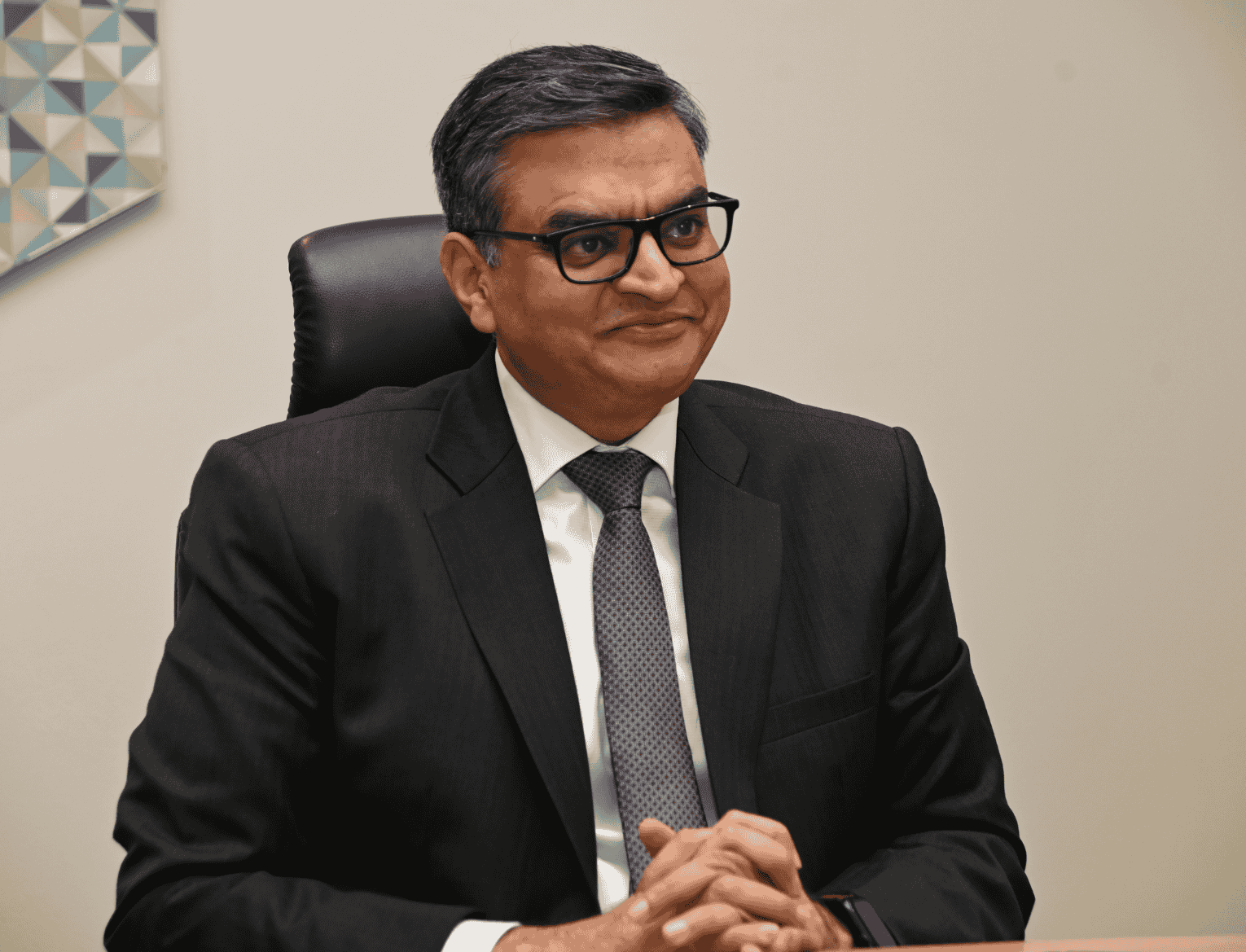
“We are deciding the final stages of a 200-million-dollar Africa solar facility to be incorporated in Mauritius” 

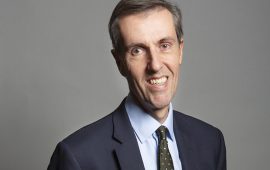
Ashish Khanna, Director General, International Solar Alliance

  • “Egypt now has solar bids at 3 cents per kilowatt-hour. India is doing most of the projects for 4 to 5 cents. Imagine how much lower it is compared to your diesel-based cost of 15 to 20 cents.”
  • “It is a unique advantage of Mauritius, compared to other SIDS, that you already have a thriving private sector.”

Mauritius could become a financial and technological springboard for Africa’s solar future. The International Solar Alliance (ISA), an intergovernmental organisation with 124 member states, is working towards finalizing a 200-million-dollar Africa solar facility to be incorporated in Mauritius, leveraging the island’s robust financial ecosystem. In this interview with Bizweek, Director General Ashish Khanna delves on ISA’s mandate to scale-up solar energy production, arguing that it is “the cheapest, cleanest and most job-inducing technology.” Mauritius, he says, could lower its energy production cost to less than half if it invests in solar and battery solutions. The government’s ambitious goal of attaining 60% percent of renewable energy in the local mix by 2035 is important in that regard, but so too are a strong political will, the institutions to carry out the mandate, transparency, and the right financial ecosystem.

Rudy Veeramundar

Could you tell us about International Solar Alliance and your mission here in Mauritius?

International Solar Alliance is a treaty-based organization which has 124 member countries, which means it is probably the Global South’s largest multilateral institution. Our main objective is how we can economize on our growth and jobs through the use of solar batteries and electric mobility. We have a new strategy that focuses on four pillars that will also allow us to be complementary to existing financial institutions like the World Bank, Asian Development Bank, African Development Bank, as well as research-focused institutions like the International Energy Agency (IEA). What are those pillars? First, how do we unlock private sector investment? This is important for Mauritius. A lot of times, the private sector needs policy and regulatory clarity, as well as reducing the risk of private sector investment. So we focus, through catalytic finance, on how to improve the policy and regulatory capability, and how to have reduced risk perception in the private sector. Second is how to improve the capability in countries. In the case of Mauritius, we will talk to universities on what kind of training program or centre of excellence will make sense. The third pillar is for a few countries like Mauritius, where we have a country partnership framework. We are here as part of formalizing and looking at the details of the country partnership framework. 


During your visit to Mauritius (last Monday), you will engage in ministerial meetings as well as technical workshops. What outcomes do you hope to achieve from this mission? 

Mauritius, like any island state, is still heavily dependent on diesel and heavy fuel oil, and that is costing 20-25 cents, which is a huge burden on the budget, as well as on the wallets of its people. Solar, as we see in Maldives and other places, can be done at 10 cents or lower. Look at the difference. You could be lowering your cost to less than half if you can move more towards solar and battery solutions. Countries like Mauritius are hugely dependent on tourism. Ecotourism, and using less diesel is extremely important. So, our main objective today is to see whether the focus will be on floating solar – a project that we are evaluating at Tamarind Falls – whether it is solar rooftop, which has a huge potential for a country like Mauritius, or any other form of solar, look at what kind of battery solutions we have, and then pick a good university that can become a centre of excellence for developing your own capability to find your own solutions. That is the gamut of options that we are very keen to discuss with the government.


The government of Mauritius has reviewed its ambition in terms of energy mix. Instead of meeting the 60 percent of renewable energy threshold in 2030, it is aiming to do that in 2035. How is ISA going to help?

Let me give you a very interesting take on that. A country of the size of India has achieved its 2030 target of 50 percent renewable energy five years in advance. Today, out of almost 490 gigawatts, India has 245 gigawatts from renewable energy. I go around the world. I meet a lot of naysayers. ‘Oh, does solar make sense? Is it really possible?’ Well, that’s a living example. You do not do it because somebody else is asking you to. You do it because it is in the economic interest of your country. It is the cheapest, cleanest and most job-inducing technology. 

As for your question on how we can help, Mauritius is a land-constrained country, and we have to look at what the best possible project is. That is why we are evaluating Tamarind Falls as a good floating solar project. We also have to look at the large-scale solar rooftop capabilities. We will then have to see whether there are small mini grid opportunities. Maybe agriculture pumps would be an opportunity as well. Then we will have to figure out to what percentage a sum total of that takes you.

Financing and implementation often remain barriers to renewable energy. How is ISA helping countries and private partners to overcome these challenges? 

That is a very good question. We have come to almost deciding the final stages of an Africa solar facility. It will be a 200-million-dollar facility incorporated in Mauritius – because that is the strength of Mauritius, the financial – which will allow the private sector to invest in distributed renewable energy, whether it is solar pumps, solar rooftop or other projects across Africa. It is just that, financially, the entity might be based here. I feel the barrier to finance is probably a little less of a challenge in Mauritius than compared to the rest of Africa, where the risk perception of investing is very high.

As part of our country partnership strategy, what we like to evaluate is how local banks can come up with a financial product that allows products of solar electric mobility and batteries to be sold. Because the big difference is solar is a one-time expense, with little maintenance, whereas diesel and others need regular maintenance. So, if you and I were to buy a solar battery, we would need some initial financing support, because the cost is high. But then, over the lifetime of the product, we would save a lot of money compared to diesel. For example, it could be less than half of a diesel pump or something like that. So, these are the two aspects: Have a local financial product and work with banks for Africa-wide solar facilities.


If the Prime minister wants to stand firmly behind the target of 60% of renewable energy, putting people with the right leadership skills behind this mandate, with full empowerment, is going to be critical.


Looking ahead, where do you see the biggest opportunities for scaling solar energy in the next decade, particularly for Africa and the SIDS? 

Interestingly, Mauritius has the capability of taking the leadership in the SIDS agenda. When we were in Asia Pacific and in Colombo one and a half months back, Mauritius, Seychelles and Maldives, together with five Pacific countries, signed a declaration of intent to do a joint procurement of solar. Then we went to Chile, and nine Caribbean countries signed the declaration. So, why do seventeen countries want to come together? Because if you try and do a 5-, 10-, or 15-megawatt project, large scale international private investors are not interested in small projects. 

The SIDS all have the same problem. All of them have 80, 85 percent of generation out of diesel, which is costing as much as 5 percent of GDP in some countries. Imagine how much of that money can be used for social protection and other priorities. If they come together and we help and do a joint procurement and digital tendering, that will bring down the cost and help SIDS learn from each other. 

And I think if Mauritius gets its policy right, is able to demonstrate leadership by doing initial projects for resorts, floating solar and others, then they can take a lot more of a leadership role within SIDS as well, because you have a good private sector environment. It is a unique advantage of Mauritius, compared to other SIDS, that you already have a thriving private sector. 

PPPs would then make a lot of sense…

Absolutely. Solar, everywhere, is only done by the private sector. Government brings in the right policy and regulatory framework, and the private sector comes in and invests. Sometimes, in some countries, they may need some risk mitigation support. But the private sector will definitely have to invest. 

Did you have the opportunity to assess the business landscape in Mauritius, and how we can take this forward?

I would like the proof of the pudding to be in projects. Mauritius has tried two or three times to do a bid, but it did not get very good results. That is what we want to focus on. What kind of power purchase agreement and bidding framework will allow the right risk mitigation and risk allocation so that you get the best possible private sector interest. We will try to do it through floating solar. Why floating solar? Because you probably do not have enough land mass to do a grid connected. So, perhaps the first attempt will be to try and find the right contractual framework through a Tamarind Falls floating solar.

Do you see coal being rapidly phased out from the energy sector? 

Perhaps it is a function not of the climate change debate only, but of economics. Mauritius must decide what the best mix of biomass, coal and solar is in order to meet its energy requirements essential for digitization, health and jobs. And our analysis shows that solar will become a part of all solutions. Perhaps with some batteries, because you will also need to meet night peak requirements. So, a mix of solar and batteries will be extremely important if you want to continue some base load, that is the country’s least cost-generation priority. But in our understanding of what solar could be, Mauritius has a huge potential. 

You have over 26 years of experience leading energy sector development across more than 15 countries. What key lessons have shaped your approach to advancing the energy sector? 

That is a very good question. Let me share a couple of things. The first is strong political will. When I was in Egypt and the country had not done any renewable energy, it was a strong political will that led to big reforms and a big and ambitious target that brought Benban, which was then the world’s single largest solar plant at 2000 megawatt.

India’s experience of moving from 0 to 115 gigawatts in 10 years is the result of political will and of a strong target of 500 gigawatts. So, political will, with a strong, ambitious target, is the first part. The second is institutions. You need to have institutions that are going to carry out the mandate, because it is a journey. Sometimes your PPA and your contract will not be right. It will have to be reviewed. Your regulations will not be right. Since most of it will be done by the private sector, having a very good regulator is extremely important. The regulator, solar institutions and financing institutions, as an ecosystem, are very important. 

The third is transparency. If you are doing a competitive and transparent bidding, then you can bring down the cost. Egypt, for example, is now having solar bids at 3 cents per kilowatt-hour. India is doing most of the projects, with or without batteries, sometimes for 4 to 5 cents. Imagine how much lower it is compared to your diesel-based cost of 15 to 20 cents. 

Finally, the advantage Mauritius has, which a lot of countries don’t, is a very good financial ecosystem. Eventually, you want some local and some international financing to be available for the private sector, which has a necessary task of scaling up. 

So, that is what has led a lot of countries. And therefore, I feel that Mauritius, which already has a target of 60%, probably needs to have a little bolder policy ownership, create the ecosystem of institutions, and finally look into the financing.


The study should be ready by February… maybe 15 or 16 megawatts of floating solar, 10 or 15 megawatts of solar rooftop, and another 1 megawatt of agri photovoltaic. So, we demonstrate, and then the market takes over.


Did you have the opportunity to assess our policy landscape and where we need to improve?

That is something that we will do more deeply. As I said, there are two or three areas that are very clear. One is the contractual framework. When you do the tendering and the power purchase agreement, do you have the right risk allocation framework? And the second part of the policy will be on other mechanisms, like solar rooftop. Does the policy allow adequate incentives both for people to do rooftop, but also for distribution companies to feel comfortable with the inflow because of net metering and others. So, those are some of the issues that we will be discussing. 

One issue I forgot to discuss is agri photovoltaic. We are undertaking a study in Mauritius. Because of the constraint of land mass, should some sites be developed for doing agri photovoltaic? Within the same project site, you can do both agriculture and photovoltaic. 

The study should be ready by February. That will allow maybe 1 megawatt of projects to begin on agri photovoltaic. So, it is a combination: maybe 15 or 16 megawatts of floating solar, 10 or 15 megawatts of solar rooftop, and another 1 megawatt of agri photovoltaic. So, we demonstrate, and then the market takes over.

You have emphasized the importance of strengthening ISA’s skills and accountability framework. What specific reforms are being pursued to strengthen accountability in member countries? 

The best way to strengthen accountability is related to a strong policy and regulation, and transparency. Because nothing brings accountability like transparency. When people know everything – the contract, the bidding, etc. – then the accountability issues are strengthened.

The last item, which I alluded to before, is the quality of institutions. If the Prime minister wants to stand firmly behind the target of 60% of renewable energy, putting people with the right leadership skills behind this mandate, with full empowerment, is going to be critical. Because, as we know, there are navigational issues. You will have to deal with some concerns from the private sector, from the CEB, etc. Then, having the right institution with the right leadership to navigate that will be very important. That brings accountability. So, quality of contracting, transparency, quality of leadership.

Any final words for us?

I think Mauritius is on the cusp of finally being able to get out of very high cost. It is costing enormously in the budget. It is costing enormously to the wallet of Mauritius. And therefore, you need to have a big, concerted effort, within a land-constrained environment, to do a whole host of projects – whether it is floating solar, solar rooftop, agri-PV, etc. – to unlock this potential and then take more of a leadership role among the SIDs. It is only when you are able to demonstrate progress that other SIDs countries will look to you. That is a unique opportunity. 

Skip to content