Back to Bizweek
SEARCH AND PRESS ENTER
Latest News
Waste is no longer waste; it is a resource

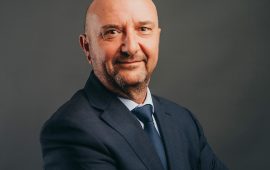
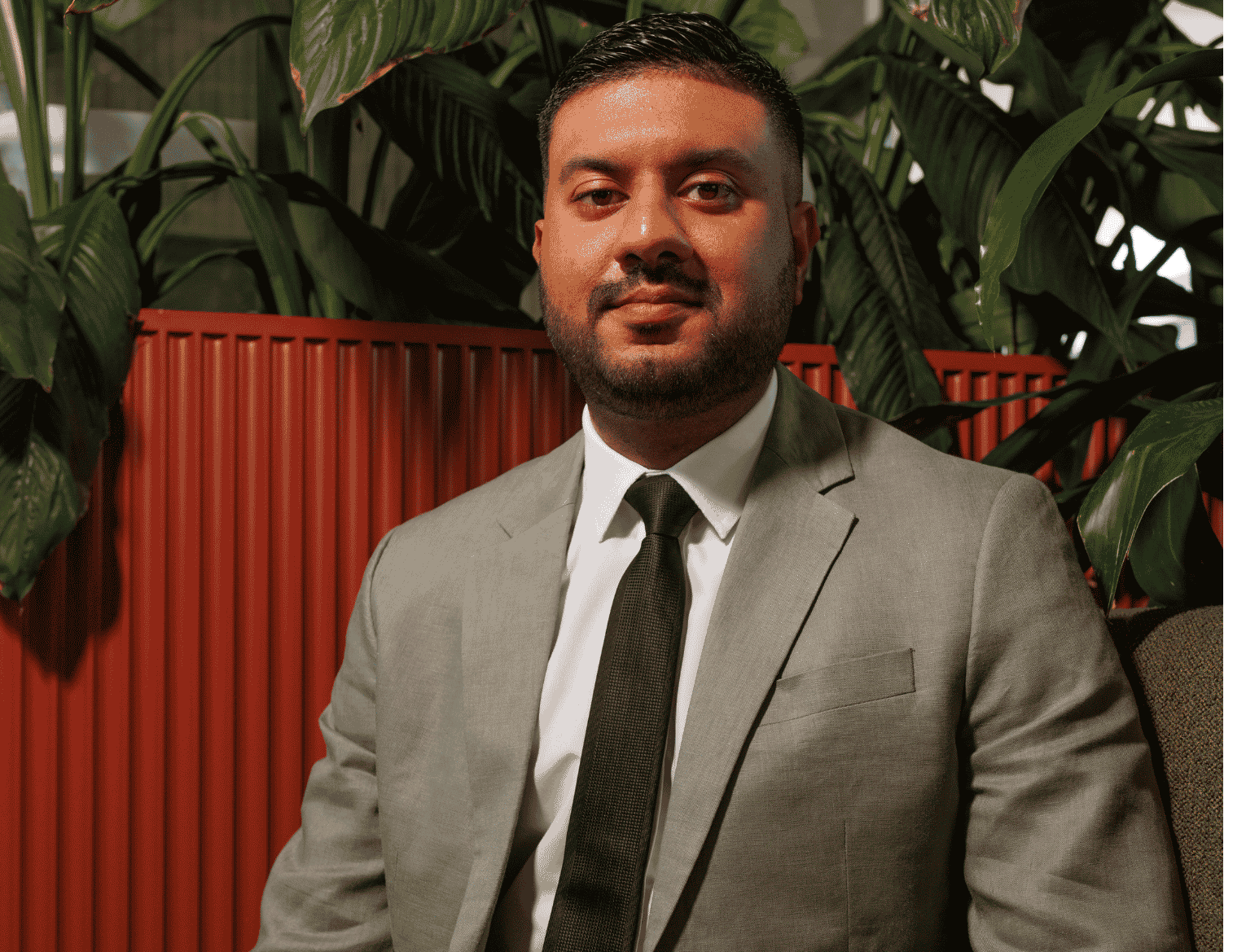
Durgesh Teeluckdharry, Chief Operating Officer, IWPF Ltd


  • “The transition to a more sustainable waste-management system must be treated as an urgent national priority.”


A far-reaching change is being prepared for the way households dispose of their waste. Mare Chicose has almost reached saturation level, and the planned Integrated Waste Processing Facility (IWPF) programme aims to replace the country’s long-standing reliance on a single bin and landfill disposal with source segregation, material recovery and composting. Durgesh Teeluckdharry, Chief Operating Officer of IWPF Ltd, tells Bizweek why infrastructure alone will not be enough, and why the success of the transition will depend just as much on public discipline, government action and the creation of a genuine circular economy.

Mauritius has relied predominantly on landfill disposal for decades. Why has the country reached a point where a complete transformation of its waste-management model has become unavoidable, and what role is the Integrated Waste Processing Facility programme expected to play in that transition?

The Integrated Waste Processing Facility, or IWPF, programme will form the backbone of the new national waste-management system.

Landfill disposal remains unavoidable, but we must understand the present context. Approximately 540,000 tonnes of unsegregated waste are sent to landfill every year. Waste is collected from households, transported to transfer stations, loaded into larger trailers and then taken to Mare Chicose.


“People will have to support the programme by separating their waste correctly. As the saying goes, ‘garbage in, garbage out’.”


Mare Chicose is the country’s only engineered sanitary landfill. The purpose of the integrated waste-processing facilities is not to eliminate landfill completely, but to complement it by recovering as much value as possible from the waste stream before the remaining material reaches the landfill.

Landfill should therefore become the destination only for residual waste — material that cannot be recovered, recycled or treated. It should no longer be the primary destination for virtually all the waste generated in the country.

The programme is expected to process more than 70 per cent of the waste that is currently being sent directly to landfill. The two systems will work in parallel, but only residual waste should ultimately be disposed of at Mare Chicose.

The landfill has helped Mauritius address a significant public-health and environmental problem. However, the country must now move towards material recovery and find ways of returning recovered materials to productive use.

Could you tell our readers more about the IWPF programme and how it will operate?

The process began approximately two years ago, when the Ministry of Environment, working alongside the BOT Projects Unit of the Ministry of Finance, issued a request for proposals.

The starting point was the recognition that approximately 540,000 tonnes of waste were being sent to a landfill that was approaching saturation. The ministry proposed a vertical expansion of Mare Chicose, but this cannot be regarded as a permanent solution. After another 10 or 15 years, the country would be confronted with the same capacity problem.

The authorities therefore decided to develop two integrated waste-processing facilities on a Build-Own-Operate basis. There are two 27-year concessions, comprising an initial two-year implementation period followed by 25 years of operation. The concessions may subsequently be extended, subject to the successful operation of the facilities.


“Landfill should become the destination only for residual waste.”


The project is based on the introduction of a three-bin system. At present, households generally use a single green bin. Under the new system, waste will be separated into three distinct streams. The first bin will contain dry recyclable material, such as paper, plastic, cardboard and other recoverable items. The second will contain organic waste. The third will be used for material that cannot be recovered through the Material Recovery Facility or treated by the composting plant. This residual waste will continue to be sent to landfill. Even the recyclable and organic streams will contain a certain proportion of residual material, particularly during the early years. 

The success of the system will depend heavily on public participation, and there will inevitably be a learning curve. People will have to support the programme by separating their waste correctly. As the saying goes, “garbage in, garbage out.” If a facility receives highly contaminated material, the quality of its output will also be affected. The lower the contamination rate, the more material we will be able to recover and return to productive use.

Of the approximately 540,000 tonnes generated annually, a minimum assured waste quantity of 260,000 tonnes has been agreed for delivery to the facilities. One facility will serve the north and the other the west of Mauritius.

Are the two facilities already operational?

No. As I mentioned, the programme includes a two-year implementation period, and we are presently in the development phase.

The concession agreements impose specific obligations on both the concessionaires and the public authority. As concessionaires, we must raise the required financing, complete the design work and ensure that the facilities comply with all the environmental, financial, legal and technical requirements set out in the agreements.

The authorities also have responsibilities, including educating the population and preparing the wider system for source segregation.

We are conducting our own awareness work because the level of contamination will have a direct effect on the facilities’ ability to recover materials and operate efficiently.

What exactly do you mean by the “level of contamination?”

Contamination levels are defined in the concession agreements. During the first year, for example, the facilities may have to accommodate contamination levels of up to 30 per cent.

Consider the first bin, which is intended for dry recyclable materials such as paper, plastic and cardboard. Even those items must meet certain quality requirements. A pizza box covered in oil or grease, for instance, may no longer be suitable for recycling.


“The lower the contamination rate, the more material we will be able to recover and return to productive use.”


Contamination therefore refers to the proportion of material placed in a particular waste stream that cannot ultimately be recovered or processed as intended.

The cleaner the recyclable stream, the greater the quantity of material that can be processed and supplied to local or international operators. Those materials can then be transformed into products and returned to the market.

Mauritians are accustomed to placing everything in one bin and leaving the collection service to deal with it. Could public behaviour and a lack of discipline become major obstacles? How optimistic are you that people will adopt the new system?

I am the Chief Operating Officer of the concessionaires and have been closely involved in advancing this programme. I often describe it as my baby. Many Mauritians may not have lived in European countries where waste segregation is already well established, but they have encountered these systems through travel, documentaries, films and other forms of media. They are aware that such systems exist.

People must understand that this is an important change, necessary for the health and safety of the population. I have every reason to be optimistic because segregation itself is relatively simple. It may require only another five minutes in a person’s day to separate waste correctly.

However, optimism must be accompanied by proper education and public awareness. The ministry and the other authorities have their respective responsibilities under the concession framework, while we have ours.

The principal responsibility for a national public-awareness campaign rests with the Government, which must also procure and distribute the bins to households. IWPF’s role will be to support and complement that awareness effort.

The project is built around the concept of the circular economy, under which waste is no longer regarded simply as something to discard, but as a potential resource. How significant is this shift for Mauritius, and what economic opportunities could it create beyond environmental protection?

It represents a major shift because the entire purpose of the project is to help Mauritius move from a linear economic model towards a circular economy.

We cannot look only at the environmental dimension. We must also consider how recovered materials will be marketed, how new value chains can be developed, and how we can maximise the value of every usable product.

Everything begins with segregation at source. The quality of the material entering the facilities will determine the quality of the output we can produce.

The concession agreements are highly performance- and compliance-driven. Even the compost produced from suitable organic material will have to comply with standards set by the Mauritius Standards Bureau. Our suppliers have also ensured that the equipment and processes should be capable of meeting European standards.

This must therefore be viewed as an integrated system rather than as a collection of isolated activities. An entire market must be developed, and extensive education will also be required. A circular economy means creating markets for the different materials recovered from the first and second waste streams, while ensuring that only genuinely residual waste is sent to landfill.

Mare Chicose is already involved in waste-to-energy activities. As concessionaires, we are also examining other downstream opportunities that could contribute to the wider objectives of the circular economy.

The concept also extends to the direct and indirect employment that will be created through the construction and operation of the facilities. It includes the training and integration of people who presently work as waste pickers, whether formally or informally. As the market develops, informal waste pickers should receive sufficient support from the authorities and the Government to understand that a new industry is emerging, and that they can participate in it.

During the project’s development, one suggestion was simply to export all the recovered materials because there were supposedly too few local operators. I did not agree with that approach. When I assumed responsibility for the project, I made it clear that we should first engage with local operators. We met companies already active in recycling and explored ways of working with them.

The purpose is to develop the whole sector and help people understand that there is a new market — and, in many respects, a new industry — to build.

The project serves an environmental purpose, but it nevertheless remains a commercial undertaking. How do you balance those commercial considerations with the broader environmental, social and governance commitments?

ESG cannot be treated as a separate component. The environmental, social and governance dimensions must progress together. 

On the environmental side, for example, any problem involving odour, emissions or the management of waste and wastewater could create reputational risks and undermine the confidence of surrounding communities.

The social dimension is equally important because trust is fundamental. If we fail to meet the commitments set out in the concession agreements, the project could lose the confidence of communities, investors and other stakeholders.

Although we are not legally required to conduct every form of social assessment, we have chosen to undertake a comprehensive social impact assessment because the social consequences of the project cannot be separated from its environmental objectives.

ESG considerations have been present from the beginning. Whenever we engage with potential investors, one of the first questions concerns our ESG framework and the measures being taken to address environmental and social risks. We have therefore devoted a significant part of the project’s planning and governance structure to these issues.

A full environmental and social impact assessment is being carried out for the proposed northern facility. The land is located near Eastern Mix, an existing industrial operation. Because a stone-crushing activity is already present, the surrounding area includes an established buffer zone.

We negotiated the site strategically so that the facility would fall within that industrial buffer. In addition, we have preserved the buffer distances required by the concession and are ensuring full compliance with environmental impact assessment procedures.

These safeguards are essential not only for the surrounding community, but also for investors. This is regarded as a green infrastructure project, and much of the potential financing is expected to come from green or sustainability-focused funds.

Investors conduct extensive due diligence and impose detailed ESG conditions through their financing term sheets. We must demonstrate that the project complies with those requirements throughout its development and operation.

Looking several years ahead, how will you determine whether the project has succeeded? What key performance indicators will you use?

People sometimes assume that a project becomes successful as soon as the ribbon is cut. However, the opening ceremony will mark only the beginning. Success will be measured over several years, once we can determine whether the facilities are delivering what they were designed and developed to achieve.

A technically sound facility alone will not guarantee success. The Government must fulfil its responsibilities, the population must participate in the segregation system, and the facilities must operate efficiently.

We will know that the project is succeeding when households understand the importance of separating their waste and consistently do so. On our side, the facilities must achieve their expected recovery and processing performance.

Another important indicator will be the transfer of knowledge from our international partners to local teams. Mauritian engineers, technicians and operators must ultimately be capable of managing the entire facility.

Only when the infrastructure is operating effectively, the population is participating and Mauritian professionals can run the system independently will we be able to describe the project as a complete success.

We are developing the facilities with a long-term perspective. Each concession covers 27 years, including the implementation and operational periods, and may be extended for a further 25 years. The facilities must therefore be supported by appropriate staffing, maintenance programmes and operational systems throughout their lifespan.

Ultimately, we should be able to say that Mauritian professionals have developed and operated a project of this scale, from within the country, to international standards.

Mare Chicose is already approaching saturation. Independently of the IWPF programme, how urgent is it for the country to find an alternative or to reduce its dependence on the landfill?

It is extremely urgent. Although I do not have all the latest capacity figures immediately at hand, the pressures on the landfill are already evident.

There have been recurring problems involving the number and movement of collection vehicles, as well as difficulties affecting transfer stations such as La Brasserie. These issues demonstrate that the authorities must accelerate the implementation of the new system. Segregation at source must begin, and the quantity of waste being sent to landfill must be reduced.

The vertical expansion of Mare Chicose will not be completed immediately. In the meantime, the volume of waste arriving at the landfill continues to increase. Approximately 540,000 tonnes are presently disposed of each year, and that amount is rising by about 2 per cent annually.

By the time the vertical expansion is completed, the landfill may already be approaching another level of saturation. The transition to a more sustainable waste-management system must therefore be treated as an urgent national priority.

Is there anything else you would like to add?

Several aspects of the programme are interdependent. The concessionaires and the public authorities each have obligations that must be fulfilled for the project to progress.

As concessionaires, we are doing everything possible to meet our responsibilities. However, certain stages cannot proceed until the authorities complete the actions required on their side. The regulatory and policy framework, together with a clear implementation timetable, must be put in place. Once those elements are established, we will be in a stronger position to advance the project.

The same applies to investors. This is a project-finance structure, and lenders and investors require sufficient reassurance that the project is supported by the public authority. As it is a public-private partnership, neither party can operate independently of the other.

This is not about shifting responsibility or engaging in a blame game. It is simply the reality of the project structure: the authorities must complete certain actions before we can meet the obligations that depend upon them.

For example, financing institutions need confidence that the appropriate legislation will be adopted, and that there is a credible strategy for introducing waste segregation. They need clarity on how the three-bin system will be implemented and how the bins will be distributed to households. They must also understand how often collection vehicles will deliver waste to the facilities.

The transport system must be aligned with the new waste streams. Collection vehicles may need to be adapted or replaced so that they can accommodate the three-bin system. Local authorities will therefore have to consider renewing and reorganising their collection fleets.

All these elements must move together. Despite these dependencies, we remain fully committed to delivering the project for the country.

Could you take us through your academic and professional journey? How did you enter the waste-management sector and assume such a significant role at a relatively young age?

It has certainly been a challenging journey. I first completed a Licence de technologie en génie civil at the University of Limoges. To become a registered engineer in Mauritius, however, I also needed an engineering degree taught in English. I therefore completed a Bachelor of Engineering at the Université des Mascareignes.

At the same time, I worked for a contractor in Mauritius to gain practical experience and understand how the industry operates. Academic knowledge alone is not sufficient. That experience allowed me to learn more about building projects, health and safety requirements, and the various technical and operational aspects of the construction sector.

I then completed the two years of professional training required before applying for registration with the Council of Registered Professional Engineers. I undertook that training at the Central Water Authority, where I worked on several projects, including the Rivière des Anguilles Dam project.

I was also involved in projects concerning water supply in the north of the country. At the time, Mauritius was facing significant water-distribution problems and drought conditions — challenges that, to some extent, remain with us today.

We worked on the introduction of centralised pressure filters, which involved drawing water from rivers and treating it to help improve supply.

While gaining this professional experience, I continued my studies. I completed a master’s degree in structural engineering and public works at the Université de la Réunion. I subsequently obtained a Master of Business Administration from the University of Northampton.

After leaving the Central Water Authority, I initially planned to move to France to continue my career. However, I was approached by Pierre [Editor’s note: Pierre Ah Sue, Founder and Chairman of Sotravic] to join Sotravic and support the company’s international development. Sotravic International was seeking to expand abroad, particularly into the Middle East. We successfully established an office in Oman and pursued several project opportunities.

Entering that market was difficult, but the process gave us valuable experience in international business development.

The IWPF project later regained momentum when the Government moved forward with the programme. We had to pass through three separate stages of negotiation: the technical evaluation, the administrative process and, finally, formal negotiations with the Ministry of Finance over the financial package.

At that stage, I was asked whether I would be interested in taking on the challenge. I knew it would be demanding, but I was young and saw it as an opportunity to contribute to something important.

I had seen similar waste-management systems operating in France and believed that such a model could be introduced in Mauritius. I have always wanted to contribute to my country, and this seemed like the right opportunity to do so.

We knew from the beginning that the project would involve numerous challenges. We therefore approached it one step at a time, addressing each issue as it emerged. Every day brought a new problem to solve.

I was eventually asked to assume full responsibility for advancing the project. I became project lead and oversaw the negotiation process, while working under the guidance of Pierre and Eddie Young.

As the project progressed, I became increasingly involved with stakeholders, financial institutions and the other parties required to move it forward. I was then asked whether I was prepared to take the project to the next stage and assume greater responsibility. I accepted.

However, this is not a project that can be driven by one person. I may hold a leadership position, but I am supported by a strong and experienced team. We have an experienced project manager from South Africa and specialists in risk management, engineering, marketing and legal matters, and communication. 

I benefit from the support of the chairman and from Pierre’s extensive knowledge of the industry. It is not a one-man show. The project is being advanced by an entire team whose members contribute their respective expertise and help ensure that the right decisions are taken.

That, in broad terms, is the journey that brought me to this position.

Skip to content