Back to Bizweek
SEARCH AND PRESS ENTER
Latest News

Trust Is the Real Currency

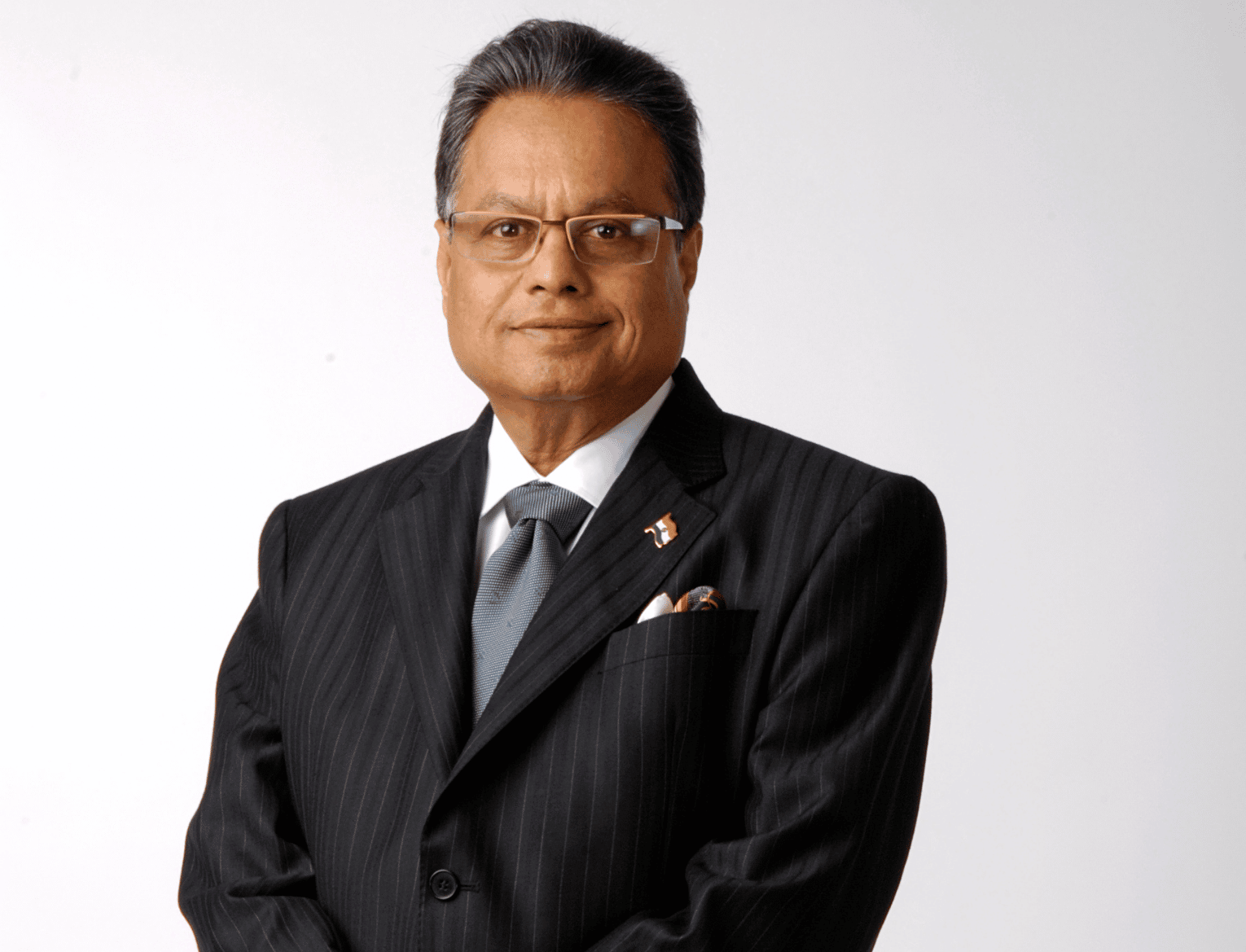
Dr. Vijay Darda | Chairman of the Editorial Board, Lokmat Media Group | Former Member of the Rajya Sabha

Dr. Vijay Darda | Chairman of the Editorial Board, Lokmat Media Group | Former Member of the Rajya Sabha

After more than five decades in journalism and 18 years in the Rajya Sabha, Dr. Vijay Darda remains convinced that a news organisation’s first loyalty must be to its readers and to the truth. In this interview with Bizweek, he discusses the pressures confronting independent media, the business model for journalism, the role of artificial intelligence, India’s growth priorities, the importance of SMEs, and the country’s evolving engagement with Africa. He also argues that Mauritius can provide more than financial intermediation and can become a substantive platform connecting Indian and African enterprise.

Interview: Rudy Veeramundar | Conducted by telephone

You have spent more than five decades in journalism and the media, while also experiencing politics from inside Parliament. Looking at India today, how would you assess the health of its democracy and, particularly, the ability of the media to hold political and economic power to account?

India’s democracy is resilient, with regular elections and strong institutions. But democracy is more than voting. It requires freedom of expression and accountability. The media’s duty is to question power, whether political, corporate or within the media itself.

The biggest challenge is preserving independence amid business pressures, ownership patterns, political interference and the digital race for eyeballs. My guiding principle is very simple: journalism’s first loyalty is to the readers and to the truth, not to power or popularity. That is the basis on which we work.


“Journalism’s first loyalty is to the readers and to the truth – not to power or popularity.”


The traditional newspaper business is under pressure globally from declining print revenues, changing consumption habits and the dominance of digital platforms. What is the sustainable business model for independent journalism in this new environment?

Independent journalism cannot depend on advertising revenue alone. I believe the future lies in a mix of subscriptions, memberships, carefully chosen advertising, events and specialised content, without compromising editorial freedom. Editorial freedom is essential, and trust is the real currency. If you lose trust, nobody will come near you.

If we deliver accurate, relevant and courageous journalism, people will pay for it. Regional-language media has an advantage because it understands local communities best. We must also continue investing in research and innovation. Algorithms cannot replace investigative journalism, reporting from the ground and thoughtful analysis. The future is not about print versus digital; it is about being a trusted news institution across platforms.

Lokmat has evolved from a regional newspaper into a multi-platform media group spanning print, television, digital and events. What were the most important strategic decisions behind that transformation, and what would you do differently if you were building a media organisation from scratch today?

The key strategic decision was recognising that platforms evolve, but trust endures. We kept readers at the centre while expanding into television, digital, social media, events and conventions. We did not move away from our fundamentals. We invested in strong regional journalism and a multilingual presence across Marathi, Hindi and English so that we could serve diverse audiences without losing credibility.

Looking forward, our focus is on accelerating both print and digital transformation. We are integrating print, digital, video and social media into one news ecosystem, powered by innovation, information and artificial intelligence, while doubling down on reporting from the ground and on our regional strength. Technology will evolve, but creativity will always be our greatest competitive advantage.

Artificial intelligence is beginning to transform newsrooms, advertising and content distribution. Do you see AI primarily as an opportunity for journalism, or does it risk further weakening trust, editorial standards and the economic value of original reporting?

I see AI as a powerful opportunity, but not as a substitute for factual and truthful journalism. It can assist with research, translation, transcription, data analysis and multilingual digital distribution. But editorial judgement, verification and accountability must remain human.


“Above everything else: preserve the people’s trust.”


Our approach is AI-assisted journalism, not AI-replaced journalism. AI should enhance efficiency, but creativity and original reporting must remain at the core. It may change how we produce news, but it must never change why we do it.

India has ambitions to become one of the world’s leading economic powers. Beyond headline GDP growth, what structural reforms are still required for India to translate economic expansion into broader prosperity, employment and stronger opportunities for entrepreneurs?

India should judge its success not only by headline GDP growth, but by the quality of the jobs and opportunities it creates. Priorities must include skills development, simpler regulation, better access to finance for SMEs and deeper integration into the global economy. Otherwise, growth will remain largely on paper.

We also need to invest in health, education and cities, while bringing more women into the workforce. Women are increasingly contributing in fields ranging from defence and aviation to technology and business. Sustainable growth is ultimately about improving the quality of life of every Indian.

Much of India’s international economic narrative is dominated by its technology companies and large conglomerates. How important will SMEs, family-owned businesses and regional entrepreneurs be in determining the next phase of India’s growth?

SMEs, family businesses and regional entrepreneurs will drive India’s next phase of growth. Large firms create scale, but SMEs drive jobs, innovation and resilience. With access to capital and technology, together with predictable policies, they can compete globally. Inclusive growth comes from empowering regional enterprise.

What they need now is affordable finance, skills, technology, reliable infrastructure and predictable regulation. Businesses cannot plan when rules, financing conditions and interest rates keep frequently changing. SMEs are the backbone of the system. Governments have limits on the number of jobs they can provide, so enterprise and skilled work must create the employment of the future.

India is increasingly positioning itself as both a major global economy and a voice of the Global South. How do you see India’s economic and diplomatic role evolving over the next decade, particularly as the international order becomes more fragmented?

India can be both a major global power and a trusted voice of the Global South. In a fragmented world, countries want reliable partners, and India can fill that space. Our long-standing relationship with Russia is one example of the value India places on reliability in international partnerships.

Economic strength in manufacturing, technology and innovation will reinforce India’s diplomatic role. Our goal should not simply be to become powerful, but to be trusted and connected, to be a country capable of building consensus.

Africa is emerging as an increasingly important economic partner for India. Where do you see the greatest untapped opportunities for Indian businesses on the continent – financial services, technology, manufacturing, infrastructure, healthcare, education or other sectors?

Africa is not a single-sector opportunity; it is a platform for long-term partnerships. Healthcare, pharmaceuticals, digital services, agriculture and renewable energy all offer strong potential.

But the relationship should shift from exporting to investing: building local capacity, creating jobs and sharing technology. The future of the India-Africa partnership lies in cooperation and shared prosperity, not in a donor-recipient model.

Mauritius has historically enjoyed close political, cultural and economic relations with India, and has also positioned itself as a gateway between Asia and Africa. In today’s changing global economy, what new role could Mauritius realistically play in strengthening India-Africa trade and investment?

The relationship has deep roots. Former Prime Minister of Mauritius Sir Seewoosagur Ramgoolam and my father, Jawaharlal Darda, knew each other, and I have also had the opportunity to meet both Navin Ramgoolam and Sir Anerood Jugnauth. These personal and historical connections reflect the closeness between our countries.

Mauritius can be a valuable bridge between India and Africa by leveraging its historic ties, financial expertise, knowledge of African markets and strategic location. It can support Indian businesses through investment, financial services and legal operations. But its future role should be based on genuine economic substance – skills, capital, technology and governance – rather than financial intermediation alone.

There are also opportunities in healthcare, education, tourism, renewable energy and digital services. The strong cultural relationship between India and Mauritius should now translate into deeper business partnerships connecting Indian and African enterprises. Mauritius also has an important advantage as a safe and welcoming destination, which can support stronger tourism ties with India.

Through the Lokmat Global Economic Convention, you have sought to connect India with business communities internationally. What have these engagements taught you about how global investors perceive India today, and what are the misconceptions India still needs to overcome?

The Lokmat Global Economic Convention is not just a conference; it is a bridge. Although Lokmat’s roots are in regional-language journalism, the global economy, investment and culture provide common ground through which we can connect with international communities. We have organised conventions in London, Singapore, Hong Kong, Dubai, Baku and other cities.

These dialogues give global leaders a first-hand view of India’s reforms, resilience and readiness to partner. This is where perception becomes confidence. Some outdated views remain, but continuous engagement and predictable execution are changing them. Conventions such as this turn interest into commitment. Mauritius is a country close to my heart, and it would be a natural setting for this kind of engagement.

You spent 18 years in the Rajya Sabha while remaining deeply connected to journalism and business. What did politics teach you about leadership that journalism could not? And conversely, what did journalism teach you about political power?

Journalism gave me the courage to question and the discipline to seek facts. It taught me to ask: Who benefits? Who is left out? What truly serves the public interest? My years in Parliament taught me that raising a question is only the beginning. The real responsibility is to build consensus and convert questions into workable solutions that benefit people.

Journalism kept me accountable to the truth and connected to the people; public life made me accountable to citizens. Together, they taught me that leadership is responsible public service.

Your father, freedom fighter Jawaharlal Darda, wanted you to ‘lend voice to the voiceless’ and contribute to nation-building. After a career spanning journalism, Parliament, business and philanthropy, what does that responsibility mean to you today, and what would you like the next generation of the Darda family and Lokmat to preserve above everything else?

My responsibility is towards people, particularly the poor and those in need. They need good education, healthcare, food security and the opportunity to work. I proposed in Parliament that public representatives – from the gram panchayat level to the highest constitutional offices – should send their children to schools run by public authorities. If the children of political families attended those schools, the system would improve. The same principle applies to public healthcare: those who govern should have a direct stake in the quality of the services ordinary citizens use.

Vocational training is equally important. Technology will reduce the number of some government jobs, but skilled people – including carpenters, plumbers, drivers, cooks and other tradespeople – can build dignified and sustainable livelihoods. The right to education, food, healthcare and work must be made meaningful.

My father taught me this value system. Journalism’s purpose is to give voice to the voiceless and to stand for dignity and justice. Technology and business models will evolve, but credibility must endure. Above everything else, I would like the next generation of the Darda family and Lokmat to preserve the people’s trust.


Journalism, Parliament and Public Service

Dr. Vijay Darda is the Chairman of the Editorial Board of Lokmat Media Group, a media entrepreneur, former parliamentarian and philanthropist. Together with his brother Rajendra Darda, a former Maharashtra minister and Editor-in-Chief of Lokmat Media Group, he expanded Lokmat, the Marathi daily launched from Nagpur on 15 December 1971. The group subsequently introduced the English daily Lokmat Times and Hindi-language newspaper Lokmat Samachar. With a readership of 21.8 million, Lokmat has maintained a leading position among Marathi newspapers. Under Dr. Darda’s chairmanship, the organisation has developed into a multi-platform media company spanning publishing, broadcasting, digital content, entertainment, community initiatives and sports.

His distinctions include the Feroze Gandhi Memorial Award for Excellence in Journalism for 1990-91, presented by former Prime Minister P. V. Narasimha Rao. Dr. Darda has also led the Indian Newspaper Society and the Audit Bureau of Circulations, and served as the founding president of the South Asian Editors Forum. He has written several books and contributed weekly columns to national and regional newspapers for many years.

Dr. Darda served three consecutive terms in the Rajya Sabha from 1998 to 2016. During his parliamentary career, he served on several standing and consultative committees and introduced Private Members’ Bills addressing matters of national interest. He has also attended and reported on major international gatherings, including the World Economic Forum, a United Nations Security Council meeting and a Non-Aligned Movement summit.

Through various trusts and foundations, Dr. Darda supports education, disaster relief, environmental protection, wildlife conservation, sport, and the arts, with particular attention to less-developed regions. He also supported his wife, Jyotsna Darda, in establishing Lokmat Sakhi Manch, a platform promoting women’s empowerment.


The Global Table: An Evening Beyond Borders

Dr. Vijay Darda, Chairman of the Editorial Board of Lokmat Media Group and former Member of the Rajya Sabha, and Abhaykumar Salunkhe, YPO Africa Regional Chair (Gold) and Executive Chairman of Cresta International Holding Company, will host The Global Table – An Evening Beyond Borders in Mauritius.

Organised in connection with the Lokmat One World Summit & Awards – Mauritius 2026, the event will bring together distinguished guests from India and Mauritius. The Indian delegation will include prominent industrialists and business leaders, former ministers, Members of Parliament and political figures from Maharashtra, alongside dignitaries from both countries.

Conceived as an evening of dinner and dialogue, the gathering will provide a platform for exchanges on policy, enterprise, diplomacy, thought leadership and global cooperation.

Skip to content