Back to Bizweek
SEARCH AND PRESS ENTER
Latest News
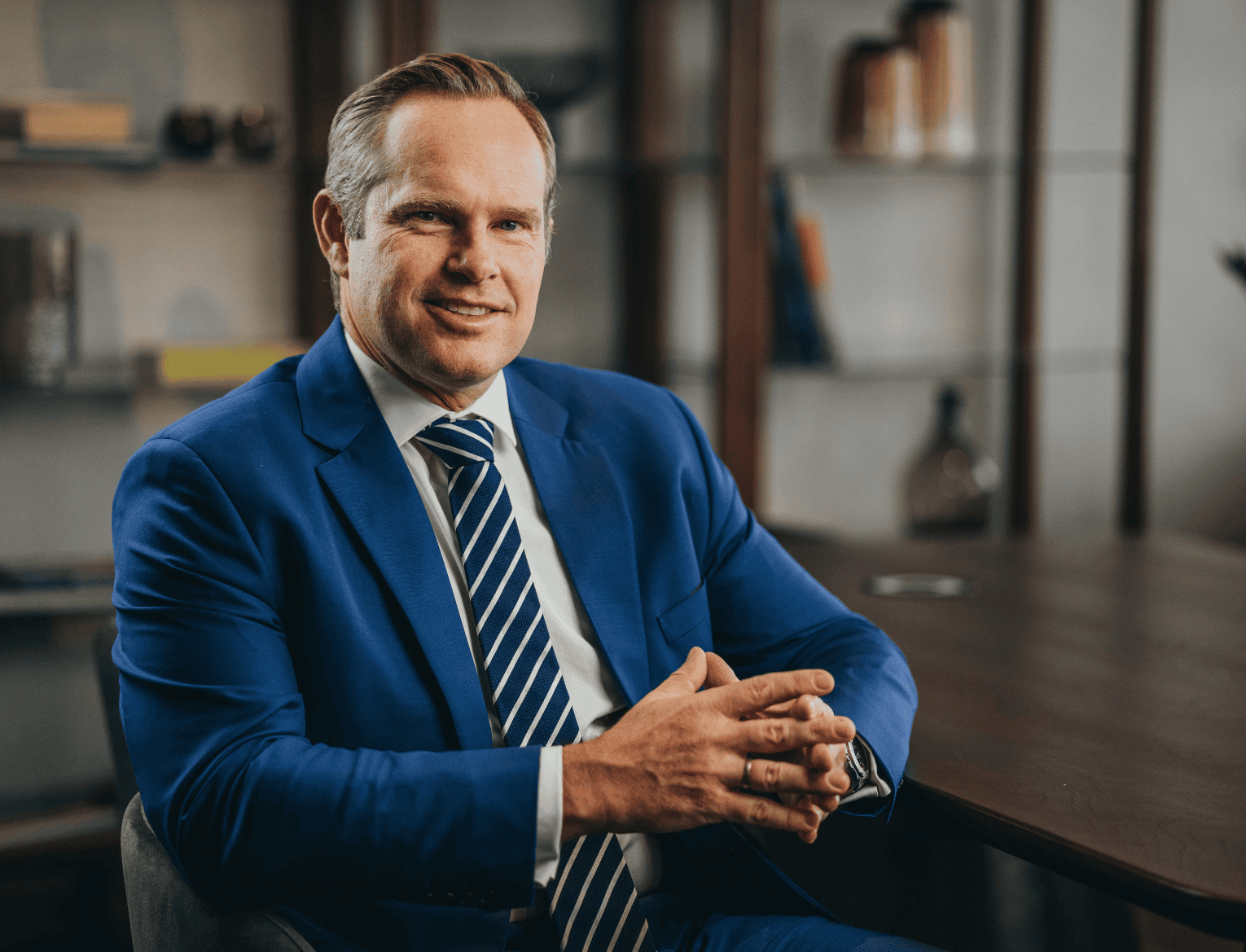
Mark van Beuningen, Group Strategy & Investment Executive, CIEL Group

There’s a distinction between digitising what exists and genuinely creating new value

  • “There is a large growth opportunity in the medical device manufacturing sector in India, which is a sector adjacent to our Healthcare cluster, and where we can leverage our strong manufacturing and India know-how from our Textile business.”


  • “From a capital allocation and growth strategy perspective, it is important to overlay the geographic or country risk with the market size opportunity, as well as understand whether or not your investment into a new geography is similar to your core business model.”


From medical device manufacturing in India to digitally enabled service across the Group, Mark van Beuningen, the Group Strategy and Investment Executive of CIEL Group, explains how the conglomerate is prioritising expansion in healthcare, finance and textile; why India and East Africa are emerging as strategic growth corridors, and how partnerships and adjacency strategies are opening new opportunities. In this interview with Bizweek, Mark van Beuningen says that the measure of success is not the volume of initiatives launched but whether each new project improves the last.

You were brought in to head a newly created Strategy & Investment Executive department at CIEL, a deliberate structural signal from the Group. What mandate did you arrive with, and how are you shaping the investment agenda alongside the Group leadership?

The mandate that I was given was to support CIEL Group’s Chief Executive to develop a structured and well-defined portfolio growth strategy, as well as a clear group-wide Digital & AI transformation roadmap. 

From a portfolio growth strategy and investment perspective the starting point was a comprehensive portfolio strategy and capital allocation review across CIEL’s six clusters: Finance, Healthcare, Textile, Hotels & Resorts, Property, and Agro.


We are not chasing hype or building at a superficial level


We did this by assessing the clusters from two main perspectives: market lens in assessing the market opportunity and competitive positioning of each cluster to understand what the strategic potential of the businesses could be; value lens in assessing the future value creation potential of each cluster from a return on capital employed (ROCE) perspective.

This helped us to better understand which of our clusters have the highest future value creation potential to focus our future capital allocation; which are our core cash-generative businesses or fortress businesses, that we need to continue to strengthen to maintain future strong cash generation that can be used to invest into higher growth opportunities; and which businesses require a focused improvement on performance.

We then developed our Growth Strategy Framework that sets out a clear path by cluster across three priorities: strengthen our core businesses, pursue business or geographic adjacency growth opportunities, that is investments in new businesses or geographies that are adjacent to the core businesses of each cluster, and explore new frontier growth opportunities. 

CIEL operates across six clusters in over ten markets. From a portfolio strategy perspective, which sectors and geographies represent the most compelling growth opportunities right now, and where is the Group prepared to be more selective about deploying resources?

We have identified growth drivers in all our clusters. I would like to focus here on the future growth opportunities that we have identified our Healthcare, Finance and Textile clusters.  

Our Healthcare cluster (C-Care) has a very strong core business in Mauritius, with a high growth geographically adjacent business in Uganda. We have invested a lot into the core Mauritian business and are now looking to invest into future growth opportunities in East Africa with continued growth in Uganda, as well as future investment opportunities focused on Kenya, but also potentially in other East African countries.

From a Finance cluster perspective, we believe that there is an opportunity for significant growth in our Bank One investment in Mauritius through a focussed niche strategy in Corporate & Institutional Banking (CIB), with International CIB as key driver, as well as Private Banking & Wealth Management. 

The future growth opportunity for our Textile cluster is in India, where we have been present for over twenty years through our Indian business that is headquartered in Bangalore. CIEL Textile is one of the leading global textile manufacturers of high-end formal and casual shirts with key clients who are looking at India as a key future source market to diversify away from China. India’s recent free trade agreements with the EU and UK and negotiated tariff position with the U.S. has enhanced India as a textile contract manufacturing source market.

The Group has identified India and East Africa as the two priority expansion geographies. These are very different markets with very different risk profiles. How do you think about sequencing and sizing your strategic commitments across them?

From a capital allocation and growth strategy perspective, it is important to overlay the geographic or country risk with the market size opportunity, as well understand whether or not your investment into a new geography is similar to your core business model. At CIEL we assess this by each industry cluster where we look at new geographic growth opportunities.

Across our clusters, CIEL has experience in operating in India, Kenya, Tanzania and Uganda that enables us to understand the specific country risks and how to address them.

From a sequencing and sizing perspective, we are taking a disciplined and incremental approach to capital allocation, prioritising the markets where we already have a strong operational foothold while selectively targeting the highest-potential growth markets in the region. 

India is a huge market with a rapidly growing economy and importantly has a government that recognises the importance of attracting foreign investment, which has resulted in increasingly investor friendly regulations and incentives.

Given our long experience in India, we believe there is a large opportunity to organically grow our existing Textile business in India, as previously discussed, as well as look for new growth opportunities in different sectors. Given our existing knowledge of the market, from a sequencing perspective we have therefore prioritised India as a key market to invest in.

Could you give us a concrete example of how CIEL’s adjacency growth strategy works in practice and what it takes to successfully enter a sector?

We believe that there is a large growth opportunity in the medical device manufacturing sector in India, which is a sector adjacent to our Healthcare cluster and where we can leverage our strong manufacturing and India know-how from our Textile business. 

We completed a rigorous market assessment of the Indian medical device manufacturing industry to identify which sectors within the industry were most attractive to enter and how to enter the market as a new entrant. We identified orthopaedic implants as one of the key sectors to enter.

One of our five Business Principles is that we are pioneers and entrepreneurs, nurturing successful partnerships across borders. Key to CIEL’s success when entering new industries, sectors or geographies has been partnerships with established players. 

Given that we are a new market entrant into this sector we searched for and identified a joint venture partner that is a French orthopaedic implant manufacturing business that was looking for a partner itself that had deep experience in India, which CIEL has had with over twenty years with its Textile business.

Digital transformation is one of CIEL’s defining strategic enablers. What is your assessment of where the Group sits on the digital maturity curve today, and what does a coherent Group-wide roadmap look like when you span six sectors and ten-plus countries?

We sit in an interesting and realistic position. CIEL is a large, diversified Group with deep operational roots across finance, healthcare, textile, hospitality, property, and agro. That shapes everything about how we approach this.

Maturity varies meaningfully across the Group, which is entirely expected given the different competitive environments, customer bases, and digitisation economics at play in each cluster. A textile manufacturer in India and a private hospital group in Mauritius are starting from different places, and they shouldn’t be forced onto the same roadmap.

What we have done over the past year is run a Group-wide Digital and AI Maturity Assessment. This wasn’t just a benchmarking exercise. It gave us a structured situational analysis across all clusters, allowed us to define what a mature, future-state CIEL looks like, and helped us build the roadmap to bridge that gap. From that, we developed a focused six-pillar roadmap covering data, core systems, technology enablers, organisational capability, AI and governance, and strategic alignment.

A coherent Group-wide roadmap, for an organisation like ours, is less a single unified plan and more a set of shared foundations layered on top of cluster-level strategies built for their specific realities. The Head Office role is to set direction, raise the floor, and accelerate clusters by transferring capability from those that are ahead. The roadmap compounds when we stop treating it as a project and start treating it as an operating model.


What model are you building to ensure that cluster-level digital initiatives compound into genuine Group-wide capability, rather than a collection of disconnected projects?

The risk you are describing is real, and common in diversified groups. You end up with many pilots, no shared learning, and the same mistakes repeated across business units. We are building deliberately against that pattern.

The model is federated but connected. Each cluster has the domain knowledge, the operational context, and the accountability to make it work. The Group plays a specific enabling role: setting governance standards, building shared foundations that would be wasteful to replicate in every cluster, and providing advisory support, best practices, and knowledge transfer across the portfolio.

Critically, everything we build is grounded in CIEL’s DNA and values. That means we approach this with the right ethics, building safely and responsibly for a sustainable future. We are not chasing hype or building at a superficial level. The Group has always been excellent at the fundamentals, and we intend to keep that standard intact as we layer on the digital, data, and AI capabilities that will support our long-term vision. And our Group-level function is actively connecting dots across clusters.

This is very much in the spirit of Go Beyond: a step-change in how we operate and create value, built on the right foundations and driven by a culture that values excellence, accountability, and responsible innovation. The honest test of whether this is working is not how many projects are running. It is whether each new initiative is materially better and faster than the last, because we have retained the learning and built on it.

Digital transformation means different things at different levels of a diversified group. How does CIEL think about the distinction between digitising existing operations and creating new digital value?

The distinction between digitising what exists and creating genuinely new value is an important one. Both matter, but they operate on different timelines and require different thinking.

In the near term, the more credible opportunities are at the intersection of our existing strengths. In Finance, there is a real opening to build digitally native products and fintech collaborations that extend our reach beyond traditional banking infrastructure, particularly in markets across East Africa where demand for accessible financial services is accelerating faster than legacy systems can respond. In Healthcare, the combination of our clinical footprint and growing patient data creates the foundation for digital-first healthcare models, from remote diagnostics to digitally-assisted clinical pathways, that go well beyond what a physical network alone can deliver.

In Textile, the data generated across our India and Indian Ocean manufacturing operations, combined with our relationships with global brands, opens possibilities in supply chain visibility and traceability that our clients increasingly require. That is a value-added service layer that didn’t exist in our business model a few years ago.

Across the Group, there are also meaningful synergy opportunities that our diversified structure is uniquely positioned to unlock. As clusters mature digitally and we build shared data foundations, the ability to cross-leverage insights, platforms, and capabilities across sectors becomes increasingly real. This is where the Group’s diversification starts being a structural advantage.

The approach is to build with breadth in mind.


AI is moving faster than most transformation roadmaps were designed to handle. How is CIEL thinking about AI strategically, not just as a productivity tool, and where do you see the most asymmetric opportunities across the Group’s six sectors?

AI changes the calculus of digital transformation fundamentally. The previous cycle was largely about systems: ERP (Enterprise Resource Planning), cloud migration, and process digitisation. Important work, but plannable in multi-year horizons. AI doesn’t give you that luxury. The capability is evolving fast, and the gap between organisations building fluency now and those waiting for the dust to settle is widening in real time.

Our position is that AI is a strategic capability, not a tool category. Which means the question isn’t “what can we automate?” It is “where does AI change our competitive position, the economics of a business unit, or our ability to serve customers in ways we couldn’t before?”

Across our sectors, the asymmetric opportunities look different. In Healthcare, the potential is in clinical decision support, patient flow optimisation, and reducing administrative burden on stretched clinical staff. In Finance, it is credit intelligence, fraud detection, and genuinely personalised client engagement at scale. In Textile, it is supply chain visibility, demand sensing, and quality control where even marginal improvements compound significantly given our production volumes. Hospitality is rich with customer experience applications, and Property has strong angles in asset management and predictive maintenance.

What ties all of this together is data. The sectors with the richest, cleanest operational data are the ones where AI will move fastest. 

Digital transformation ultimately lives or dies on people, not technology. With 38,000 employees across multiple geographies, how is CIEL building the human capability to sustain this shift?

This is the question that most transformation programmes answer last, and it’s usually why they stall. You can have the right strategy, the right tools, the right governance, and still find that the organisation moves at the speed of its slowest adopters. Culture and capability are the long pole in the tent.

For a group our size, spanning cultures, languages, education levels, and job functions as different as garment production workers and investment analysts, there is no single answer. What we are building is a layered approach. At the senior level, the work is about ensuring leadership has enough fluency to ask the right questions, sponsor the right investments, and not abdicate digital decisions entirely to technical teams. At the functional level, it’s about building pockets of genuine capability through our Digital and AI Transformation Forums, people who can translate business problems into digital solutions and drive adoption within their cluster. At the frontline level, it’s about thoughtful change management: meeting people where they are, making new tools genuinely easier than old habits, and being honest about what changes and what doesn’t.

Not training everyone to be a data scientist but ensuring a meaningful proportion of our workforce understands what AI can and can’t do, can use AI-assisted tools effectively, and approaches the shift with curiosity rather than anxiety. 

At 38,000 people, you don’t move everyone at once. You build from the early adopters, demonstrate impact in ways that are visible and credible, and let momentum do the work.

Skip to content