Back to Bizweek
SEARCH AND PRESS ENTER
Latest News

The space projects of Elon Musk are very ambitious, and the future is impossible without such ideas

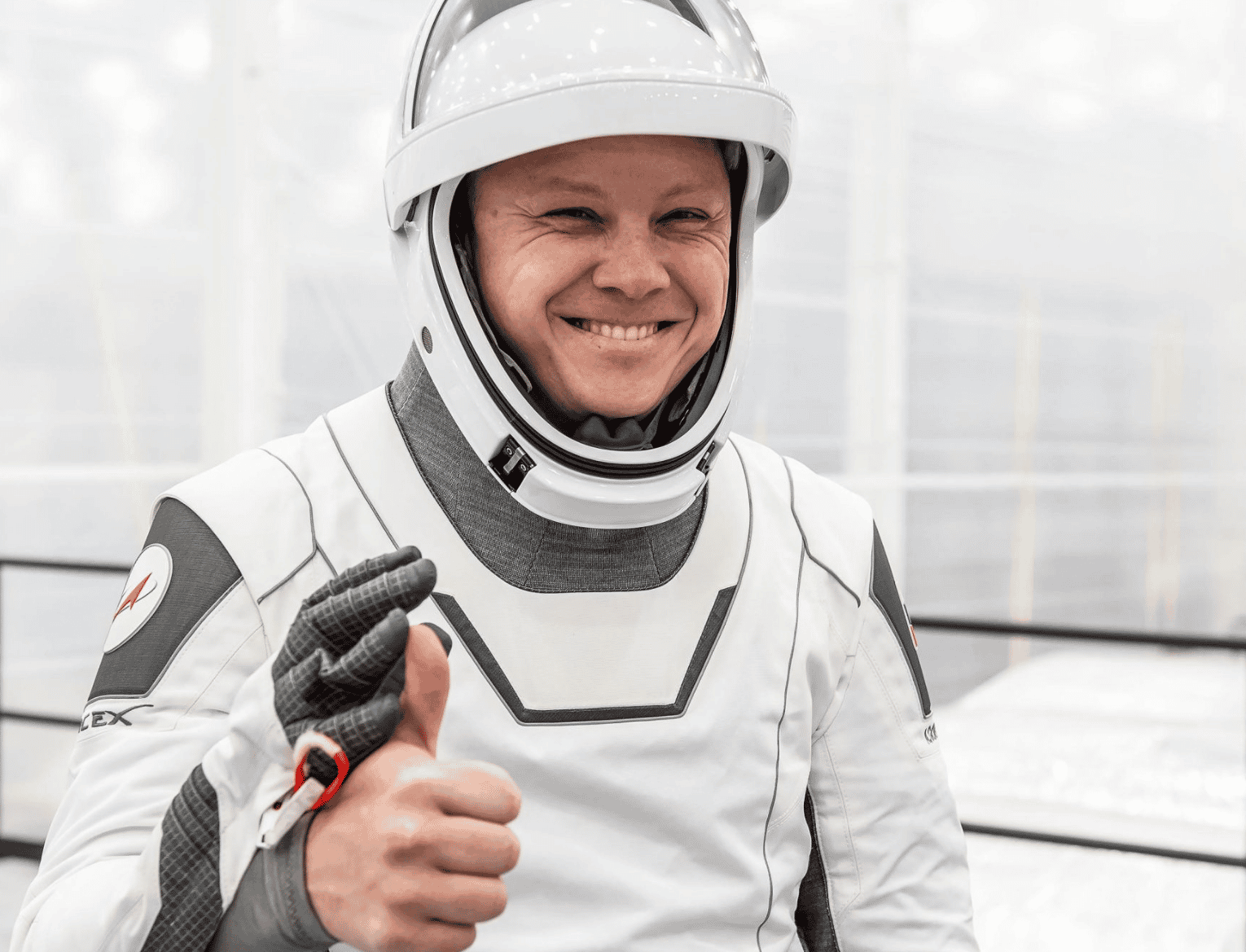
Aleksandr Gorbunov, Russian cosmonaut and aerospace engineer 

  • “Nothing would be possible if it had not been for Yuri Gagarin travelling to space for the first time.”

Sixty-five years after Yuri Gagarin opened the way for human spaceflight, Russian cosmonaut Aleksandr Gorbunov visited Mauritius to honour that legacy and share his own experience aboard the International Space Station. In this interview with Bizweek, he discusses how space exploration has moved from Cold War rivalry to international cooperation, why Moon exploration should be pursued jointly, and what young Mauritians can learn from Russia’s long space tradition. 

You are in Mauritius to mark the International Day of Human Space Flight and the 65th anniversary of Yuri Gagarin’s historic mission. What does this moment represent for you personally?

Of course, this is an extremely important day for us. It marks the fact that the Russian cosmonaut was the first person to fly into space. Yuri Gagarin is indeed a hero, since he was the one who took a step into the unknown. Sixty-five years later, we travel to space and now it is more or less known. For me, Yuri Gagarin symbolises a hero, a person who opened space and made it available for us. He is the one who opened this profession for me.

Yuri Gagarin opened the door to human space exploration in 1961. How does his legacy continue to shape the work of modern cosmonauts?

Of course, after 65 years, work in space has changed dramatically. Yuri Gagarin made several orbits around the Earth, and now we are travelling to the International Space Station, which has completed more than 150,000 orbits around the Earth. Nothing would be possible if it had not been for Yuri Gagarin travelling to space for the first time.


“The best way to explore the Moon is with Russia, the U.S. and China together.”


Yuri Gagarin’s mission took place at the height of the Cold War, when space exploration was closely tied to geopolitical competition. How do you reflect on that period today, and how has space evolved from rivalry?

Today, the main project is the International Space Station. The very existence of this station is due to close cooperation between Russia, the United States, the European Union, Japan and Canada. Twenty-seven years of the station’s existence prove that cooperation and collaboration between rivals are possible, and that this is the way to move forward and to develop space projects. It is not rivalry, but cooperation, that we should seek. Only by working together, and not by being rivals, can we achieve goals, including travelling to the Moon and to Mars.

Could you briefly take us through your journey to becoming a cosmonaut? What inspired you to pursue this path?

I graduated from the Moscow Aviation Institute. My profession is engineer; aerospace engineer, to be precise. After my graduation, I worked for several years for a corporation that develops spaceships. While studying at university, I met people involved in this field, and I met several cosmonauts. That was the moment when I understood that I could not only work on creating spaceships, but I could actually be the one inside the ship. I could go to space. It was not that far. In 2018, I joined the cosmonaut corps. I went through a lot of preparation, and in 2024, I went to space on Dragon, an American spaceship.

During your mission aboard the International Space Station, what was the most memorable moment for you?

The most memorable moment was seeing the Earth from space for the first time.

And how does seeing Earth from space change your perception of our planet and humanity?

I think that a person, including a cosmonaut, is fully formed before a flight. During a flight, he confirms the thoughts and images that he had before the flight.

You mean how he perceives the planet?

No, I mean that nothing changes. Actually, there is not a big difference between a person who lives on Earth and a person who sees Earth from space, because my perception of the world and humanity had been formed before my trip to space. Seeing Earth from space just proved that we all share the planet. It is our common home, and we should protect it together.


“We need to make space tourism cheaper.”


What are the main challenges, both physical and psychological, that cosmonauts face during long-duration missions?

The biggest challenge I faced was adapting to weightlessness. You need to do this quickly, within two weeks, while you are at the International Space Station. You can feel dizzy there. However, you get used to it, and then you feel like you are at home.

Now it is much more comfortable to be at the International Space Station than it was 15 years ago. The reason for this is that there is an internet connection. That is why we can talk to our relatives and friends, maintain contact with those who are on Earth, and feel like normal people. It helps to avoid psychological problems.

At the International Space Station, we also conduct a huge number of experiments, including medical experiments. As an example, I can recall experiments on the determination of protein structure. We study the structure of proteins in space because it is the most precise way to do this. The results of this research help us find the best treatment for certain diseases. 

What major developments can we expect in space exploration in the years to come?

I believe that, in the near future, we will put emphasis on the exploration of the Moon. Russia, the United States and China have their own programmes that aim to explore the Moon. But I believe that the best way to explore the Moon is to do it together.

What are your views on space tourism and on initiatives such as those led by Elon Musk to reach Mars or build a self-sustaining city on the Moon?

I believe that space tourism is a good way to go. Hundreds of people have already travelled to space thanks to Russian and American spaceships. The only problem is the price. It is extremely expensive. I suppose the way to go is to make travel to space available for people. So, we need to make space tourism cheaper.

Some people worry about space tourism influencing the work of professional cosmonauts. But I can compare it to travelling by plane. Those who travel by plane do not affect professional pilots. That is why I believe that space tourists will not affect professional cosmonauts.

I think Elon Musk’s projects are very ambitious. They are like science-fiction stories now, but the future is impossible without such ideas. Sixty-five years ago, even a man’s flight to space seemed to be a fantastic idea. But I am sure that new technologies will be developed with the help of such ideas. They will help us reach Mars and build cities on the Moon, but it will be in the future.

What advice would you give to young Mauritians who are interested in science, technology, or even in becoming future cosmonauts?

The best way to become a cosmonaut is to study, and to study in Russia, because Russia is a great country, and one of the key players in the field of space exploration. So, if you want to be a professional and become a cosmonaut, you need to go to Russia to study.


Spaceflight Day Marked at RGSC 


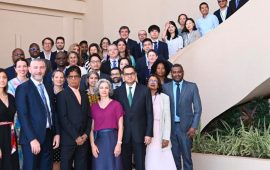
Mauritius marked the International Day of Human Space Flight during a commemorative ceremony held at the Rajiv Gandhi Science Centre in Bell Village. The event, organised with the Embassy of the Russian Federation, was attended by Minister Kaviraj Sharma Sukon, Ambassador Irada Zeynalova, RGSC Director Dr Aman Maulloo and members of the scientific community to honour Yuri Gagarin’s 1961 space mission and highlight the role of science and space technology as practical tools for economic development, public policy and international cooperation.

Observed annually on 12 April, the International Day of Human Space Flight commemorates the 1961 mission during which Soviet cosmonaut Yuri Gagarin became the first human to travel into space. His flight opened a new chapter in space exploration and remains a landmark in the scientific history of the 20th century.

In his remarks, Dr Kaviraj Sharma Sukon underlined the transformative role of science and technology as drivers of economic development. He also pointed to their importance in addressing present-day global challenges, particularly where data, innovation and research can help improve monitoring systems and strengthen the quality of decisions taken in key sectors.

The Minister highlighted the growing relevance of space-based technologies beyond the traditional field of exploration. In agriculture, such tools can support monitoring and planning. In healthcare, they can contribute to better systems and more informed decision-making. His intervention also placed emphasis on the longstanding and cordial relations between Mauritius and the Russian Federation in science, technology and innovation.

For her part, Ambassador Irada Zeynalova reaffirmed the Russian Federation’s commitment to supporting Mauritius as the two countries deepen cooperation in science and space-related fields. Her remarks linked the commemoration of Gagarin’s legacy to future collaboration in areas where space science can generate practical benefits.

A keynote lecture, entitled “From Gagarin to the International Space Station: 65 Years of Human Spaceflight,” was delivered by Russian cosmonaut Aleksandr Gorbunov. His participation gave the event a direct link to contemporary human space exploration.

Aleksandr Gorbunov undertook his first spaceflight as part of the Crew-9 mission, which launched on 28 September 2024 aboard a Crew Dragon spacecraft. During his 171-day mission, he conducted scientific experiments and supported the maintenance of systems aboard the International Space Station.

The programme also included a film screening and an exhibition themed “Fly Me into Space.” The exhibition was designed to enhance public awareness and deepen understanding of space exploration and its practical applications. It showcased major milestones in space science and the technological advances that have shaped modern space missions.

Skip to content