Back to Bizweek
SEARCH AND PRESS ENTER
Latest News
The Island That Chose the Sun

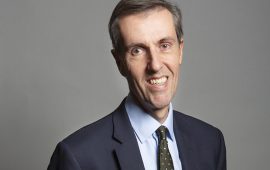
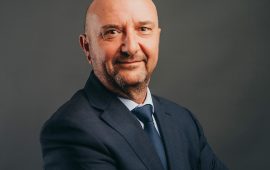
Hon. Patrick Gervais ASSIRVADEN, Minister of Energy and Public Utilities, Mauritius & Mr Ashish Khanna, Director General, International Solar Alliance

Small Island Developing States occupy an uncomfortable position in the global energy economy. They have contributed almost nothing to global carbon emissions, yet they pay some of the highest prices in the world for the fossil fuels that power their economies. Many spend between 5% and 15% of GDP on fuel imports. In some island regions, imported oil accounts for up to 80% of the energy supply. Every price spike in a distant market, every geopolitical disruption on another continent, lands directly on household electricity bills and business operating costs. This exposure is structural, persistent, and deeply inequitable.

And yet the same geography that creates this vulnerability also contains its answer.


“The structural vulnerability that has defined island energy for decades is not inevitable. Mauritius, in partnership with ISA, is demonstrating what the alternative could look like.”


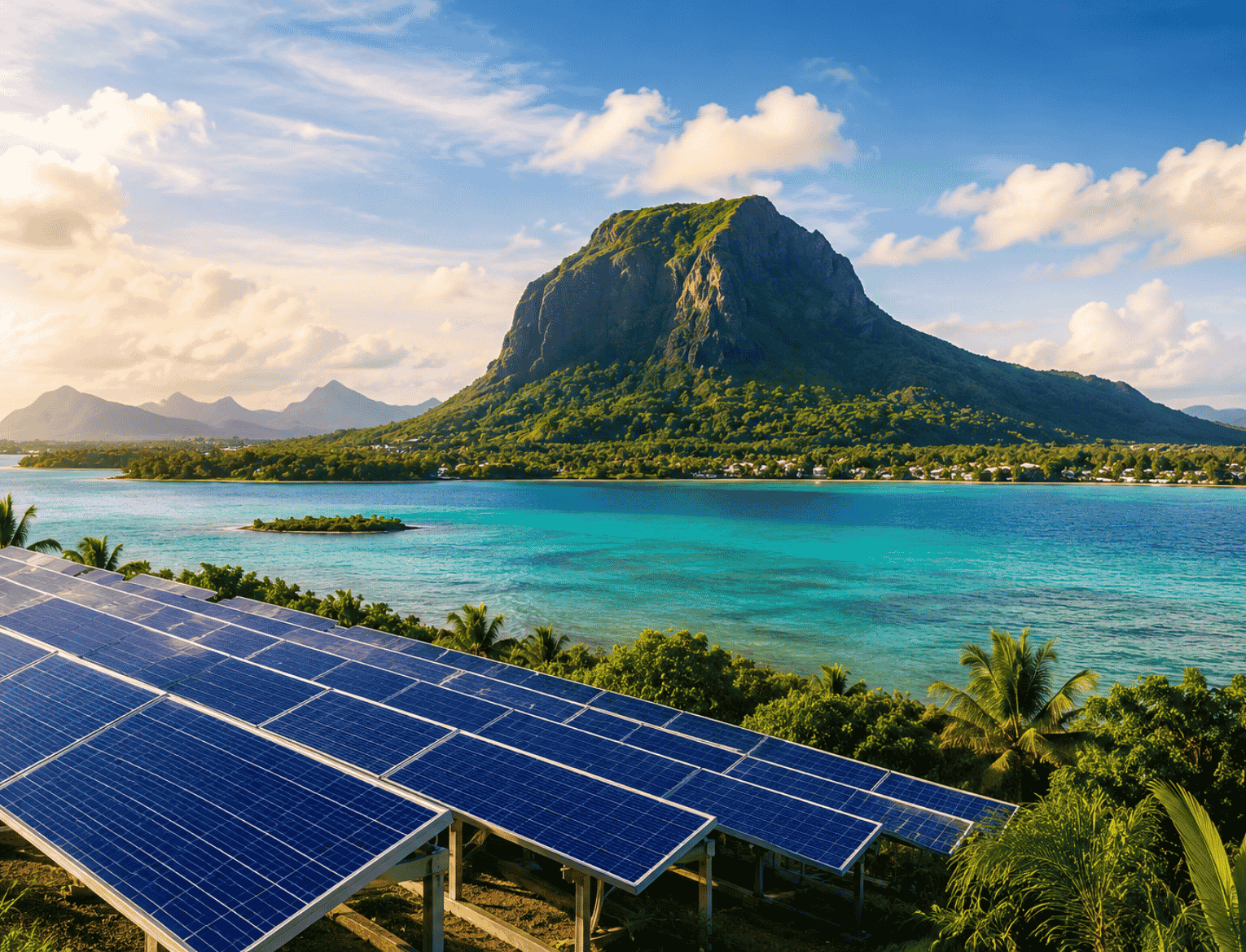
Island nations are, almost without exception, bathed in sunlight. The solar resource available to most SIDS is abundant, predictable year-round, and immune to supply chain disruptions, shipping delays, or the decisions of distant producers. It cannot be sanctioned, withheld, or priced by any external actor. It is, by its nature, sovereign energy.

Mauritius recognised this logic clearly. The question was how to act on it, not merely in aspiration but at the scale and pace the moment demands. The answer came through partnership.

In April 2025, Mauritius became the first African country to sign a Country Partnership Framework with the International Solar Alliance. It was a deliberate choice to move beyond project-by-project solar installations toward a comprehensive, long-term collaboration, one that aligns ISA’s global expertise and network with Mauritius’s national priorities and timeline. That framework is now producing results across every dimension of the energy transition: regulatory strengthening, institutional capacity building, a pipeline of bankable projects, and the establishment of a Solar Technology Application Resource Centre that anchors innovation and technical knowledge within the country.

The breadth of applications being developed through this collaboration is significant. Rooftop solar, floating solar installations, agrivoltaics, solar water pumping, and solar pathways toward green hydrogen are all part of the work underway. The solarisation of the Jawaharlal Nehru Hospital, an early, visible proof of concept, reflects the continuum from demonstration to national scale that the CPF is designed to accelerate.

The scale of that national ambition is now impossible to ignore.

In April 2026, Mauritius announced a 405 MW pipeline of renewable energy and storage projects, with a national target of 60% renewable energy by 2035. At the centre of this pipeline is the Central Electricity Board’s 220 MW solar photovoltaic and battery storage tender, the largest renewable energy procurement ever undertaken by an island nation.

The significance of that milestone extends well beyond Mauritius’s own grid. For years, a persistent assumption has constrained investment in island energy markets: that small size means limited opportunity, that competitive procurement requires large volumes, and that serious investors look elsewhere. The 220 MW tender, transparent, well-structured, and backed by the institutional frameworks developed through the ISA partnership, directly challenges that assumption. The Maldives demonstrated something similar when competitive procurement sharply reduced solar tariffs and attracted genuine international investor interest. Mauritius, at a greater scale and with stronger institutional foundations, is now reinforcing that lesson for the broader island world.

The tender is listed on the ISA SIDS E-Marketplace, making it visible to a global pool of developers and investors. That visibility is not incidental. It is the point.

Through the ISA SIDS Platform, developed with the World Bank Group, island nations are being brought together to plan, procure, and attract investment collectively, placing the private sector at the centre of delivery. Individually, SIDS economies carry limited leverage in global energy markets. Aligned with shared procurement standards and coordinated market signals, they can meaningfully shift how investors perceive and price these opportunities. Mauritius, through the scale of its ambition and the quality of its preparation, is helping to anchor this collective shift.

Its experience is already becoming shared knowledge. The lessons Mauritius has gained in procurement design, regulatory structuring, investor engagement, and project bankability are being shared through the SIDS Platform with island economies across Africa, the Pacific, and the Caribbean. This transfer of learning took on new urgency at the ISA SIDS Dialogue in Bali in June 2026, where governments, financiers, and private-sector actors gathered to translate accumulated experience into concrete action. Mauritius did not come with a theoretical model. It came with a proven example: a signed Country Partnership Framework, a functioning institutional architecture, and the largest renewable energy tender ever launched by an island nation.

For Small Island Developing States, the path to energy security runs through this combination – a sovereign resource that cannot be disrupted, a credible institutional partner to accelerate the transition, and a procurement model that signals seriousness to global markets. The structural vulnerability that has defined island energy for decades is not inevitable. Mauritius, in partnership with ISA, is demonstrating what the alternative could look like.

Skip to content