Back to Bizweek
SEARCH AND PRESS ENTER
Latest News

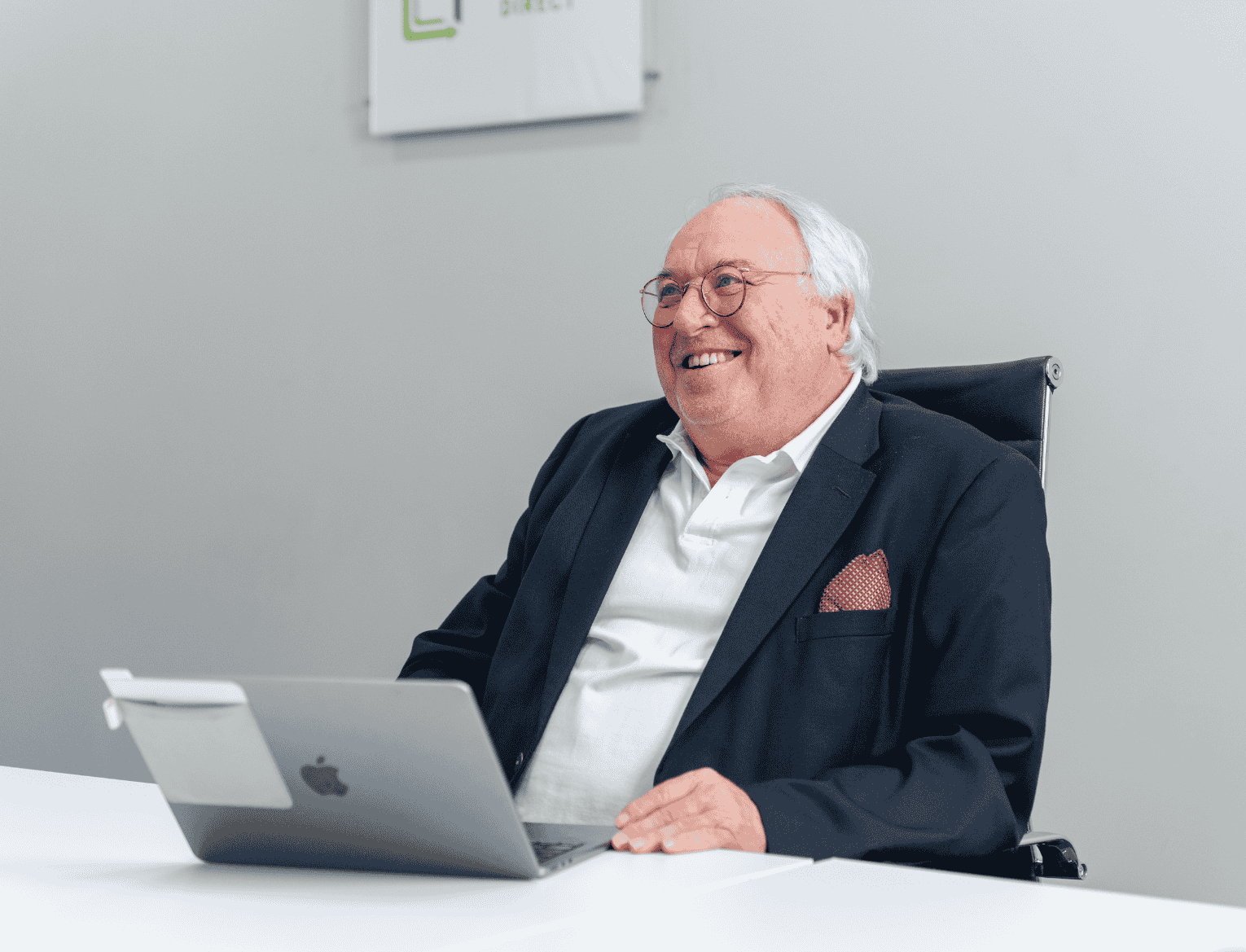
“The Mauritian insurance market is not very innovative”

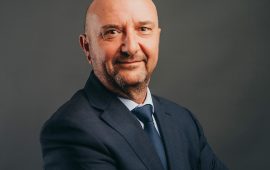
Martin A. Weintz, Chairman of Quantum Insurance

  • “Our biggest challenge ahead will be health insurance.”
  • “Below Rs 100,000, it’s nearly impossible to find good candidates.”

When I arrived, Ebene had only one tower,” recalls Martin A. Weintz, Chairman of Quantum Insurance. Since then, Mauritius has successfully transitioned from basic call centres to high-value service activities. But as the economy evolves, so too do expectations, especially among the younger generation, who now prioritise work-life balance, purpose, and growth over long-term job stability. In the insurance sector, however, innovation has lagged. “The top five or six insurers offer essentially the same products,” he observes. “The only difference is in pricing and, sometimes, service. Products haven’t evolved much in the past 20 years.

Editor-In-Chief: Rudy Veeramundar | Photos: Bradley Rambhojun

Let’s start with Quantum Insurance. Could you tell us about your background and experience in the insurance sector? 

As I mentioned recently, I’m the oldest member of a very young and dynamic team at Quantum Insurance. I was appointed Chairman of the Board in November to support the work of our CEO, Devesh Biltoo.

I’ve been living in Mauritius for the past 42 years. Originally, I come from France, but I’ve also lived in the United States, England, and Germany. Most of my career has been spent within the AXA Group, where I served as CEO of various insurance subsidiaries, including AXA Assistance in Munich. I was responsible for the Group’s travel insurance operations across Europe and the United States. I specialised in what we call “in-kind” payment insurance programs—where the insurer organises, handles, and directly pays for the services provided. These service-oriented insurance programs function effectively only when both product and service are delivered together.

In the early 2000s, I persuaded AXA to invest in Mauritius. At the time, I saw great potential in the Mauritian workforce, particularly their bilingualism and hospitality-oriented mindset. We partnered with the Rogers Group to set up a joint venture, launching AXA Customer Service, previously Rogers Call Center. The aim was to leverage the local strengths for customer service in insurance. I’m happy to say that many of the people who started with us back then have gone on to hold senior positions in various organisations today. That’s deeply rewarding.

So, your decision to invest in Mauritius was a successful bet?

Absolutely. When I arrived, Ebene had only one tower. Business Mauritius was urging companies to move in, but it was too expensive and not fit-for-purpose. That’s why we chose a large building in Coromandel instead.

Back in the early 2000s, Mauritius was considered the Eldorado for call centres and outsourcing. Unfortunately, some practices in the industry were questionable, which led to a poor image of call centres. Many employees didn’t want to be labelled as call centre agents. But I believe that through our partnership with a global player like AXA, we helped professionalise the industry and elevate its image.

When I first arrived, even Allianz was leaving Mauritius. They came back seven years later, and now they run one of the largest outsourcing operations on the island, with around 1,500 to 1,800 employees. Mauritius has made a successful transition from basic call centres to high-value services, and I’m proud to have played a small role in that transformation.

You have witnessed Mauritius’ economic transition. How do you see the evolution of the local workforce?

Mauritius has undergone massive changes over the past two decades. When I first arrived in the 1980s, making an international call meant going to Cable & Wireless at Rogers House. Today, nearly everyone is connected to the internet.

More significantly, the workforce has evolved. In the early 2000s, BPO and call centre jobs were highly sought-after, especially by graduates. These jobs offered a way to use their language skills and gave them pride and visibility in the international workplace.

Today, the situation has changed. Many young people want a better work-life balance. They are more selective. Back then, you would join a company like Rogers and stay until retirement. That model is no longer viable. Today, people seek purpose, learning, and growth. If they don’t find it, they move on.

This has created challenges for retention, particularly as Mauritius lacks a sufficient number of qualified HR professionals. At Quantum, we try to be creative. We maintain a flat organisational structure. Both Devesh and I are accessible to all employees. We put a lot of emphasis on respect and employee engagement. We want our team to feel valued and heard.

Let’s talk about salaries. How have expectations changed?

Salary expectations have increased substantially. In 2007, a middle management salary was modest. Below Rs 100,000, it’s now nearly impossible to find good candidates. Today, if you want to recruit a qualified CFO, you need to offer a six-figure salary.

Despite the current slowdown in the offshore sector, qualified professionals are in high demand. Many are leaving for better opportunities in Canada, Guernsey, Luxembourg, and elsewhere. The bilingual advantage plays a major role, especially for those targeting Quebec.

At Quantum, we’ve tried to strike a balance between what’s financially sustainable and what’s necessary to attract and retain talent. Our shareholders understand that without proper remuneration, you can’t build a committed team.

Do you observe any gender dynamics in this talent migration?

Yes. In fields like accounting and finance, we see more women than men now. Many female professionals in Mauritius show a strong commitment to completing qualifications like ACCA and staying in the country. In some communities, families push for academic excellence, and we now have a far higher number of qualified actuaries than when I first arrived. Back then, there were perhaps one or two. Now there are many.

What are your thoughts on AI and its potential impact on jobs in Mauritius?

I’m not alarmed by AI. I use ChatGPT myself. It can help summarise reports or generate ideas, but decision-making still belongs to humans. The idea that AI will make people jobless overnight in Mauritius is exaggerated.

Mauritius still operates in traditional ways. We still use handwritten forms for car claims! AI will take over repetitive administrative tasks, but it should be seen as a tool to enhance productivity, not a threat.

Mauritius has evolved beyond low-value outsourcing. The level of education has risen. We need to encourage both academic and vocational paths. Try finding a reliable plumber in the north. It’s a challenge. There is value in skilled manual work too. Everyone doesn’t need to be a CFO.


“Many young people want a better work-life balance.”


How do you assess the current state of the insurance industry in Mauritius?

The Mauritian insurance market is not very innovative. The top 5 or 6 insurers offer essentially the same products. The only difference is in pricing and, sometimes, service. Products haven’t evolved much in the past 20 years.

We, Quantum Insurance, were the first fully digital insurer in Mauritius. That remains core to our DNA. Our platform initially attracted tech-savvy, urban clients. But now, we want to reach beyond that, to places like Pamplemousses, Mahebourg, and Chemin Grenier. Many still see us as “the online insurer.” That must change. We offer multiple channels – online, phone, live chat – and now 24/7 assistance. We are working to change perceptions.

As for climate-related risks and industrial insurance, most local insurers act as brokers for large international reinsurers. We lack in-house expertise to assess complex risks. For products like agricultural or catastrophe insurance, we rely on international specialists.

Our biggest challenge ahead will be health insurance. Mauritians increasingly seek access to private healthcare. Public health is free, but many prefer alternatives. We need to reinvent medical insurance. We’re working on it.

You mentioned some product innovation at Quantum…

Yes. We’ve launched an accident cover product that includes much more than compensation. It offers psychological support, anti-harassment services for schools, and help for families caring for injured children—including monthly allowances and reimbursement for damaged items.

We’re also developing a funeral plan called “Antim Yatra” (The Last Journey). It combines traditional funeral coverage with emotional support, guidance for succession processes, and logistical assistance for mourning families. It’s designed with cultural realities in mind.

We believe insurance should go beyond paying claims. It should serve people. That’s why we’ve created Quantum Assistance 24, a platform for round-the-clock support. No IVR maze. When you call, you speak to a human being.


“Today, people seek purpose, learning, and growth. If they don’t find it, they move on.”


So, you believe the future of insurance is a hybrid model?

Absolutely. We want to become the reference for service in the insurance sector. We don’t believe in price dumping. We want clients to judge us by the quality of service, not just the price tag.

We have a dedicated quality service team separate from operations to ensure objectivity. We train our staff not only to say “yes” but to say “no” with empathy. Explaining why something can’t be covered, with respect and clarity, is part of our brand promise.

What is your long-term vision for Quantum Insurance?

Our shareholders are committed to the long term. We promised them a path to profitability, but not at any cost. We’re not chasing quick wins. Our growth is rooted in quality service, long-term value creation, and employee satisfaction.

I often refer to the AXA triangle: customer satisfaction, employee satisfaction, and shareholder satisfaction. You can’t succeed unless all three are balanced. If employees are unhappy, or if clients feel mistreated, your business won’t thrive. Our goal at Quantum is to maintain that triangle and become a valued and respected name in Mauritian insurance.


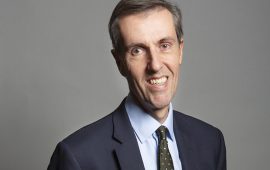
Devesh Biltoo, CEO of Quantum Insurance

“Insurance shouldn’t be a constraint or a source of stress”

  • Quantum Insurance launches 24/7 customer support in Mauritius

Quantum Insurance has introduced the country’s first round-the-clock customer service offering, signalling a shift in the way insurers interact with their policyholders in an increasingly on-demand economy.

The company, which has built its reputation as the first 100% digital insurer on the island since its launch a decade ago, is now extending that digital proposition by adding a human touch. Policyholders can now access support services 24 hours a day, seven days a week, including weekends and public holidays, not only for emergencies, but also for everyday queries, claims, quotations, and document follow-ups.

Insurance shouldn’t be a constraint or a source of stress,” says Devesh Biltoo, CEO of Quantum Insurance. “Our new 24/7 service reflects our vision of a responsive, human-centred and connected insurer. Clients should be able to reach us wherever they are, without having to reorganise their schedule.”

A hybrid approach to customer experience

The move reflects Quantum’s broader strategy to redefine the insurance experience in Mauritius. While many insurers globally have turned to automation and artificial intelligence, Quantum is doubling down on human interaction, seamlessly integrated with its digital tools.

Digital is already there: strong, fluid and efficient,” the company says in a statement. “But in an increasingly depersonalised world, we believe it is essential to bring back the human voice. Speaking to an advisor, day or night, builds trust and proximity.

The insurer’s new service model is designed to eliminate the friction traditionally associated with the sector, such as long queues, limited office hours, and language barriers. Whether via smartphone, laptop or a standard call, clients can now access personalised assistance in their preferred language at any time of the day.


“In an increasingly depersonalised world, we believe it is essential to bring back the human voice”


Recalibrating client relationships

The 24/7 service is part of a broader renewal of Quantum’s client relationship strategy. Having initially differentiated itself through digital innovation, the company is now seeking to set itself apart through relational excellence, making insurance not just more efficient, but more accessible and human.

With a redesigned website, intuitive interfaces, and an always-available support team, Quantum positions itself as a trusted insurance partner for customers throughout their journey, from quote to claim.

This is a natural step for a modern insurer like us,” says CEO Devesh Biltoo. “We are proud to be the first in Mauritius to offer this kind of service.

About Quantum Insurance

Quantum Insurance is an independent insurance provider in Mauritius, offering a range of products including motor, home, and travel insurance. The company’s mission since inception has been to simplify insurance, make it more transparent and better aligned with the everyday needs of Mauritian clients.

Skip to content