Back to Bizweek
SEARCH AND PRESS ENTER
Latest News

“The greatest victory against corruption is ensuring that the corrupt gain nothing from their crimes”

Titrudeo Dawoodarry, Acting Director-General of the Financial Crimes Commission (FCC)

  • “Asset recovery is not the job of a single agency. Its success depends fundamentally on seamless domestic collaboration.”

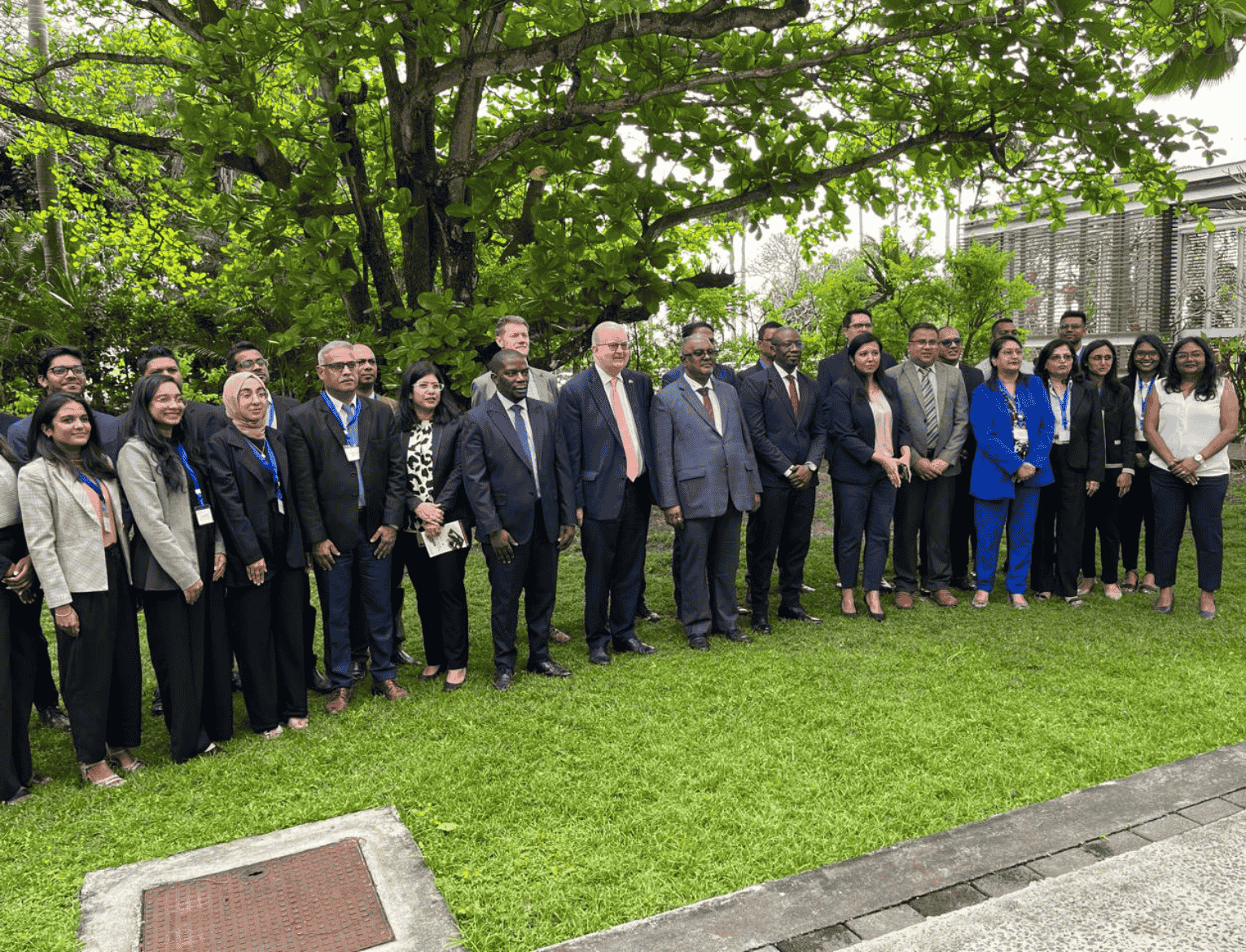
Mauritius reinforced its regional leadership in the fight against financial crime and corruption in September by hosting the International Centre for Asset Recovery (ICAR) training on financial investigations and asset recovery, alongside the Commonwealth Secretariat’s High-Level Leadership and Management Programme for Heads of Anti-Corruption Agencies in Commonwealth Africa. Titrudeo Dawoodarry, Acting Director-General of the Financial Crimes Commission, addressed both gatherings, combining operational results with reflections on institutional leadership ahead of Mauritius’s 2027 FATF review.

Speaking at the ICAR training, the Acting Director-General of the Financial Crimes Commission (FCC) reported that the FCC had executed one of its largest asset recovery operations of the year on 5 September 2025, targeting a residential property in Tranquebar, Port Louis, linked to Wendip Appaya. Assets seized exceeded Rs 100 million, ranging from vehicles and lorries to autocycles, furniture, and wildlife trophies.

Titrudeo Dawoodarry outlined wider enforcement results since January 2025:

  • Criminal attachments: over Rs 705 million.
  • Civil attachments: more than Rs 170 million.
  • Pending confiscation orders: approximately Rs 59 million.
  • Confiscation orders obtained: around Rs 12 million, covering pleasure craft, land, and buildings.

Crime does not pay, and any assets derived from illegal activities will be swiftly identified, seized, and realised to their maximum value,” Mr Dawoodarry said. “The greatest victory against corruption is not catching the corrupt, but ensuring they gain nothing from their crimes while society regains everything it lost.”

He cited early vehicle realisation as a key innovation, ensuring seized assets retain value. Eleven vehicles and two pleasure craft were liquidated recently, raising more than Rs 10 million .


“Criminals innovate constantly. So must we.”


Preparing for the FATF Review

The FCC head warned that Mauritius’s 2027 FATF Mutual Evaluation Review would assess not only laws, but practical effectiveness in tracing, freezing, and confiscating assets. He stressed the need for quicker processing of mutual legal assistance requests, stronger cross-border partnerships, and enhanced statistics to show impact .

Domestically, Mr Dawoodarry pointed to the National Coordination Committee, created under the FCC Act 2023, which links the Police, Financial Intelligence Unit, Financial Services Commission, Mauritius Revenue Authority, Director of Public Prosecutions, Attorney General’s Office, and Gambling Regulatory Authority. “Asset recovery is not the job of a single agency. Its success depends fundamentally on seamless domestic collaboration,” he said.

Leadership and Institutional Integrity

Addressing the High-Level Leadership and Management Programme for Heads of Anti-Corruption Agencies in Commonwealth Africa, the Acting Director-General of the FCC focused on governance and leadership challenges. Welcoming representatives from 20 countries, he reminded them that “we are not merely administrators; we are architects of institutional culture, guardians of public trust, and agents of transformational change.”

He acknowledged that anti-corruption agencies face criticisms of selective enforcement, political bias, and inefficiency, adding that “the answer lies not in defensive posturing, but in strengthening our institutional frameworks, enhancing our operational capabilities, and demonstrating through our actions that we are independent, professional, and effective guardians of public integrity.”

Quoting Nelson Mandela, Mr Dawoodarry argued for action matched with vision: “Action without vision is only passing time, vision without action is merely daydreaming, but vision with action can change the world.”


“Crime does not pay, and any assets derived from illegal activities will be swiftly identified.”


Adaptive Leadership and Collaboration

Using the “Dead Horse Theory” as an analogy, he urged participants not to persist with outdated practices. “Effective leadership means having the courage to recognise when something isn’t working, and the wisdom to try a different approach,” he said, calling for adaptive leadership that embraces innovation and evidence-based change.

He also told participants that the training received meant that they should expect concrete progress: better investigation results, higher recovery rates of assets, and stronger coordination between agencies.

From Training to Transformation

In both speeches, Mr Dawoodarry framed training as a strategic investment in capacity. “Criminals innovate constantly. So must we,” he said, urging participants to equip themselves with tools for tracing illicit flows, managing electronic evidence, and investigating crypto assets.

He concluded with a call for sustained collaboration: “Together, let us turn financial investigations and asset recovery from defensive reactions to proactive deterrents.”

Skip to content