

Back to Bizweek
SEARCH AND PRESS ENTER
Latest News
- 18/09/2023
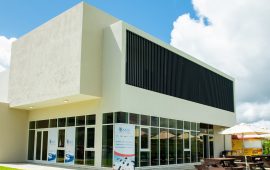
La MCCI Business School lance l’Innovation Imperative
Leverage agile frameworks to provide a robust synopsis for high level overviews. Iterative approaches to corporate strategy foster collaborative thinking to further the overall value proposition. Organically grow the holistic world view of disruptive innovation
- 29/10/2023
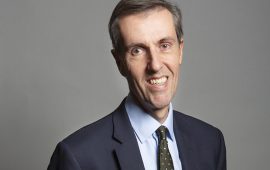
Mauritius may be small in size but it is a leading economic force
UK Prime Minister’s Trade Envoy to Mauritius was back in the island in the first week of October, and answered our questions on important topics such as the Strategic Trade Partnership (STP) with Mauritius, the

- 01/11/2023
Le Groupe CIEL affiche une augmentation de ses bénéfices pour le premier trimestre
Le Groupe CIEL affiche une augmentation de ses bénéfices pour le premier trimestre Le Groupe CIEL a annoncé des bénéfices en hausse pour le premier trimestre clos le 30 septembre 2023. Le chiffre d’affaires s’est
- 01/11/2023
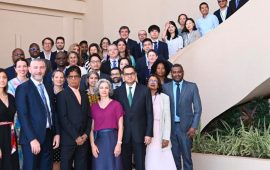
Ensuring efficient market conduct supervision has been at the forefront of the Bank of Mauritius’ agenda”
Ensuring efficient market conduct supervision has been at the forefront of the Bank of Mauritius agenda On 22-23 November 2023, FinCoNet (the International Financial Consumer Protection Organisation) held its Annual General Meeting (AGM), hosted by

- 13/11/2023
Embracing sustainability is not an option, but a business need!
Embracing sustainability is not an option, but a business need! A conference focused on sustainability and climate change is scheduled to take place in Mauritius from October 26 to 27. The CEO of Spaanda, the
- 16/11/2023
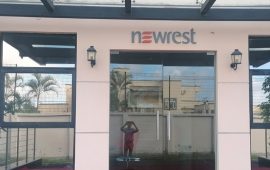
Le Groupe Newrest inaugure une unité de production à Maurice
Leverage agile frameworks to provide a robust synopsis for high level overviews. Iterative approaches to corporate strategy foster collaborative thinking to further the overall value proposition. Organically grow the holistic world view of disruptive innovation

- 17/11/2023
La MCB sacrée Best Private Bank in Mauritius 2023
Leverage agile frameworks to provide a robust synopsis for high level overviews. Iterative approaches to corporate strategy foster collaborative thinking to further the overall value proposition. Organically grow the holistic world view of disruptive innovation

- 18/11/2023
AI is changing the game
AI is changing the game As AI continues to revolutionize various sectors, it’s crucial to stay updated with its advancements. The pervasiveness of AI is undeniable and it carries immense potential. However, it also presents
- 08/03/2026
- Cover Story
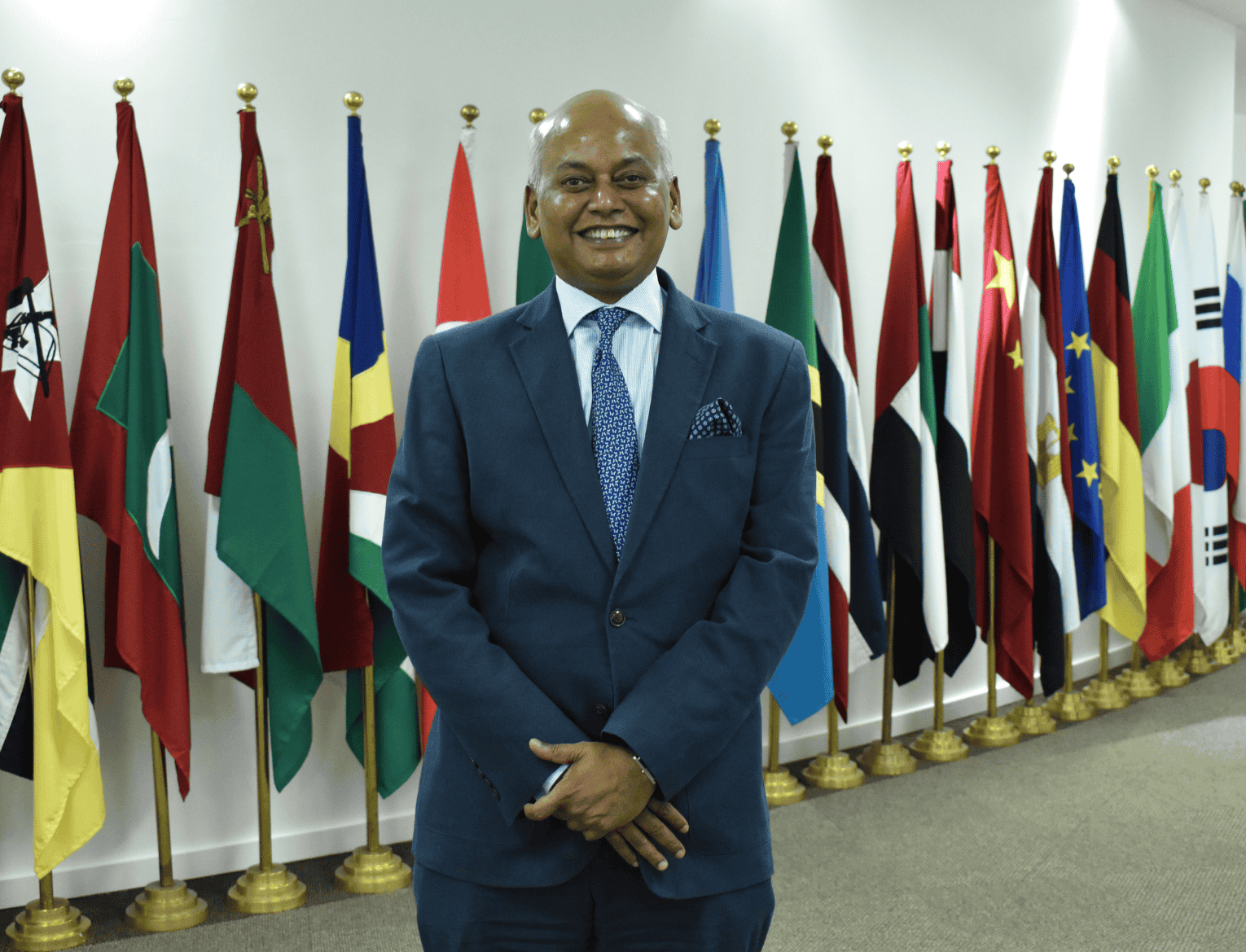
- “(…) in infrastructure, planning systems and development models.”
- “The long-term impact of delayed climate change adaptation is enormously high”
Climate risks are intensifying across the Indian Ocean basin, and the cost of inaction is rising sharply, warns Sanjiv Ranjan, Secretary-General of the Indian Ocean Rim Association (IORA). In an interview with Bizweek, he argues that the region must move beyond awareness and focus on resilience, capacity-building and practical cooperation among Member States. For the Secretary-General of IORA, strengthening the institutional capacity of the IORA Secretariat and translating dialogue into concrete outcomes will be essential if the organisation is to help its diverse members confront climate disruption, safeguard maritime stability and harness the economic potential of one of the world’s most strategic ocean regions.
Rudy Veeramundar
You assumed office as Secretary-General of the Indian Ocean Rim Association on 1 January 2025. After more than three decades in diplomacy, what does this appointment represent for you personally and professionally?
Personally, Mauritius feels like a second home to me. I have always felt very close to the traditions of this country, and I deeply value the warmth and hospitality that I have consistently received here. My association with Mauritius is also linked to very fond personal memories. I first came here when my daughter was only three months old. Today, she is in college, so this country marks an important chapter in our family life.
Professionally, to head a regional organisation such as IORA is both a privilege and an honour. It is also a serious responsibility. It gives me the opportunity to serve the Member States of an organisation whose relevance is growing steadily. Increasingly, other regional organisations and international institutions want to engage with IORA. We are also forging new partnerships, not only with Member States, but with other regional and international organisations.
For me, the central professional responsibility is to strengthen cooperation, improve delivery mechanisms, and enhance the effectiveness of the organisation for all Member States. This serves the larger objectives for which IORA was established: peace, stability, regional cooperation and sustainable development. These principles were set out in the Charter by the visionary leaders who conceived the organisation in the closing years of the last century.
As I sometimes say light-heartedly, IORA existed before the era of the iPad and the iPhone. But behind that remark is a serious point: this organisation has long had a role to play in building cooperation across the Indian Ocean, and today that role is more important than ever. Member States must feel the value of being associated with IORA, and it is my responsibility to help strengthen that sense of relevance.
Before taking up this role, you had already built a long diplomatic career. When you arrived in Mauritius to lead the Secretariat, what struck you first about IORA and the work that had already been done?
The first thing that struck me was the breadth of the organisation’s agenda. IORA began in 1997 with seven core members and has since expanded to 23 Member States and 12 dialogue partners. Those dialogue partners are comparable in many respects to observers in other organisations, and they include the permanent members of the United Nations Security Council, as well as other important partners.
What became clear to me very quickly was that the organisation had developed a broad agenda that genuinely reflects the interests of Member States. That agenda covers maritime safety and security, disaster risk management, trade and investment, tourism, science and technology, women’s economic empowerment, and more recently climate change, which was adopted as a strategic agenda last year. This is not to say that climate concerns were absent before then. The organisation had already adopted the Blue Economy as far back as 2013, which clearly showed that environmental and ocean-related concerns were already central to the thinking of Member States.
What I felt, however, was that while the platform existed and the agenda was broad and relevant, there was room to strengthen the delivery mechanisms in these various areas. In other words, how do we move from recognition of common challenges to stronger action, better coordination and more effective outcomes?
Take climate change, for example. This region is being disproportionately affected by its consequences. How do we prepare ourselves? How do we make our systems more resilient? How do we ensure that the best practices developed in one country are shared more effectively with others? Mauritius, for instance, has developed useful experience in dealing with cyclones. As adverse climatic events become more frequent in other parts of the region, how do we transfer that knowledge? How do we train people? How do we build institutional and operational capacity across countries so that they are better able to face these challenges?
So, my initial thinking was that regional cooperation needed to be further strengthened through mechanisms that already existed, while also creating new pathways through partnerships with international organisations. The United Nations system, for example, includes highly specialised agencies working on issues that are directly relevant to our Member States. We are therefore forging cooperation with institutions such as the UN Office for Disaster Risk Reduction so that the organisation can bring greater capacity, expertise and practical support to Member States that may not otherwise have ready access to such inputs.
Very often, we also find that capacities in search and rescue, humanitarian assistance and related areas remain limited. So, the task is twofold: first, to build institutional knowledge within governments and societies; and second, to develop actual operational capacities by connecting Member States with expert organisations and helping facilitate those relationships through IORA.
Do you believe we are now beyond the stage of simply raising awareness about climate change, given that the region is already facing its effects directly?
Yes, very much so. We are no longer in a period where climate change is only an abstract issue or a matter of awareness-raising. We are in the middle of it. The challenge, now, is practical, immediate and strategic.
One of the difficulties is that human beings often register extreme climatic events as isolated occurrences. What we do not always register easily is the pattern behind them. The growing frequency, intensity and spread of such events across the region tells us that things are changing on the ground, and that countries must prepare themselves accordingly.
Our focus, therefore, has been on strengthening a preventive approach. Prevention is better than cure. We need to help Member States build resilience, enhance capacities, create the necessary intellectual and policy frameworks, and put in place legal, regulatory and institutional systems that can support mitigation and adaptation. If countries prepare themselves in advance, the impact will inevitably be less severe than it would otherwise be.
“Climate does not recognise boundaries”
This approach cuts across the organisation’s priority areas. Whether we are speaking about energy transition, sustainable development, the Blue Economy, or the sustainable use of ocean resources by large ocean states such as Mauritius, climate resilience is part of the conversation. The climate agenda is not a standalone issue. It intersects with each of the organisation’s priority areas and cross-cutting themes.
We have, for instance, partnership agreements with IRENA, through which we conduct courses for our Member States. We also work with the Coalition for Disaster Resilient Infrastructure, with whom we have undertaken training programmes on urban resilience, telecom network resilience and smaller but useful projects for Small Island Developing States. We are building networks, bringing experts and policymakers together on common platforms, and ensuring that the level of effectiveness improves.
Resilience, in that sense, becomes a key organising concept.
You repeatedly emphasise resilience. Why is it so central to the Indian Ocean region?
Because our infrastructure, planning systems and development models were generally not designed for the scale of extreme climatic events that we are increasingly witnessing today.
Take rainfall, for example. A country might have historically planned on the basis of average annual or seasonal patterns, but today, one may witness levels of rainfall in a single day that far exceed previous assumptions. This leads to inundation, flooding and infrastructure failure. We have seen this in Mozambique, in Kenya, in India and elsewhere, where large parts of countries have been severely affected. And these are no longer rare events. They are occurring with increasing frequency.
For policymakers and governments, this means that resilience must be integrated at the planning stage itself. If infrastructure is built without taking future climatic risk into account, the costs of repair and recovery, in both financial and human terms, become far higher later.
That is why resilience matters. A building can be retrofitted to withstand stronger earthquakes. A telecommunication network can be strengthened to remain operational during disasters. Bridges can be redesigned or reinforced to cope with heavier water flows and stronger currents. In some cases, retrofitting may not be possible, but at the very least, governments should make an assessment in advance and determine whether an existing structure will meet future resilience requirements. If not, they must identify alternatives and begin planning for them.
This requires resilience to be incorporated into policymaking itself, in ministries responsible for public infrastructure, planning, communications and public works. Governments need to be aware that this is no longer optional. The long-term impact of delayed climate change adaptation is enormously high.
Are Member States beginning to respond more actively to this resilience agenda?
Yes, clearly. We are seeing growing interest from Member States.
For example, in February we held a workshop in Reunion Island on disaster risk management, and the response from Member States was very strong. It was a multi-day workshop, and participation reflected the seriousness with which these issues are now being taken.
What we really need are the officials from the line ministries and institutions that are directly responsible for these issues. Policymakers, technical personnel, disaster management officials, infrastructure planners and others whose work is operational.
For instance, if the National Disaster Management Authority of India is in contact with the relevant authority in Mauritius, or with the institutions that coordinate disaster response in other countries, those direct lines of communication matter. One of IORA’s roles is to help create these linkages, encourage awareness and facilitate practical cooperation.
Climate does not recognise boundaries. When major events occur, they often affect wide parts of the region. Preparation, therefore, must also be regional in outlook.
Your diplomatic career has taken you across Europe, Latin America and the United States. You also previously served as Deputy High Commissioner of India to Mauritius. How have these experiences shaped your perspective on regional cooperation in the Indian Ocean?
Serving in different parts of the world teaches you, first and foremost, how to understand societies in depth. Diplomats study the politics, economics, social structures, cultural traditions, cuisine, music and art of the countries where they serve. But beyond that, one also studies how those countries engage with regional organisations.
You begin to see, in concrete terms, the value countries derive from regional frameworks.
One of my important learning experiences came when I served in India’s Permanent Mission to the United Nations in New York. There, I saw how consensus-driven approaches often produce outcomes that are more sustainable over time. IORA is very much that kind of organisation. It is consensus-based and inclusive, allowing Member States to arrive at solutions that are acceptable within their own contexts, and therefore more durable.
My experiences in Latin America were also instructive. There, one sees how regional arrangements can allow countries to achieve collectively what they may not be able to achieve individually.
On a large continent facing connectivity challenges, they realised that facilitating the softer dimensions of connectivity could produce major gains in trade and economies of scale.
These lessons are relevant to IORA. We have a region with diverse societies, different levels of development and very wide geographical spread, from the East coast of Africa to the Indian subcontinent, onward to Southeast Asia and Australia. The question is how to draw from experiences elsewhere and adapt those lessons to the Indian Ocean context.
At a broader level, my own background as someone from a country with enormous cultural, spiritual and linguistic diversity also helps me appreciate the deep civilisational linkages across the Indian Ocean. These are not recent ties. For millennia, there were trade routes, people-to-people contacts and cultural exchanges linking the eastern coast of Africa to the Indian subcontinent and onward to Malaysia, Indonesia and beyond.
Many people are not fully aware of the depth of these historical connections because they were disrupted over the past two or three centuries. But if we understand those older linkages, we may also be better able to think about how to strengthen cooperation again in ways that benefit our peoples today.
The Indian Ocean region has become increasingly central to global trade and geopolitics. How would you describe the strategic importance of this region in the global economy?
The Indian Ocean region is one of the major maritime corridors of the world. It links Asia, Africa, Europe and the Middle East through routes that are essential for trade, energy and supply chains.
Historically, the region has long been of global importance. It lay at the centre of maritime exchange routes, and, in a civilisational sense, some have described it as one of the cradles of humanity and early commerce. The reference to explorers such as Vasco da Gama or even the famous voyages associated with the search for India is a reminder of how central this ocean space has always been to the global imagination.
In contemporary terms, its strategic importance is evident in the movement of goods and energy. A very large share of global container traffic passes through the Indian Ocean region. Similarly, a substantial percentage of global energy supplies moves through these sea lanes. Trade, energy and value chains are therefore inseparable from the stability of this maritime space.
What is also significant is that many of the world’s fastest-growing economies are located in or connected to this region. India, Indonesia, Malaysia and others are major production hubs. This means that the global economy increasingly depends on what happens in the Indian Ocean.
It is also worth noting that the region includes countries at very different levels of development. One of the ideas that leaders such as President Nelson Mandela highlighted when speaking of regional cooperation was precisely this: how to bring together countries with uneven levels of development onto a common platform where they can exchange ideas, experiences and pathways towards growth and progress.
That, in many ways, remains the importance of the Indian Ocean region today. It is at once a vital strategic corridor and a shared development space.
IORA brings together Member States from Africa, Asia and Australia, along with dialogue partners. What makes the organisation particularly relevant in the current international context?
IORA occupies a very specific space. There is no other organisation that brings together countries from across the Indian Ocean on a single, inclusive, consensus-based platform in quite the same way.
That is a value addition. In the world we live in today, dialogue is essential. Talking is better than not talking, and in the current international context, it is not always easy to sustain such dialogue across highly diverse countries and priorities. Yet the Member States of IORA clearly value this approach. They value an organisation in which every member state has a say, where discussions are participative, and where views can be expressed in a constructive and inclusive framework.
“The capacity of the IORA Secretariat must be strengthened”
This unique character, countries at different stages of development, with different concerns, but committed to dialogue, is one of IORA’s strengths. It provides a platform through which issues such as trade, investment, resilience, maritime security and sustainable development can be discussed in a way that is cooperative rather than divisive.
During your mandate as Secretary-General, what are your main priorities for strengthening cooperation among IORA Member States?
The word I would emphasise is strengthening.
First, the capacity of the Secretariat itself must be strengthened. This means strengthening both its institutional and intellectual capacity so that it can deal more effectively with the range of subject areas under the organisation’s mandate. We need stronger in-house research capability, better monitoring and feedback systems, and improved reporting mechanisms.
Second, our engagement with Member States must become even more effective. We also need to strengthen linkages with partner institutions that have recognised expertise in areas that are important to the region.
For example, if there are direct benefits to Member States from a memorandum of understanding with the United Nations Conference on Trade and Development on trade policy, then we should seek those benefits actively. The same applies to other international institutions with specialised knowledge that can help us deliver more effectively.
Strengthening, therefore, has several dimensions: strengthening the Secretariat, strengthening institutional processes, strengthening thematic work, strengthening partnerships, and strengthening implementation.
Another important objective is institutionalisation. Over the years, the organisation has generated useful initiatives and outcomes, but some of these achievements are not always sufficiently institutionalised either within the Secretariat or within Member States. Sometimes, even Member States themselves are not fully aware of what has already been achieved. So, part of my objective is to ensure that progress is documented, remembered, built upon and embedded more firmly in practice.
This also includes modernising systems: improving the website, digitising information and internal processes, and reducing the extent to which work is still handled manually where better technological systems can be introduced.
Visibility is another important element. Sometimes, even in Mauritius, where the Secretariat is based, many people know very little about IORA. Increasing the organisation’s visibility matters, not for symbolic reasons alone, but because awareness supports engagement, ownership and wider understanding of its work.
One of the challenges for many regional organisations is translating dialogue into tangible outcomes. How can IORA ensure that its initiatives deliver concrete benefits for Member States?
This is a very important question.
IORA has a broad agenda, but it also has structured mechanisms through which priorities are translated into work programmes and activities.
We have working groups and functional bodies across the main priority areas. There is a working group on maritime safety and security, another on disaster risk management, another on trade and investment, and core groups dealing with fisheries and tourism, among others. In these mechanisms, Member States come together and agree on work plans, usually over a two-year period, based on priorities that they themselves identify.
These work plans are in turn derived from a broader action plan, effectively the strategic vision of the organisation. The current action plan covers the period 2022 to 2027, and during India’s chairmanship, work will also begin on the next five-year cycle.
This is where dialogue is translated into implementation. A workshop on disaster risk management, for example, is not an isolated event. It emerges from an agreed work plan and a strategic framework.
In addition to this, Member States themselves can come forward to organise workshops, training programmes, seminars, pilot projects or live demonstrations. There is also the Special Fund mechanism, which provides a pool of resources from which Member States can request support to organise activities in their own countries, with participation from other members.
Dialogue partners can also contribute. For instance, the Turkish development agency may organise a programme on lessons learned from post-earthquake disaster management and invite IORA Member States to participate. This allows practical experience from one context to be shared with many others.
The key point is that the organisation provides a structured platform for capacity building, exchange of best practices, policy input and practical cooperation. The goal is not abstract discussion, but useful exchange and implementation in areas where Member States have identified a common need.
How does IORA function institutionally? What are the main mechanisms through which decisions are taken and activities are implemented?
At the functional level, as I mentioned, the organisation works through its working groups, core groups and related bodies in the priority areas. These bodies identify issues, develop work plans and implement activities.
At the decision-making level, there are three principal mechanisms.
The first is the Sub-Committee on Finance, which deals with financial issues relating to the Secretariat and the functioning of the office.
The second is the Committee of Senior Officials, which examines the substantive issues facing the organisation and provides recommendations.
The third is the Council of Ministers, which is the ministerial-level body – generally composed of the foreign ministers of Member States – and it takes policy decisions on the main elements of the organisation’s work.
Typically, there are two meetings of the Committee of Senior Officials and one meeting of the Council of Ministers during the annual cycle.
“Member States must feel the value of being associated with IORA”
There was also, when the organisation completed 20 years in 2017 under Indonesia’s chairmanship, a summit at the level of Heads of State and Government. But this is not a standing institutional mechanism. Whether such a summit is held is a matter for Member States to decide.
There is also what we call the Indian Ocean Dialogue, which is a Track 1.5 platform. This brings together policymakers, academics and experts to discuss issues such as maritime security, disaster management and other concerns identified by the chair or host country. That dialogue is distinct from the Indian Ocean Conference, which is hosted by the India Foundation and is a separate initiative.
Trade and investment facilitation is one of IORA’s core priorities. How can the Indian Ocean region strengthen economic integration and benefit from shifts in global supply chains?
Trade and investment are central to the region’s importance. Historically, the Indian Ocean has been a commercial space, and places such as Mauritius are themselves products of those historical routes and exchanges.
But it is important to understand IORA’s role correctly. The organisation was never conceived as a trade negotiating platform in the way that some other regional organisations have been. It was not designed to negotiate free trade agreements, customs unions, monetary unions or similar arrangements. If one reads the leaders’ statements from the organisation’s early period, including the one made here in Mauritius, that was made very clear.
Instead, IORA’s trade and investment agenda is intended to help Member States leverage complementarities, relative strengths and opportunities for economic cooperation. It is about facilitating value chains, encouraging investment, promoting tourism, improving the ease of doing business, and enabling business communities to connect.
This is one reason why the Indian Ocean Rim Business Forum is important. Each year, under the Chairmanship of the organisation, the chambers of commerce of the chairing country convene the forum, bringing together business people to network, discuss opportunities, explore investments and also provide policy inputs to the deliberations taking place within IORA’s working structures.
The organisation’s value lies in helping countries understand how to cooperate, where complementarities exist, and how regional cooperation can support economic development. In that sense, economic integration is not approached through formal trade negotiation, but through facilitation, dialogue, network-building and support for practical cooperation.
Could you point to a few examples of IORA’s concrete achievements over the years?
Achievement is, of course, always a relative term, but there are several areas where the organisation has made useful contributions.
One example is support to small and medium enterprises. In many countries, SMEs occupy a significant share of the economic landscape and make an important contribution to employment and value creation. The memorandum of understanding and cooperation built around SME support is one practical achievement.
Another important area is maritime safety and the stability of maritime routes. Since trade in the region depends on safe sea lanes, efforts to improve maritime domain awareness are very important. IORA has supported information-sharing workshops and practical cooperation involving naval forces, marine police and related authorities. In some cases, real-time or near-real-time information-sharing helps support responses to maritime incidents or criminal activities. Safe trade routes are themselves an economic achievement.
Search and rescue cooperation is another area. Live demonstrations and technical exercises are conducted to prepare authorities for situations such as mercantile vessels catching fire or aviation incidents at sea. These are not symbolic exercises; they are practical capacity-building measures involving the relevant technical ministries and operational agencies.
“The Indian Ocean region is one of the world’s major maritime corridors, linking global trade, energy flows and supply chains”
The organisation has also produced guidelines and work plans on important issues such as illegal, unreported and unregulated fishing, humanitarian assistance and disaster relief, and marine debris. It has also supported conservation-related work and awareness around sustainable use of marine resources.
Sometimes, the public expects achievement to mean a formal trade agreement or some very visible treaty structure, but that was never the organisation’s primary purpose. Its contribution has often been in building norms, sharing best practices, improving capacities and creating cooperation mechanisms where they did not previously exist.
Connectivity – whether maritime, digital or logistical – remains essential for regional development. What role can IORA play in encouraging stronger connectivity across the Indian Ocean Rim?
Connectivity is clearly essential for economic development. Without dense and efficient networks of connectivity, countries cannot fully capture economic opportunities.
I have had some direct experience with connectivity projects in previous roles, including work on railway links between India and Nepal, and the India-Myanmar-Thailand trilateral highway. Those projects reinforced for me the extent to which connectivity underpins development.
Within IORA, however, the mandate is not one of directly constructing connectivity infrastructure. The organisation does not function as a project-executing body for ports, roads, digital corridors or shipping lines. That is not the mechanism we currently have.
What IORA can do – and does do – is provide the platform through which countries can identify what kinds of initiatives are needed to improve connectivity and understand the softer dimensions that support such projects.
For example, if two countries want to strengthen shipping routes between them, what regulatory, customs, logistical or infrastructural conditions need to be in place? If a country wants to develop cruise tourism, what are the requirements in terms of customs systems, port facilities and related infrastructure? These are the kinds of issues the organisation can help illuminate.
So, while IORA does not itself build connectivity projects, it contributes by enabling countries to discuss, understand and prepare the enabling environment required for stronger regional connectivity.
The Blue Economy has become a central theme for many Indian Ocean countries, particularly island states. How can the region harness its marine resources while ensuring sustainability?
The answer lies in balance: the balanced and sustainable use of available marine resources while ensuring their preservation for the future.
IORA supports policy dialogue and capacity building across the whole spectrum of the Blue Economy. This includes understanding the impact of ocean temperature changes on ocean health, recognising the value of seagrass and other coastal ecosystems, strengthening sustainable fisheries practices, and improving accounting for ocean resources.
We also have as a Centre of Excellence the Blue Carbon Hub in Perth, Australia. It supports research by inviting scientists and researchers from Member States to undertake work on issues of particular concern and then helps facilitate the sharing of that knowledge across the region.
Another important area is financing. The question is not only what needs to be done in the Blue Economy, but how Blue Economy projects can be financed. Raising awareness of the available mechanisms and opportunities for financing is therefore part of the process.
This is closely linked to climate priorities as well. Sustainable use of ocean resources and climate resilience are interrelated issues, particularly for island states.
In parallel, there are wider global developments such as the BBNJ Agreement – the treaty on biodiversity beyond national jurisdiction, sometimes referred to as the High Seas Treaty. We support awareness and engagement on such frameworks, and many IORA members have been signatories to it.
Many countries around the Indian Ocean are vulnerable not only to climate risks but also to illegal fishing, trafficking and other maritime crimes. How can IORA strengthen cooperation in these areas?
Last year, IORA adopted principle-based guidelines to address illegal, unreported and unregulated fishing. This was an important step, and the work was recognised by the United Nations General Assembly in one of its resolutions.
The challenge, now, is to move from principles to implementation. The next steps involve working through the specific elements covered by those guidelines. For example, how can Member States strengthen the capacity of their ports to detect and respond to illegal fishing? What infrastructure is needed? What surveillance systems are required? How can countries better identify vessels engaged in such practices and prevent them from using ports or operating freely?
These are practical questions, and they require capacity building. Workshops held in places such as Goa have brought together navies, coast guards and marine authorities from different countries to exchange best practices. Participants discuss matters such as port state measures, flag state responsibilities, vessel tracking systems and enforcement methods. This kind of operational exchange is extremely useful.
Of course, this is a vast area, and no one would claim that such problems can be eliminated completely. But capacity-building efforts, technical exchange and better coordination do make a difference.
Maritime crimes, more broadly – including trafficking and illegal activity at sea – also require better information sharing and stronger cooperation between authorities. This is an area that remains very much on our agenda.
We are also looking at nature-based solutions. For example, mangrove restoration and related practices can contribute to resilience and environmental protection. Organisations such as the Coalition for Disaster Resilient Infrastructure, based in Delhi, are doing important work on resilience, including retrofitting infrastructure and supporting projects in small island countries. Mauritius itself has benefited from such projects.
So, in many cases, IORA also acts as a channel through which cooperation with partner organisations can help mobilise funding or expertise for specific projects in Member States.
At a time when geopolitical competition is intensifying across the Indo-Pacific, how can IORA maintain its role as a platform for dialogue and cooperation among diverse Member States?
IORA’s strength lies precisely in the fact that it is a non-political, consensus-based and inclusive platform focused on cooperation. It is not a forum for political confrontation. Its mandate is centred on economic cooperation, resilience, dialogue and sustainable development.
In a context where geopolitical tensions are increasing, that role becomes even more important. It allows countries with different positions, interests and levels of development to continue engaging with each other on practical issues of common concern.
The fact that the organisation is participative and consensus-driven gives it credibility. Every member state has a voice. Every member state can contribute to shaping priorities. That makes it a useful platform even in difficult international times.
The ongoing conflict involving Iran has heightened tensions in the Middle East and raised concerns about disruptions to global shipping routes, particularly around the Strait of Hormuz. What implications could such developments have for the economies of the Indian Ocean region?
IORA does not have a political mandate, so I must be careful not to go beyond what Member States have entrusted the Secretariat to do.
What I can say is that the stability of maritime routes is essential for trade, energy supplies, security and supply chains across the Indian Ocean region. Any disruption in these routes naturally has economic spillover effects for countries across the region.
However, IORA, as an organisation, does not take positions on conflicts as such. Our focus remains on economic cooperation, resilience and dialogue, in accordance with the principles set out in our Charter.
Mauritius hosts the IORA Secretariat and has positioned itself as a hub for maritime activities, financial services and the Blue Economy. What role do you see the country playing within the broader IORA framework?
Mauritius already plays an important role simply by hosting the Secretariat. That gives it a unique place within the organisation’s institutional life.
Beyond that, Mauritius has practical experience in several areas that are highly relevant to the region. Its work in dealing with cyclones and related climatic events offers useful lessons in resilience and preparedness. Its interest in the Blue Economy and maritime issues aligns naturally with many of IORA’s priorities. It is also well placed to contribute to discussions on services, connectivity and regional cooperation more broadly.
As a small island developing state, Mauritius also illustrates many of the issues that matter deeply within the Indian Ocean region: vulnerability to climate risks, the importance of ocean-based development, and the need for strong regional networks.
Finally, what message would you like to share with IORA Member States and the wider world during your mandate?
One concept that is very relevant here is the idea of mutual and holistic security and growth for all in the region. This formulation was articulated by India, but it speaks to the aspirations of many, if not most, of our Member States.
The basic point is that no country can grow in isolation. Growth must be mutual, security must be shared, and development must be understood in a broader, holistic way. Countries have to look at each other’s interests and ensure that progress is not pursued in isolation but collectively.
This also reflects a larger philosophical outlook – that the world is, in a sense, one family. We may sometimes think we are secure in isolation, but the truth is that we must work together if everyone is to be secure, prosperous and moving forward on a positive path.
As Secretary-General, I see my responsibility as helping to preserve and strengthen the core values and foundational spirit of the organisation, while also improving its performance. I would like to see stronger systems and processes within the Secretariat, better institutionalisation of what has already been achieved, wider use of technology and digital tools, and greater visibility for the organisation.
The sky is the limit if Member States can contribute their best for the benefit of one another. The task before us is to strengthen what already exists, deepen cooperation and secure better outcomes in the years ahead.