Back to Bizweek
SEARCH AND PRESS ENTER
Latest News

“Not to have a banking presence in Mauritius was a missing ingredient for Access Group”

Jamie Simmonds, Chief Executive Officer of The Access Bank UK Ltd

  • We needed a strong bank in Mauritius to complete the initial phase of a global trade finance capability within Access Group.”
  • A lot of African corporates are moving their offshore offices to Mauritius.”
  • “We shouldn’t lose sight of the strong handshake that there is with India, and the opportunities that come with this positioning.”

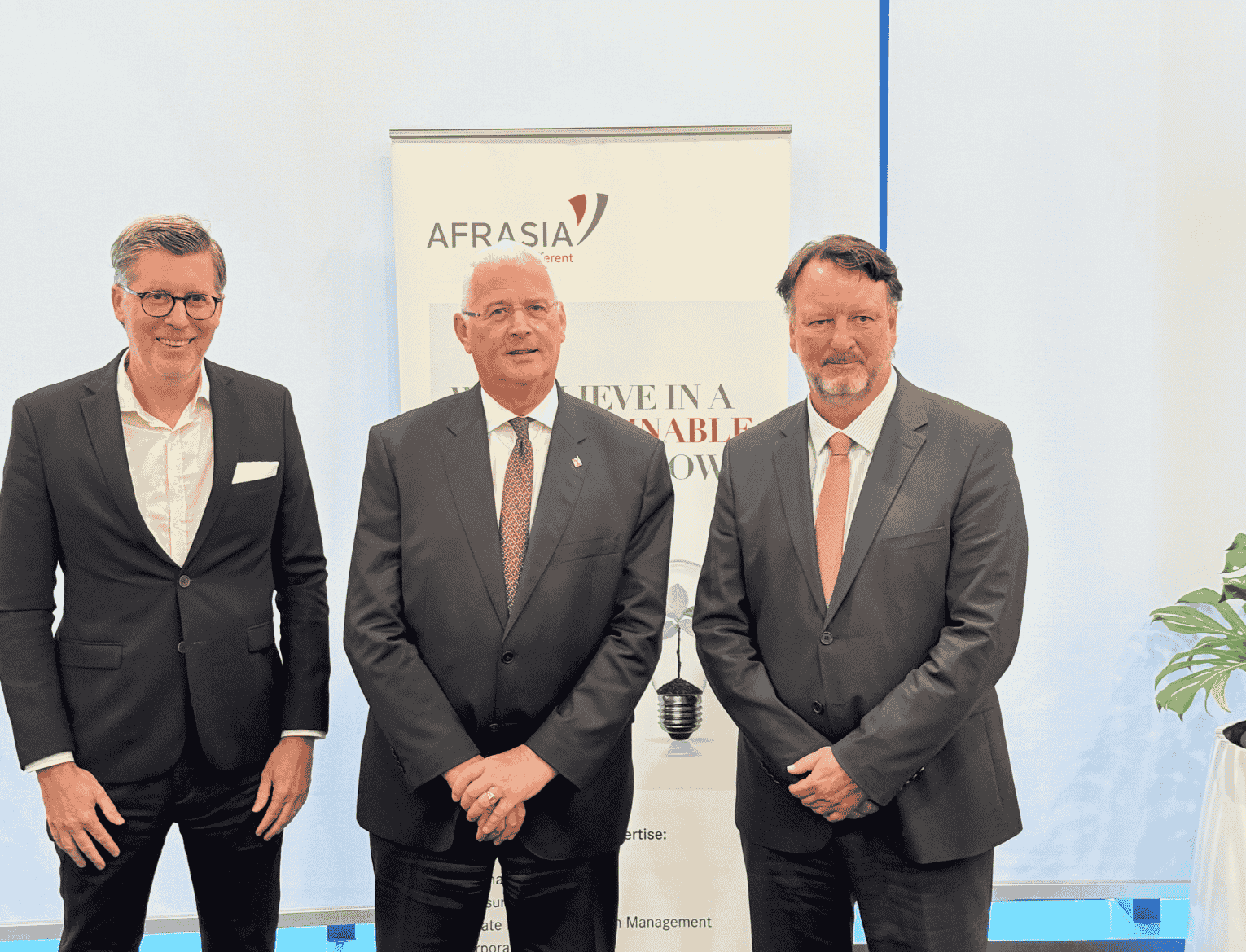
The Chief Executive Officer of The Access Bank UK Ltd, Jamie Simmonds, outlined, on Friday, the strategic vision behind the bank’s acquisition of a 76% controlling stake in AfrAsia Bank. Speaking at AfrAsia’s head office in Port Louis, he described Mauritius as a “missing ingredient” in the group’s global network and highlighted synergies in trade finance, wealth management, and international market expansion, while assuring continuity in AfrAsia’s governance and brand.

The Access Bank UK Ltd finalised the acquisition of a 76% controlling stake in AfrAsia Bank a few weeks ago, marking a significant step in the group’s global expansion strategy. Jamie Simmonds, Chief Executive Officer of The Access Bank UK Ltd, addressed the media at AfrAsia’s head office on Friday, outlining the rationale behind the deal, its strategic implications, and the opportunities it presents for both institutions.

Mauritius is a centre that we’ve long had ambition with, as far as Access Group is concerned. The way that Mauritius has positioned itself over a long number of years as an investment hub leading into Africa says, for Access Group, with its ambitions not to have a banking presence here in Mauritius was a missing ingredient,” he explained. “Mauritius is particularly attractive as a location given it’s got a strong regulator and it is a strong legal system. So, wherever we’re opening in a new environment, we’re looking for those two key attributes,” he explained.

From a strategic perspective, he added, the acquisition fills a key gap in The Access Bank UK’s global network. “What we’ve been constructing over a number of years is a global trade finance capability within Access Group, alongside what we do from a private banking and a wealth management perspective. We needed a strong bank in Mauritius to complete the initial phase of that.

The Access Bank UK, operational for nearly 17 years, has built a trade finance confirming and issuance capability serving sub-Saharan Africa. Its network now spans Dubai, Hong Kong, Malta, and France.

Dubai… connects with Africa, particularly around food security,” Jamie Simmonds said. “Hong Kong acts as our Asia hub, particularly in terms of China’s deep investment and interaction with Africa. Malta provides the ability to look broadly across Europe… and opens up Northern Africa. France picks up trade flows between Francophone Africa and France. What that left us with was a significant gap in Southern Africa in particular. The controlling shareholding that we have acquired in AfrAsia means that we’ve now largely completed that global network that was important to us,” Jamie Simmonds explained.

The acquisition also brings immediate operational benefits. “AfrAsia already has a regulated operation in South Africa. It saves us having to put that structure in place. We’re able, as a trade finance group, to add value into AfrAsia in terms of the trade finance operation… I think the combination of the two will be very powerful, particularly given Mauritius’ positioning when it comes to the inflow of money,” he noted.

The Chief Executive Officer of The Access Bank UK Ltd was clear that AfrAsia will continue to operate “as a bank with its heart and mind in Mauritius. There is no intention for us to change the governance structure. Our role will be to take an active and proactive role within the governance structure through the board of AfrAsia… What we are bringing here is a UK bank taking a controlling interest in one of the leading Mauritian banks.

On branding, he confirmed that “there is no intention for us in the short term to change the brand… we see it as a very strong brand that fits well within the architecture of Access UK and what we’re doing from an international depot.”

Regulatory Approval and Financial Strength

Asked about the approval process from the Bank of Mauritius, Jamie Simmonds noted the rigorous scrutiny involved. “A regulatory process, if it’s too quick, doesn’t give you confidence in the rigour and the approach of the local regulator… Would we have liked it quicker? Yeah, sure… But I can compare it to other jurisdictions where it took us six years. By that count, the Bank of Mauritius was very agile,” he explained.

For the financial year to December 2023, The Access Bank UK reported an operating income of USD 245 million, up from USD 206 million the previous year, with a profit before tax of USD 173 million. Post-tax profit was around USD 110 million. “We’ve shown an increase year on year for the last decade,” Jamie Simmonds pointed out.

On Taxation and Corporate Responsibility

Responding to questions about fiscal measures in Mauritius’ latest budget, Jamie Simmonds stressed the bank’s commitment to the communities it serves. “A banking licence is a privilege, and we need to respect a banking licence in that way… The imperative for us is to run efficient businesses that are above the regulatory requirements, so not just to meet the rulebook, but to operate to a high standard… We will see cycles of the way that tax operates, but key for us is… a sustainable and ethical business model, playing a full part in the community. Then the profits will be there on a sustainable basis, and you take the ebbs and flows when they come from a taxation perspective.”


“This is about long-term value creation, not short-term gains”


Targets and Strategic Focus

Looking ahead, the Chief Executive Officer of The Access Bank UK Ltd emphasised that targets would be set with long-term sustainability in mind. “You can set targets that will give you a really nice return for a year, and then the bank will suffer. Our view is always to have targets that have a key strategic imperative as to the long-term health of the bank.”

He identified two critical success factors: “A strong culture and the best people that are trained in the most effective way. That’s your real competitive advantage… The measurement when it comes to that is critical, and if you get that right… what we should be measuring is how we square up when it comes to the customer experience… The bank should be a quiet enabler… understanding what the requirements of particular customers are, and how we can either make life easier for them, or how we can assist with their ambitions.

Dubai and Digital Banking

On AfrAsia’s expansion into Dubai, Jamie Simmonds sees complementary opportunities. “We’ve been active in Dubai for a decade… Our focus there is very much around trade finance… What AfrAsia are looking to do in terms of Dubai is very much on the wealth management and private banking side… We are pleased to see the ambitions of AfrAsia in Dubai,” he stated.

In terms of digital banking, even though AfrAsia is revamping its internet and mobile banking platforms to enhance user experience, immediate changes will be minimal. “Our initial view is that there’s a format that AfrAsia have. That will continue as is currently planned. The important thing is that we pay respect to the position that AfrAsia has achieved. We’re a long-term investor. Let’s not set a series of short-term objectives that distort the longer strategic benefit,” he explained.

Mauritius’ Growing Role in Africa

Jamie Simmonds sees Mauritius’ role as an African gateway increasing. “You’re seeing a lot of African corporates that are now moving their offshore offices to Mauritius. The likelihood is that this will continue to increase. We shouldn’t lose sight of the strong handshake that there is with India and the opportunities that come with this positioning. I think Mauritius will increasingly move into that space.

IBL’s Endorsement

IBL Ltd, AfrAsia’s former majority shareholder, has retained a passive minority stake. Simmonds called this a strong vote of confidence: “The very fact that they want to keep a minority passive shareholding is an endorsement of their confidence in the governance model that we bring and of the future of the bank and the opportunities that come along.

Jamie Simmonds concluded by stressing the long-term nature of the investment: “This is about long-term value creation, not short-term gains.

Skip to content