Back to Bizweek
SEARCH AND PRESS ENTER
Latest News
“Mauritius can be a credible site for advanced preclinical/clinical research”

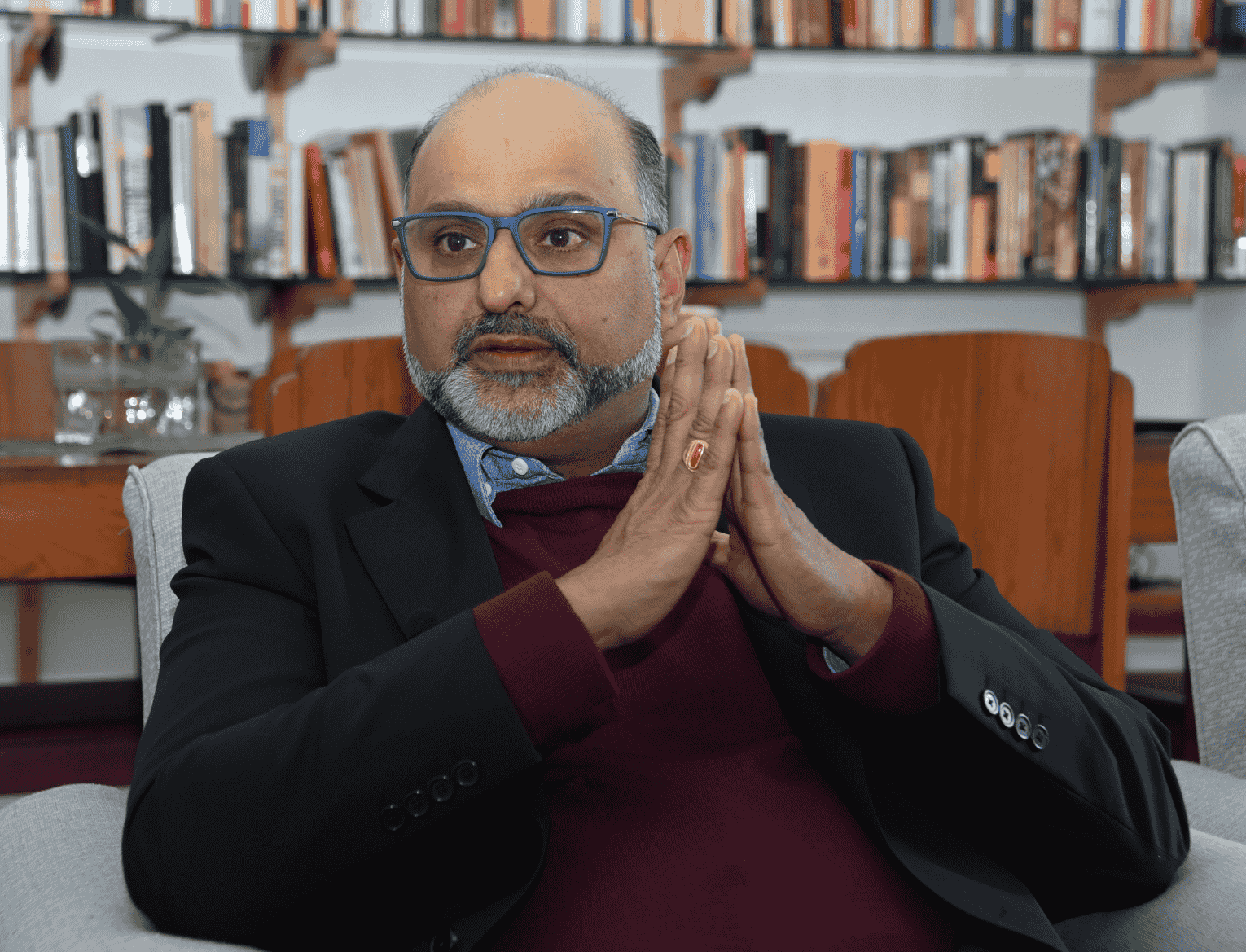
Dr Rattan Gujadhur, Biotechnology Head in the U.S.

  • “With the right infrastructure and legislative framework, we could also become a global hub for preclinical trials.”
  • “Hosting key clinical trials would allow local patients access to innovative therapies.”

I want to see my country grow. I want to see Mauritians return home. But time is moving quickly. Other economies like Rwanda, Botswana, Kenya and Nigeria are getting serious about biotech. We must catch up. Dr Rattan Gujadhur, a Mauritian-born and California-based biotechnology executive, was in Mauritius over the past two weeks and spoke exclusively to Bizweek. In this interview, he sets out why Mauritius must act swiftly to position itself as a credible biotech hub, drawing on local talent, natural assets and global partnerships before the window of opportunity closes.

Rudy Veeramundar

In an op-ed you authored in Bizweek last January, you argued that biotechnology is more than just a support sector—it has the potential to become a full-fledged economic pillar. What makes it a viable strategy for a small island like Mauritius?

To be clear, biotechnology encompasses several sub-sectors: marine biotechnology, waste management technologies, pre-clinical research, clinical trials, and drug manufacturing, including both small molecules and biologics. I consider it a strategic sector because when a country like Mauritius expands its biotech capabilities, the ripple effects are felt across multiple industries and sectors

With a unified strategy, biotech growth in Mauritius could generate employment across all these sectors. While the economy currently relies heavily on tourism and financial services, biotech offers a logical progression. We already have the talent to grow these sub-sectors. We are surrounded by the ocean, have strong agricultural research capabilities—thanks in part to decades of sugarcane cultivation and related R&D—and a small but vibrant Clinical Research Organisation conducting studies. Mauritius also exports animals for preclinical research.

These are already key components. The country offers an ideal socioeconomic environment for biotech development. And what does that mean in practice? Job creation and a broadened revenue base. That was the vision I championed during my time at the Mauritius Institute of Biotechnology Limited (MIBL). It’s why I maintain that biotech is not just a support sector but a dynamic strategic pillar for the economy.

Speaking of MIBL, what was your long-term vision for building a national biotechnology sector?

When I was invited to lead the institute, we began by hosting a high-level conference with the European Union called Africa RISE. Martin Seychell (Editor’s note: Deputy Director-General at the European Commission) attended. The EU conducted a thorough study of the biotech landscape, identifying resource and technology gaps. The idea was to assess Mauritius’s position relative to other African countries like Botswana, Rwanda, South Africa, Kenya, and Nigeria. That benchmarking exercise helped us gain clarity on where we stood.

Following the conference, we drafted a comprehensive long-term plan for the sector. One of the key priorities was strengthening the legal and regulatory framework—especially around pharmaceuticals. While Mauritius already has pharmaceutical legislation, we saw the need to modernise it to attract investment from Western countries, Japan, the US, and Europe.

This included improving compliance standards, audit mechanisms, digitisation of submissions, the turnaround time for application reviews, and the management of both clinical and preclinical trials. It also involved refining the protocols for animal testing—clarifying criteria, establishing ethical standards, and creating robust audit processes for testing sites.

All while ensuring compliance with international norms…

Exactly. We aimed to fully align with EU and U.S. standards, what is known as harmonised legislation. But our goal wasn’t to simply copy existing laws. We wanted to internalise the principles and adapt them to the Mauritian context.

COVID-19 also served as a wake-up call. It exposed the country’s vulnerability when it came to accessing medicine. Vaccine delivery to Mauritius was delayed, causing unnecessary suffering and economic strain. That led the government to seriously consider local manufacturing. Of course, we’re not aiming to compete with India or China in large-scale production—we don’t have that capital base. But we saw opportunities in niche manufacturing, for example, producing antibodies through alternative methods (i.e transgenic animals).

We also explored quick wins in agriculture. One idea was to mitigate the sharp rise in vegetable prices after cyclones by investing in vertical farming under controlled agricultural environments (CEA). This was a core strategy we identified.

Another major area was clinical trials, specifically how Mauritius could host large-scale, phase-free commercial trials for cancer, diabetes, tuberculosis, and hepatitis. We looked at New Zealand as a case study. Two decades ago, they made similar investments and now have a robust biotech ecosystem. Mauritius shares many of the right ingredients to follow a comparable trajectory.

Traditional sectors like textiles are in decline. Could biotechnology integrate with and complement these fading pillars of the economy?

Absolutely. Take Rwanda as an example—a country that went through cataclysmic events socially, years ago. Today, it has a growing biotechnology sector. Everything I’ve mentioned so far demonstrates how biotech contributes meaningfully to economic development. It creates skilled jobs.

If you look at current education trends in Mauritius, most science students gravitate towards computer science, which is fine, as we have a thriving IT sector. But those who study the core sciences—biology, chemistry, physics—often end up in marketing, sales, or leave the country altogether. That’s what I did three decades ago. I left for the United States, completed my PhD, and built a career there. I had always hoped to return to Mauritius, but the opportunities simply didn’t exist.

By creating a viable biotech sector, we can retain our talent. Many highly qualified Mauritians are working abroad. One example is my close friend Dr Shivraj Sohur, now a physician at Harvard. I know many others leading major biotech initiatives in the US and Europe. They’re in touch with me. The diaspora is eager to contribute to Mauritius.

During the Africa RISE conference, several members of the diaspora reached out to say, “You’re on the right track.” But we need genuine political commitment to build this sector.

I don’t want to overuse the Singapore model, but it’s instructive. Singapore has a dedicated science board that supports its biotech strategy. Crucially, the board is structured as a public-private partnership that remains in place regardless of changes in government. It follows a long-term plan—and it works. Major players like Merck, Pfizer, and Gilead have set up operations there, drawn by regulatory stability and policy continuity.

Mauritius should follow that path. The benefits are proven. Personally, I don’t believe we have a choice anymore. Tourism and financial services are important, as is agriculture—sugarcane has long been central to our economy—but we must diversify. It frustrates me that progress is so slow. This must be a national priority.

You’ve spoken about biotech’s applications in medicine, marine research, and agriculture. What would be a “quick win”?

One obvious area is drug development, specifically preclinical trials. Whether we’re developing small molecules or biologics for cancer or other diseases, the regulatory agencies—the FDA or European Medicines Agency—require data on safety and efficacy. That’s where preclinical studies come in. They involve animal models—rats, mice, dogs, or cynomolgus monkeys—as well as computational modelling and chemistry work.

This is a clear opportunity for Mauritius. We’re already a major exporter of cynomolgus monkeys to the United States. So, we have the biological resources. What we need now is a state-of-the-art preclinical research facility. The talent exists locally. International companies are ready to invest. If we build the right infrastructure and legislative framework, we could become a global hub for preclinical trials. This would lay the foundation for everything else to follow: phase one trials, drug development, manufacturing, and advanced clinical research.

Another quick win is to upgrade our clinical trial ecosystem. Yes, some Clinical Research Organisations (CROs) in Mauritius are running support studies, but not the main clinical trials. Why? In many cases, it comes down to the perception that our regulatory framework is not yet at global ICH standards.

Take my experience at a firm that developed a hepatitis B/D treatment—we considered Mauritius but hesitated due to legal and regulatory uncertainty. A more robust, transparent framework could position Mauritius as a credible site for advanced clinical research. This would benefit our population directly. Mauritius faces rising rates of diabetes and cancer. Hosting clinical trials would allow local patients access to innovative therapies, often on an ethical basis.

So yes, these two areas—preclinical trials and clinical trial legislation—could yield immediate results. But it requires public-private collaboration, investment, transparency, and a strong bioethics policy. Global investors need to trust that $5-$10 million trials could be conducted here that could produce robust, compliant, and internationally valid data.

You were recently in Mauritius for two weeks. What came out of that visit?

I met with two ministers, Dr Arvin Boolell and Dr Kaviraj Sukon. I told them the Mauritian diaspora is ready to support. Just reach out—we’re here. Many of us have worked across the globe. During my time at Gilead, I travelled extensively. Name a country—we’ve probably worked there. And yet, it saddens me that Mauritius is not tapping into this global expertise.

I genuinely want to see my country grow. I want to see Mauritians return home to create value. But time is moving quickly. Other economies like Rwanda, Botswana, Kenya, Nigeria and many others in the Africa east/west clusters are getting serious about biotech. We must catch up. Also, we should be positioning ourselves with AMA (African Medicines Agency) to harmonize our legislation across Africa so we can even tap into valuable African talent. The gains are unlimited!

You spoke about the need to enhance our legislation following the Africa RISE conference a couple of years ago. Has there been any progress since then?

That’s a very good question. First, I want to clarify: it’s not that Mauritius has poor legislation. Rather, we identified specific gaps that need to be addressed.

Let me give a concrete example. When we go to a pharmacy and buy medication—can we be 100% certain that those drugs meet international quality standards? Many are imported from countries like China, India, and Egypt. That’s not a criticism of those countries—they produce excellent pharmaceuticals—but the key question is: are these drugs subject to proper compliance audits when they arrive in Mauritius?

In other jurisdictions, regulatory authorities assess the origin of the drugs, audit the manufacturing sites, and verify compliance with global standards—what we refer to as GxP (Good Manufacturing Practice) norms and standards. During the legislative discussions we had back then, one of the main recommendations was to establish a healthcare authority in Mauritius—a regulatory body similar in function to the U.S. FDA. We proposed something like an Independent Licensing Authority (ILA).

The reasoning was simple: there’s a potential conflict of interest if the same ministry is responsible for both developing the health sector and approving drugs. What we need is an independent healthcare regulator—a kind of “mini-FDA”—with proper resources and technical expertise.

Such an authority would also help close other critical gaps: how to audit and certify new labs, how to ensure animal testing meets international welfare norms, how to regulate AI and advanced computational modelling tools in drug development. These are all key issues for an evolving biotech ecosystem.

To be honest, despite the groundwork we laid, I haven’t seen meaningful progress on this front. That’s not to say nothing has been done—but the core institutional reforms have yet to materialise. That said, I remain optimistic. We have the right talent mix in this country to get it done.

And your message now?

My message is simple: just make it happen. Like the Nike slogan, just do it. The benefits are clear and overwhelmingly positive.

I’ve worked in the biotech sector for over 24 years, mostly in California’s Bay Area. I remember the early days there, 25 years ago, when biotech was already booming. Today, it’s on a whole new level. Innovation, venture funding, partnerships—they’ve reached incredible heights. Places like Boston and San Francisco are global hubs for life sciences.

Why can’t we build something on that scale here? I’m passionate about job creation and bringing added value to young people’s lives. Science graduates have an incredible ability to spearhead growth with innovative ideas. That’s what drives me. It’s why I keep coming back and advocating for this vision. I genuinely love this wonderful country, and I believe in its potential.

Mauritius is currently one of the world’s leading exporters of long-tailed macaques for research. Is there still untapped potential in this area of biotechnology?

Absolutely. I know there are opposing views within the country, but here’s the reality: drug development has progressed rapidly, especially with the integration of AI and advanced modelling. That has already reduced animal use. Where 10 animals were once used, now we can achieve the same insights with two. This is already happening, thanks to better data and predictive tools.

That said, animal models are still critically necessary. We need to conduct pharmacodynamic and pharmacological studies to determine whether a drug is both safe and effective.

Is Mauritius well positioned to take this further?

Extremely well positioned. We are already a major exporter of cynomolgus monkeys, but instead of simply exporting them, we could build a preclinical research infrastructure right here in Mauritius.

Imagine establishing state-of-the-art laboratories that operate at global standards—with robust auditing, regulatory compliance, and AI integration. It would be a win-win. Very few countries are as strategically positioned as Mauritius is in this space. There have even been contamination issues with monkey supply from other countries. That hasn’t happened here.

This is what I mean when I say it’s a “slam dunk” opportunity. We just need to play our cards right, communicate the strategy clearly, engage the public transparently, and educate people on what ethical, regulated research actually looks like. It’s not about animal cruelty, it’s one of the most stringently regulated fields globally.

I’ve seen the infrastructure in China. It’s grown tremendously, creating thousands of jobs. Why not replicate that here? Are we going to continue relying only on tourism and financial services to create employment? Or are we ready to recognise the new opportunities that are right in front of us?

For me, the answer is obvious. It’s time.

We understand that China has stopped exporting long-tailed macaques, as it is now using them for its own research. Is that correct?

Exactly. China has recognised the strategic value of conducting preclinical research within its borders. And there’s an additional benefit: when you run drug development in your own country, it sparks domestic innovation. You begin to generate your own ideas and intellectual property. China is making it clear it intends to develop drugs specifically for its domestic market.

Could Mauritius follow that path, developing its own drugs, perhaps from local natural resources?

That’s the dream. Mauritius has access to extraordinary biodiversity, both on land and in the ocean. There are countless compounds in nature waiting to be discovered. Imagine we already have a world-class preclinical laboratory in place. We identify bioactive compounds from marine organisms. We conduct the full preclinical study right here, in Mauritius. Eventually, this could lead to the development of a locally designed, commercially viable ‘Mauritian Made’ drug.

That would be a major milestone. But to get there, we must think big. The opportunity is real, especially given our position as a global supplier of cynomolgus monkeys. We shouldn’t let that advantage go to waste.

Who are the potential investors who could help make biotechnology happen in Mauritius? And how do we attract them?

The U.S. investment ecosystem, particularly in biotech, remains incredibly dynamic. Of course, it faces the occasional shock, policy shifts and tariff changes, but top-tier venture capital funds remain active. These funds are staffed by leading scientists—chemists, biologists who are constantly looking for the next opportunity.

I’ve shared a list of such investors with Minister Sukon. If Mauritius can put forward strong, credible biotech projects, why wouldn’t they be interested? These funds don’t only look at the U.S. They’re scanning globally.

The key is how we present ourselves. We need to position Mauritius as a niche destination for biotech investment. As Martin Seychell and I once discussed, an institution like MIBL should have U.S. and EU representatives. We should organise biotech roadshows abroad. There’s a pool of funding we haven’t even begun to tap.

And it’s not just public funds. Thailand, for instance, recently launched a biologics manufacturing unit, backed by international partners, including MIT. Why can’t we do that too?

Let’s think beyond our borders. Why not collaborate with leading U.S. institutions like Harvard, MIT, Stanford on drug discovery or technology development? These initiatives can be funded through joint public-private mechanisms.

And let’s not forget Mauritian investors. I know for a fact that some major corporate players have shown interest. When I was at MIBL, they told me so directly. We need more public-private partnerships like MC Biotech.

As I often say, drawing on spiritual philosophy, no effort means no reward. There’s a Sanskrit word, vichāra, which means ‘seeking’ or ‘inquiry.’ If we don’t actively seek, we’ll remain stagnant. In spiritual terms, we become tamasic, inactive, heavy, inert. We must stay alert, driven, and collaborative.

Just look at what we’ve achieved in the hospitality sector. Our hotels are truly world-class. Are you telling me we don’t have the talent to build a biotech sector to the same level? Of course we do. But we’re moving too slowly.

Would a thriving biotech sector help reduce pharmaceutical prices in Mauritius—or is that a separate issue?

It’s absolutely connected. One of the projects I initiated at MIBL was about local production. We knew we couldn’t compete with global giants on scale, but we could explore niche alternatives. Some drugs can be packaged in Mauritius.

That’s how MC Biotech was born. It was the first time Mauritius had its own drug manufacturing and packaging operations. We even ran an audit to bring the facility up to standard. I was proud. It was a first for the country.

Imagine what it would mean if we expanded local production: e-drugs, diabetes medication, cancer treatments, antihypertensives… If we meet international standards, we can manufacture for our own population, and maybe for export.

There are also new technologies worth exploring. For example, transgenic animals can now produce antibodies in their milk (Bio Milk). These can then be extracted and used to make vaccines. It sounds simple, but it’s not, it requires serious investment.

Still, these kinds of innovations are what can truly reduce drug prices over time. And we’ve already taken the first step. MC Biotech proves it can be done. So why not promote more local businesses in this space?

Do you have a final message?

Yes. I came to Mauritius this time and had excellent meetings with government officials. I remain deeply committed to supporting the country. I’m in contact with key members of the Mauritian scientific diaspora, and we all share the same goal: to see preclinical development take off in a big way here.

That includes setting up a national lab and a wider lab network. That’s the future, in our view.

On the legislative side, I’ve even offered direct support to the Ministry of Tertiary Education. Let’s raise our pharmaceutical laws to international standards. I’ve delivered this message to the current government as well.

I feel I’ve done my part. Now it’s their turn to take the next step.


About Dr Rattan Gujadhur

Dr Rattan Gujadhur is a graduate in Chemistry at the London Metropolitan University. He returned to Mauritius in the early 1990s, worked briefly at Shell Mauritius Limited, under Mr Francis Piat, then left for the US in 1999 after being awarded a teaching assistantship to read for a PhD in Chemistry at the University of Massachusetts. He graduated with a PhD in 2003, after publishing several well-known and well-cited publications in the field of organic catalysis. He discovered a soluble Cu(I) catalyst for which he was awarded a prominent international patent. He completed a diploma at the University of Cambridge, and also studied for an MBA at Gilead/Golden Gate University in San Francisco, and at UC Irvine, with leadership courses in healthcare. Since 2003, he has worked mostly in the US bio-pharmaceutical industry, and at premier companies such as Gilead, Otsuka and CV Therapeutics. He was part of the product development team that progressed the Hepatitis C blockbuster drug Harvoni to commercialization and had the opportunity to work in multinational teams in Japan, Korea, India and China. In 2014/2015, he was part of a Gilead delegation who met the then President of Mauritius (Mrs Fakim) to discuss distribution of the Hep C drug locally. He currently works as Vice President of Chemistry Manufacturing and Controls at Bluejay Therapeutics, in the Bay Area, California.


Skip to content