Back to Bizweek
SEARCH AND PRESS ENTER
Latest News
“Laws alone are not enough, they must be implemented effectively to benefit local communities

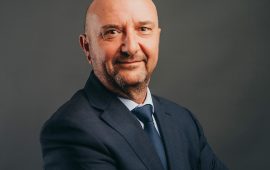
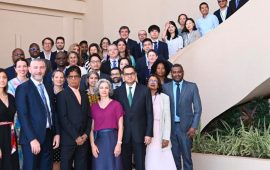
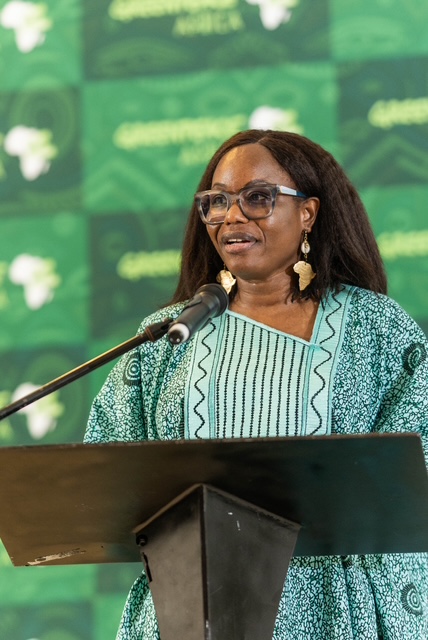
Greenpeace Africa launched its Mauritius office on 14 January 2026, reinforcing its mission to root “African consciousness” in environmental protection. For Dr. Oulie Keita, Executive Director the organisation, the new office, in collaboration with the Mauritian government,  will empower local communities to shape priorities in ocean and climate protection, while advancing its 2025-2030 strategy focused on climate justice, ecosystem preservation, and polluter accountability.

Shareenah Kalla

With your focus on “African consciousness” and dismantling exploitative systems, how does the launch of the Mauritius office empower local communities to lead their own environmental agenda?

Greenpeace was founded more than 50 years ago, in 1971, by Europeans. Africa’s involvement initially came through consultations: teams visited the DRC to examine the Congo Basin, particularly the timber trade supplying European furniture markets, and they went to Cameroon for similar work. These were short-term missions, without a permanent presence.

Around 20 years ago, we began considering a permanent presence – not “Greenpeace in Africa,” but “Greenpeace Africa.” Today, we have established regional offices across five sub-Saharan regions.

Anchoring African consciousness means protecting the environment through African approaches. Our cultures and traditions differ greatly from those in Europe. When we speak of climate change, what does it mean for Africans? How do we ensure it is not perceived as a distant European ideology imposed on the continent?

We engaged in deep strategic reflection with communities across Africa, asking: “What does ocean protection mean to you?” The responses shaped our approach. It is not about Western terminology, but about grounding our work in African realities – protecting forests, oceans, food security, and addressing climate change – while integrating African culture, traditions, and methods into our operations.

Tell us more about Greenpeace Africa’s physical presence in Mauritius.

Wednesday, 14thJanuary 2026 marks the launch of our office. Since 2020, we have been working to secure international support for Mauritius. We have engaged with fishing communities, recruited local volunteers and staff, and now established a permanent office. Our team will lead campaigns and collaborate with civil society to ensure community priorities are central to ocean and climate protection.

We are currently recruiting local staff. Several Mauritians have already joined, and about fifty volunteers have been trained. Recruitment continues. However, our priorities will be defined by Mauritians themselves. We expect consultations with communities to identify the most urgent areas where Greenpeace should begin its work.

Greenpeace Africa often calls for “Justice, not Charity.” What specific policy changes do you expect from the Mauritian government following this launch?

Mauritius is a particularly progressive country in Africa regarding ocean protection. Your nation has enacted strong legislation. But laws alone are not enough; they must be implemented effectively to benefit local communities.

Take the 2020 oil spill (MV Wakashio). We raised international awareness to rally support for Mauritius, because the disaster was not the fault of Mauritians, but it affected communities, public health, and food security. We advocated strongly for international assistance.

What we want are policies that safeguard Mauritius. Another oil spill could happen – God forbid – but if it does, is Mauritius prepared to ensure its people are not penalized or forced to bear the costs? A comprehensive oil spill strategy, backed by international collaboration, would be invaluable. Those responsible must pay, not just for the immediate cleanup, but for the long-term impacts on livelihoods and biodiversity.


“Climate impacts are not caused by Africa or Mauritius, yet we bear the consequences.”


Mauritius positions itself as a leader in the blue economy. How can we ensure that sustainable development does not become a cover for industrial overexploitation of our waters? Mauritius cannot achieve this alone. As I discussed recently with the Minister of Environment, Honourable Bhagwan, sustainable development requires collaboration with regional bodies such as the African Union and SADC. The Indian Ocean is critical, not only for this region, but globally. What happens here affects the entire continent. Building strong ties with these organizations will help Mauritius maintain its leadership in the blue economy.

You have presented your 2025-2030 strategy. What are its main pillars?

We have just begun this process. Our previous three-year strategy concluded in 2024, and now we are entering a new dynamic for 2025-2030, as global circumstances are constantly evolving.

Our first pillar is climate justice. We will focus on energy, environmental protection, and renewable energy. The goal is to provide energy to communities while empowering young people to find sustainable solutions beyond carbon dependency. Electricity is essential for education, health, and work, but it must be delivered sustainably. We want to harness solar, wind, and water to transform energy systems and meet the needs of populations in a climate-friendly way.

The second pillar is environmental and ocean protection. This includes safeguarding forests, such as the Congo Basin, which is vital for Africa and the world. We advocate for international support to enable Africa to protect these ecosystems. Ocean protection is equally critical.

Finally, the third pillar is the accountability of polluters. We want polluters to pay for the damage they cause. Climate impacts are not caused by Africa or Mauritius, yet we bear the consequences. At the international level, we push for mechanisms to ensure that those responsible cover the costs of damages affecting vulnerable populations.

Will Greenpeace Africa also support the government in achieving its renewable energy goals?

Absolutely. We want African governments to implement the commitments they made at the UN and internationally. We advocate for concrete implementation of legislation and help governments amplify their voices globally to secure resources. Governments often have the will but lack the means. That is why we put pressure on international actors – the EU, the UN, and donors – to support African governments in addressing climate change, which they did not cause.

When you say “polluters,” you mean companies?

Yes, companies, oil companies, textile industries, and chemical processing firms, among others.

So, is legislation being discussed?

We are working with the government and communities to determine priorities. We are not here to replace, but to support them. Our role is to strengthen what matters most to Mauritians

Skip to content