Back to Bizweek
SEARCH AND PRESS ENTER
Latest News

“It’s time to convert promises into implementation”

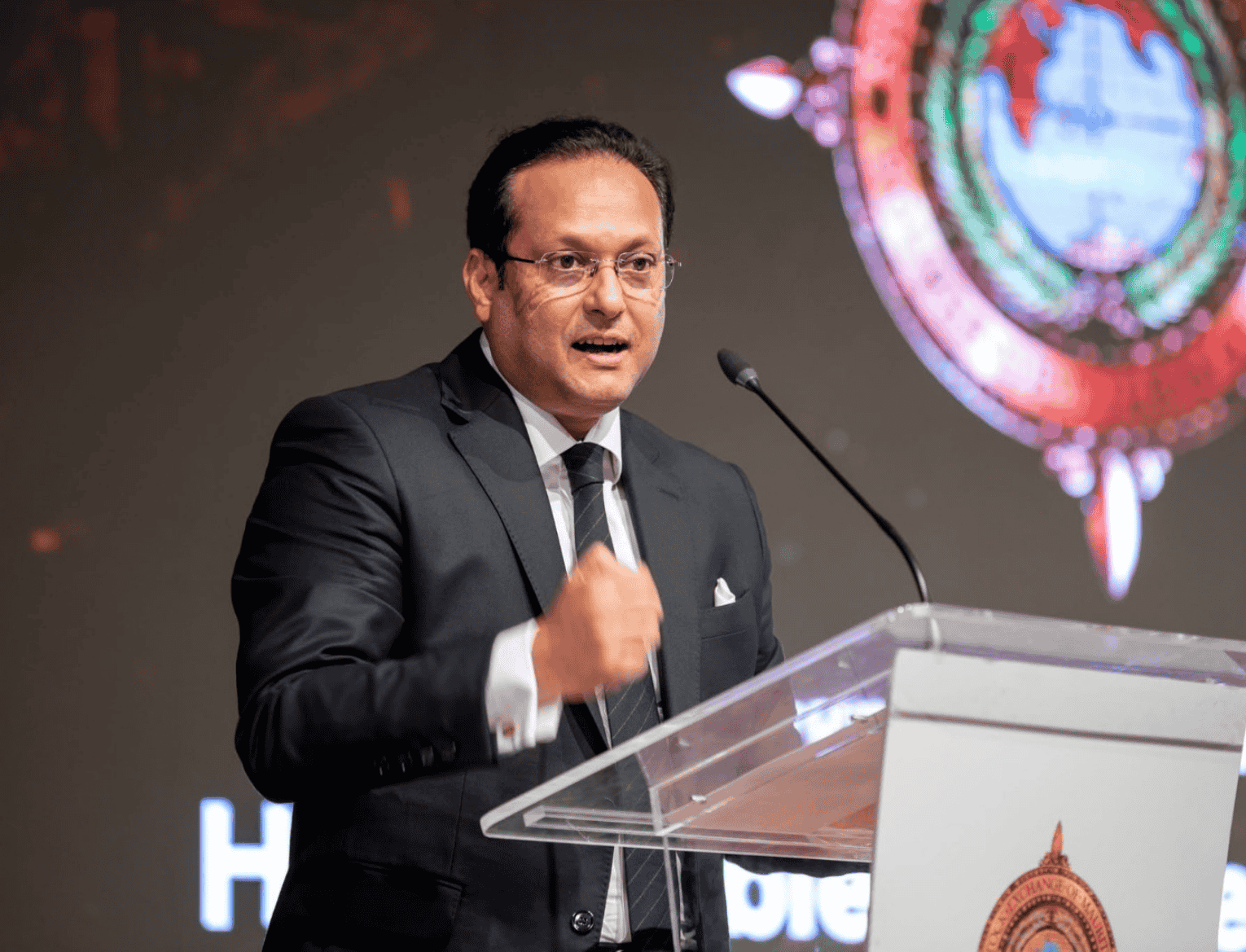
Dhaneshwar Damry, Junior Minister of Finance

  • “Unacceptable that only two projects have materialized out of PPP over the past 10 years or so.”
  • “Will the private sector ever invest in water in Mauritius? I think they should and they could.”

Mauritius must urgently rethink how it mobilises private capital for national development, says Junior Minister of Finance Dhaneshwar Damry. Judging it unacceptable that only two projects have materialized out of PPP over the past 10 years or so,” he argues that renewed public-private collaboration is essential, including in critical sectors such as water management. Will the private sector ever invest in water in Mauritius? I think they should and they could,” the Junior Minister said. As part of this shift, the Climate Finance Unit will convene the country’s first Climate Finance Forum in 2026, bringing project developers and investors together to accelerate green and blue financing.

Rudy Veeramundar

Junior Minister of Finance Dhaneshwar Damry delivered a wide-ranging address at the Gen AI Summit for Sustainable Development 2025, held on 4 December at the Atal Bihari Vajpayee Institute of Public Service and Innovation in Côte d’Or. Speaking one year after being elected to serve government, he set the tone early by sharing a personal commitment that has shaped his approach: “It’s been one year in government and my resolution to myself is that it’s time to convert pledges into actions.” According to him, the government has restored a climate of confidence in the economy, but the next stage requires execution. As he put it, “It’s time to convert promises into implementation, and this is what I want to be done in climate finance.”

At the centre of this shift is the newly established Climate Finance Unit (CFU) within the Ministry of Finance. Junior Minister Damry explained that the CFU responds to a structural disconnect that has long hindered climate investment in Mauritius. Many public and private entities present projects in renewable energy, coastal erosion, waste management, or the electrification of transport, yet still face barriers to financing.

At the same time, financial institutions insist they have capital available but cannot deploy it because of insufficiently bankable proposals. The Minister laid it out succinctly: “You have two opposites and the role of the Climate Finance Unit is to bridge that gap.” Addressing the stereotype of the banker reluctant to support high-risk ventures, he remarked that “usually, bankers give you an umbrella when it’s sunny, but take the umbrella away when it’s raining, but even bankers are keeping the umbrella on while it’s raining in the case of climate projects,” a sign that the financial sector is prepared to play its part as Mauritius advances its climate agenda.

One of the CFU’s flagship initiatives will be the country’s first Climate Finance Forum, scheduled for the first quarter of next year. This platform, he said, will serve “to match projects with investment,” offering a practical demonstration of what he calls converting pledges into actions. The initiative will not be limited to large-scale undertakings. Indeed, Dhaneshwar Damry stressed the importance of enabling smaller businesses to participate in the green transition, noting that the Climate Finance Unit is also working on a green bank ecosystem for SMEs to participate in the green-blue projects of Mauritius.”

The Minister then turned to what he described as one of Mauritius’s most pressing and underperforming policy areas: public-private partnerships (PPPs). With fiscal space constrained and climate needs expanding, PPPs, alongside Build-Operate-Transfer (BOT) and Build-Own-Operate (BOO) structures, have become central to the government’s financing strategy.  Dhaneshwar Damry described them as “the best way that we can invite private sector participation in climate projects.” His diagnosis of the country’s performance was blunt. After asking the audience how many PPP projects had materialised in Mauritius, he delivered the answer: “Let me tell you that we have only two projects. One is the parking lot at the Ebene Cyber City and the other one is the Victoria Urban Terminal. These are the only two projects that have materialized out of PPP over the past 10 years or so. Unacceptable!”

For Dhaneshwar Damry, this gap between discussion and delivery is no longer tolerable. He announced that “we are going to make PPP more efficient so that private sector participation in climate projects can be more impactful.” He argued that climate projects will mark a historic shift in investor behaviour, stating that “normally, the private sector, they don’t participate in social impact projects. But climate will be the first social impact projects that the private sector will participate in in Mauritius.” If successful, this could create momentum for private-sector involvement in other areas traditionally considered the exclusive responsibility of government.

To illustrate this, Junior Minister Damry referred to the significant water challenges in his own constituency of Moka/Quartier Militaire. While private capital has historically invested in renewable energy, he asked whether similar interest could extend to water infrastructure: “Will the private sector ever invest in water in Mauritius? I think they should and they could.” He emphasised, however, that the answer depends entirely on the robustness of the reformed PPP, BOT and BOO frameworks, noting that “only time will tell if our PPP model… will be strong enough to incentivise the private sector to invest in high impact projects like water.”

Beyond financing structures, Dhaneshwar Damry framed environmental stewardship as a national obligation shared across society. “A clean environment and clean oceans are not a choice. It’s our right and it’s the legacy that we want to leave to the next generations of this country and the planet,” he said. Given the scale of the challenge, government alone cannot carry the burden: “We need the private sector and we need every human being to do that.”


“The Climate Finance Unit will host the Climate Finance Forum in 2026”


On public finances, Junior Minister Damry reminded the audience that “the most important currency in any economy or public finances is trust.” Trust, he argued, stems from macroeconomic stability and good governance, supported by “domestic revenue mobilization and stranded debt repayment.” These, he argued, form the foundation upon which climate finance, PPPs and digital innovation must be built.

Turning to the financial services sector, Junior Minister Damry noted its importance to employment, innovation and economic inclusiveness. With financial services projected to grow by 4% this year, and a 4.6% performance recorded in the previous quarter, he argued that this sector can continue to generate new opportunities. He emphasised two areas poised to shape the future of Mauritius’ International Financial Centre: climate finance and digital finance enhanced by artificial intelligence. In his words, “Mauritius is the only investment-grade financial centre in sub-Saharan Africa… Mauritius is a leader in climate finance in the global south.” That status positions the country to support climate financing needs not just domestically, but across Africa, SIDS and the broader Global South.

He then turned to tokenisation, an emerging area of digital finance. Globally, he observed, the world counts 17 billion tokens, whereas Africa accounts for only 117 million, despite representing 20% of the global population. This disparity reflects both the continent’s digital underdevelopment and its future potential. Dhaneshwar Damry did not shy away from forward-looking speculation, asking: “Will there be a time when tokens will be backed by climate assets?” and concluding: “Sooner than later, we will see tokenization in climate finance also, and Mauritius should be ready for that.” He added that the country is already developing essential digital datasets covering oceans, drains, water and renewable assets—tools that will support the integration of AI and digital finance into climate planning.

Junior Minister Damry ended with a personal reflection aimed especially at students and young professionals. “I believe in myself… I believe that I will make things happen. I believe that I can be the change that I want to see in the world,” he said. He went on to share three rules that guide him: “Always focus on the goal. Don’t focus on obstacles,” “Work hard. There is no substitute to working hard,” and “Believe in yourself.” To this, he added that “I believe in you and you should also believe in yourself.”

Concluding his remarks, Dhaneshwar Damry recalled the government’s long-term national objectives: “We have two main aspirations. Quality jobs for everyone and inclusive development.” To him, inclusiveness encompasses better healthcare, better education, reduction in poverty, freedom from drugs, but also clean environment and clean oceans.”

Skip to content