Back to Bizweek
SEARCH AND PRESS ENTER
Latest News

“Corrupt people don’t eat alone!”

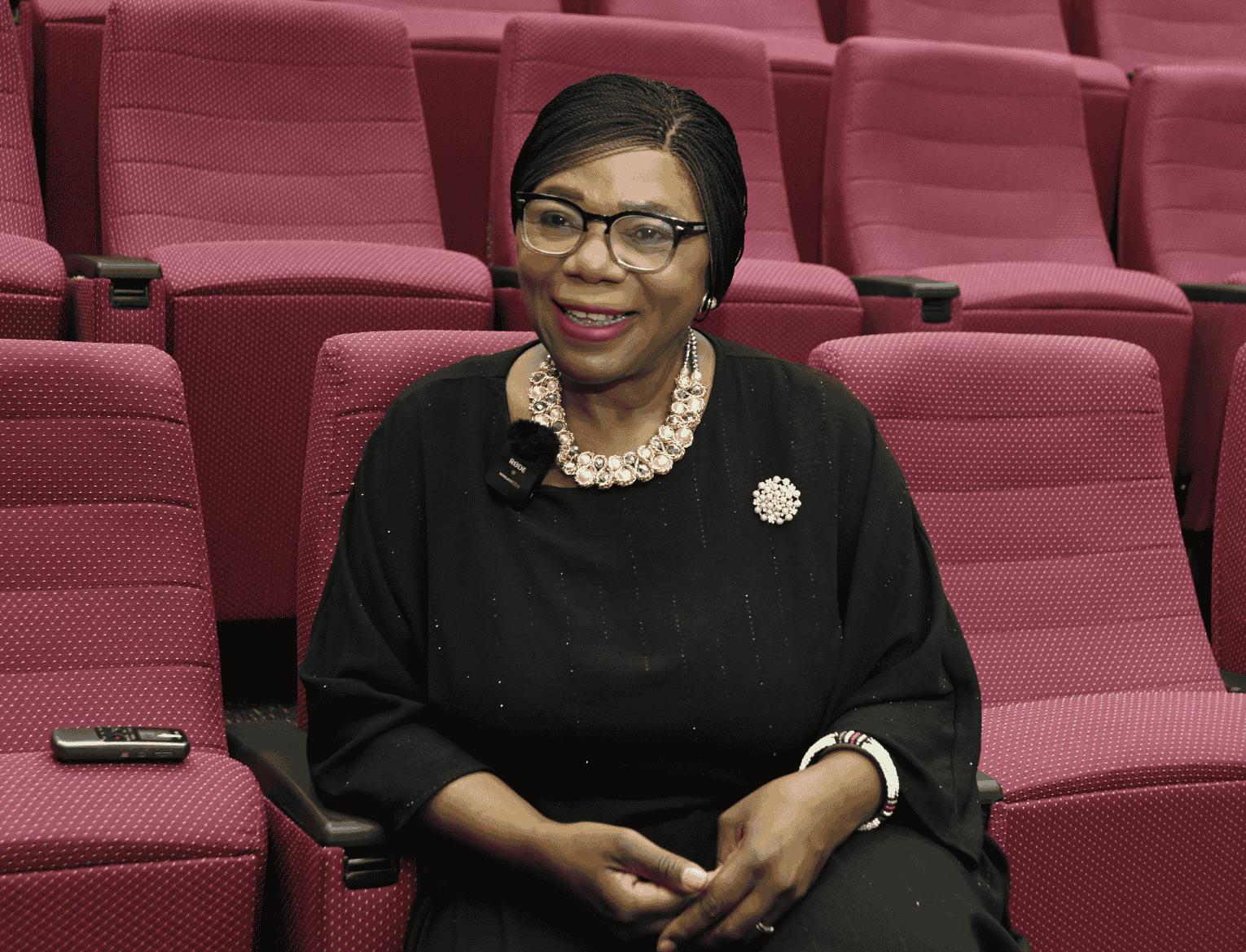
Professor Thuli Madonsela, Former Public Prosecutor of South Africa

Former South African Public Prosecutor Professor Thuli Madonsela was the chief guest of the Financial Crimes Commission (FCC) for the Anti-Corruption Week 2025. In an interview with Bizweek, she issued a blunt warning on weak governance and the need to hold every link in the corruption chain accountable.

Interview: Rudy Veeramundar | Photos: Manoj Nawoor

During the panel discussion yesterday (last Wednesday), you said that “corrupt people don’t eat alone.” I would like to hear more on this.

It’s been my experience that corrupt people don’t eat alone. They, of course, take the bulk of what they loot, but they make sure that there are many other people who get some of the crumbs or some of the slices. This is to make sure that should you try to hold them accountable, they enjoy impunity, because many people don’t want to see them go down.

The whole chain is very well structured. These people who don’t eat alone make sure that you form part of this corrupt system. Am I right?

Absolutely. If you take state capture, for example in South Africa, you find that there’s corruption at the level of politicians. They go down to corrupting DGs, staff members, ordinary supply chain managers and finance officers, but they also make sure they give a little bit to communities. So, they will establish a scholarship, they will give food parcels to older persons, and it looks good to the media when you have this event where food parcels are being given to older persons. That creates social capital for them in communities. Not only will these people probably defend them in a court of law, but I think more importantly, it’s to make sure that they don’t lose face. I think one of the antidotes to corruption is feeling ashamed. You’re not going to feel ashamed when people think you’re a hero.


“We get appointed mostly because we know politicians.”


This reminds us very much of Medellin and Escobar. Even though he was doing ill-service to the community, and he was killing people through drug trafficking and outright murders, he was treated as some kind of hero because he was giving something back to society. 

It’s a universal truth. I think an antidote to that is to make sure that we don’t only cultivate clean governance. We must make sure that clean governance translates to good governance, because good governance includes equity, making sure that people’s lives are improved. If we have good governance, the money is used and accounted for properly. No one makes personal benefit.

But also, part of it has to do with the level of education. That fact, for example, that hospitals are crowded is partly because money has been looted. The fact that we don’t have enough schools – or that you have to get a good education through a private school – is because we don’t have enough money to invest in public education. We have to make sure that it’s not just good governance, but that we educate people about the cost of corruption.

You also said that public officers who are down in the chain don’t necessarily want to form part of a corrupt system but they are afraid. They sign documents or agreements because of fear. 

That’s true in many investigations I did. A lot of people, in fact the majority of the junior officials, don’t get the money and they’re not part of that network of corruption. They just do it purely out of deference, because they’ve seen the guy or woman who didn’t comply who either got fired for a flimsy reason or they got moved. Then you don’t get any career opportunities.


“There’s an unwritten mafia rule: Don’t touch family, don’t bite the hand that fed you.”


What advice would you give public officers and those who are in the same situation?

I would say to them that there’s a cost, whether you sign or you don’t sign. The difference is that when you sign, the cost is delayed, but it ends up being more expensive. When the matter gets blown by the media, your name goes in as well. In South Africa, everyone in the value chain gets held accountable. The auditor general is not going to say that the person who pays is only the guy at the top. Anybody who signed, knowing that it was wrong to sign, gets a disciplinary hearing. Worst, the auditor general in the courts have now said they’ve got to pay back part of the money that was lost.

Usually, in that supply chain, many of them are young and they think about their children and their wife, who are going to be disrupted if they lose their job. But I would say to them that at any given stage, they will be disrupted anyway. I always say that if people are doing the wrong things, don’t give them a reason to kick you out by saying you’re disrespectful. Just kindly say, “I’m sorry, but because of this rule, I’m unable to sign it.

I also am addressing the young people who are in finance. Finance officials are an endangered species globally, and now they’re being targeted because they’re now called enablers. But you’re an unwilling enabler, and it’s an ethical dilemma. Do I refuse and then I get kicked out, and my wife, my children, and everyone goes to the streets? Or do I play ball and then later, in the future, we will be on the front page of the media and will lose the job? I would say to them to do the right thing, but to do it strategically.

Find people who you trust, who are seeing similar things so that maybe you can act together. You know that African saying: “If you want to go fast, go alone. If you want to go far, go together.” If there’s an anonymous way of reporting, do report. Unfortunately, if you’re the only one exposed to that decision, they will discover that it’s you who did it. But it’s better to do a proper protected disclosure because then everyone knows that you are now a protected person. For example, in the case of Deokaran (Editor’s note: Babita Deokaran, a civil servant whistleblower murdered in South Africa), they didn’t do a protected disclosure. The rest of the world only got to know that she did a report after she died. But, had she reported to the Public Protector or to the Auditor General, they would probably have thought twice about killing her, because they would have known that the Auditor General and the Public Protector were watching.

Let’s now come to another interesting statement you made during the panel discussion. I quote: “We get appointed mostly because we know politicians.

That’s true. True for me as well.


“Don’t meet politicians alone. Always have two or so members of your team along with you.”


Can you tell us more about this?

Well, in most democracies, even the most evolved democracies like the US, UK, etc., you don’t just go into public office purely because you’re smart, hardworking and have a good track record. There are often other considerations when people have to make a decision. It’s not always the case, but in most cases, especially for posts such as that of Public Protector, where it concerns the appointment of a single individual, it’s usually somebody they (the politicians) already know. The sad thing that I discovered as a Public Protector is that there’s an unwritten mafia rule. The godfather rule: You don’t touch family.

You don’t touch family?

Yes. Like President Zuma said to me, “you do your job excellently, please do this job without fear or favour.” He said, “when I was not president and I had to complain to the Public Protector, I found solace in the fact that the Public Protector did not look at who I was, just at what the issue was, and judged in my favour even though I was not president.

So that’s the open room. But the unwritten rule is that you don’t bite the hand that fed you. In some of these positions, the president doesn’t really have a role in appointing you. In South Africa, it’s just an administrative appointment. The public nominates, parliament selects, and the president only has one name. But still, the president is usually the head of the political party. So, you wouldn’t have gotten that position if the political party was not prepared to give it to you.

The most important thing which I did – and thank God I did – is to meet these parties up front. I’ve said to young people who came after me, “meet them up front and say, ‘here are the rules. I will not be able to do favours for everyone, for anyone. The system is open. My investigation has a standard operating protocol. We have to look at what happened.’ What will happen if there’s a discrepancy? You can’t hide it. The courts have said that you’ve got to look for the evidence everywhere. Secondly, you can’t dig information, use some of it and hide some of it. The court is going to fine you.

In fact, the good thing in South Africa now is that if you’re a Public Prosecutor, you get 100% information through digging, but you only use 80%, the court is going to hit you with a personal court order. If you made a finding that is insufficient, they would say that it is inadequate because you chose to use only part of the information.

So, it’s good to talk to the political parties, to say, “guys, I’m a straitjacket. There’s no way I can do anything for anybody.” Also, never meet them alone. That’s one thing I do as a Public Prosecutor. I never meet them alone. Because then, they know that whatever they say to me, and whatever I say to them, there are two or three other people who heard it.


“In any fight that you have, your Head of State must be very clear on where they stand.”


When you say, “don’t meet them alone,” you mean “don’t meet the politicians alone,” right?

Yes, don’t meet politicians alone. Always have two or so members of your team along with you, because that makes it difficult for them to ask you for anything. Secondly, a reasonable person would know that it’s impossible for you to cut them a favour without corrupting your team. So, it insulates you.


“The current president in South Africa seems ineffective, but the one thing he’s done well is non-interference.”


You said that both corruption and drug trafficking are murdering democracy.

They certainly are. Drug trafficking is targeting our young people. It used to target the middle class, but these days it targets ordinary people. Ordinary people are even more vulnerable because they don’t have as much supervision time with their children as other people have. Then you have that generation that is clueless, that is a burden to the system. These are the children who then can’t work.

Drug trafficking also leads to corruption because the drug traffickers have to buy the law enforcement agencies to make sure that there’s impunity. Even if corruption is not linked to drug trafficking, it is still murdering democracy through the distortion of decision-making. There’s dishonest decision-making wherever there is corruption. There’s injustice wherever there is corruption. There’s loss of money that should be improving people’s lives wherever there is corruption. Therefore, corruption brings disrespect for democracy, disrespect for institutions, lack of trust for anything that has to do with organized governance. Corruption brings lawlessness, because people eventually think, “I can’t trust the system, I will do it myself.” That leads to violence.

What I didn’t say, though, is that injustice also makes it easier for people to be corrupt, because in poor communities, when people find that it’s difficult to rise up through good deeds, through honesty, because of structural inequality, then people resort to corruption. One of the reasons why Nordic countries are less corrupt is that there isn’t a push for shortcuts because the system tends to allow those who work hard to go up.


“Corruption has become a pandemic!”


According to your experience and your professional journey, have new legislations in South Africa been a deterrent to corruption? Has there been less corruption since?

I think so. If you look at Transparency International’s Corruption Perception Index, South Africa is number seven, which means we’re doing well. The laws are very strict about independence of the media, and therefore the media will break the story. It doesn’t matter who is involved – the president, chief of police, minister – it doesn’t matter. The media will break the story. They call themselves investigative journalists. They’re going to dig, they’re going to put it out there, and then the system is forced to deal with it. That requires action to be taken, and action is going to be taken.

The current president in South Africa seems ineffective, but the one thing he’s done well is non-interference. He’s the only president so far, other than President Nelson Mandela, who has not been accused of having told any law enforcement agency what to do.


“The youth are impatient about corruption.”


There is one burning subject in Mauritius, and it is the FATF assessment…

Yes.

We know that for the next assessment, it will be about implementation, how many assets have been seized, what sentencing has been done. At the same time, we know that court cases take time…


“The laws are very strict about independence of the media in South Africa.”


They usually take time.

How do we get there?

Well, I would say that institutions such as the FCC in Mauritius and the Public Protector in South Africa have got dual powers. They’ve got the forfeiture of assets and the criminal side. So, they will hit corruption in two ways. I believe that the freezing of assets can happen speedily. That’s a wonderful part of it. People should celebrate that, because once the assets have been frozen, the ability to buy your way out is now constrained. It really has been constrained.

Then, there is the criminal justice system. What do we do with the criminal justice system? I honestly would say that I don’t know how huge corruption is in Mauritius, but in South Africa, we needed an anti-corruption court. We’ve seen, for example, that where we have these special agencies such as the SIU and the Anti-Crimes Commission, it works better. If they take these matters and it then goes to the normal court system, it gets delayed. Corruption has become a pandemic!

The speed issue is not at the commission level only. It is also at the court level. In South Africa, for example, a lot of these cases on state capture are stuck at the level of the courts because this and that is happening.

When we had the World Cup in South Africa, we had a special court for World Cup matters, and it worked.


“Drug trafficking also leads to corruption because the drug traffickers have to buy the law enforcement agencies to make sure that there’s impunity.”


You had a special court for World Cup matters?

For World Cup matters, yes. If we take the money that has been seized after we’ve won the cases and create a special court, we will not need commissions of inquiries. We will have money to create special courts.


“Corruption brings lawlessness, because people eventually think, ‘I can’t trust the system, I will do it myself.’ That leads to violence.”


We mostly talk about public sector corruption, and less, if at all, about private sector corruption. Can we have your views on that?

We don’t often talk about private sector corruption. If we only focus on the State, there’s two things that happen. Number one, the corrupt and the corruptors who are in the private sector don’t lose face, because in this bilateral crime, we’re always blaming the people on the other side. Some go around in their Lamborghinis, in their palatial homes, without anybody really forcing them to lose face. They’re able to attend funerals and weddings and get celebrated when they are actually looters. So, we need to look at that.

Secondly, corruption in the private sector also increases the cost of living. The fact is that in the procurement for the private sector, there is also corruption that increases the prices of products and services.


“When people find that it’s difficult to rise up because of structural inequality, they resort to corruption.”


What are your key takeaways as chief guest for the anti-corruption week?

The first thing is that it’s amazing that the FCC, being a young organization, has done this much between last year and this year. The second thing has been the importance of transparency, because this whole event has been about letting everyone know what’s happening so that people can collaborate, but if they have to criticise, they criticise from a knowledge of what’s happening. And if there’s a way to unlock things, they can do that. The most important thing that I’m going to take away is that fighting corruption is a team sport.

There’s just no way the FCC or any of the anti-crime agencies are going to succeed alone. You need the media, the FCC, the prosecution, communication specialists, and we need to leverage IT as much as possible.


“The Nordic countries are less corrupt because the system allows those who work hard to go up.”


In any fight that you have, your Head of State must be very clear on where they stand, because in the future, when things go wrong, you can always go back and say, “the president gave me this mandate.” That’s what happened to me with President Zuma. And then people realize that the president can’t criticize you directly, because it was his clear mandate.

The best thing for me, and that’s something I’m taking back home, was the forum of the FCC for the young people, because the youth are impatient about corruption. They feel left behind as a social group, and many of them come from underprivileged families and communities. They’ve worked hard to study or they’ve worked hard to start businesses and they find that the system, through corruption, is working against them. In other countries, they become people who have their own political ambitions. So, they get the young people to revolt, and then you get regime change. But, without really changing the fundamentals of good governance and ensuring that the complaints they heard about a fair system change, it becomes untenable even after these revolutions. Look at what happened in Libya and in the Arab Spring countries.


“Educate people on the cost of corruption.”


So, I like this initiative of the FCC because it’s opening space to get the young people to work with the system. You can change the system, you can co-create the future by saying, “yes, we understand that things have to work well for you to do well, but you have the power to influence the system.

Skip to content