

Back to Bizweek
SEARCH AND PRESS ENTER
Latest News

- 18/09/2023
La MCCI Business School lance l’Innovation Imperative
Leverage agile frameworks to provide a robust synopsis for high level overviews. Iterative approaches to corporate strategy foster collaborative thinking to further the overall value proposition. Organically grow the holistic world view of disruptive innovation

- 29/10/2023
Mauritius may be small in size but it is a leading economic force
UK Prime Minister’s Trade Envoy to Mauritius was back in the island in the first week of October, and answered our questions on important topics such as the Strategic Trade Partnership (STP) with Mauritius, the
- 01/11/2023
Le Groupe CIEL affiche une augmentation de ses bénéfices pour le premier trimestre
Le Groupe CIEL affiche une augmentation de ses bénéfices pour le premier trimestre Le Groupe CIEL a annoncé des bénéfices en hausse pour le premier trimestre clos le 30 septembre 2023. Le chiffre d’affaires s’est
- 01/11/2023
Ensuring efficient market conduct supervision has been at the forefront of the Bank of Mauritius’ agenda”
Ensuring efficient market conduct supervision has been at the forefront of the Bank of Mauritius agenda On 22-23 November 2023, FinCoNet (the International Financial Consumer Protection Organisation) held its Annual General Meeting (AGM), hosted by

- 13/11/2023
Embracing sustainability is not an option, but a business need!
Embracing sustainability is not an option, but a business need! A conference focused on sustainability and climate change is scheduled to take place in Mauritius from October 26 to 27. The CEO of Spaanda, the

- 16/11/2023
Le Groupe Newrest inaugure une unité de production à Maurice
Leverage agile frameworks to provide a robust synopsis for high level overviews. Iterative approaches to corporate strategy foster collaborative thinking to further the overall value proposition. Organically grow the holistic world view of disruptive innovation

- 17/11/2023
La MCB sacrée Best Private Bank in Mauritius 2023
Leverage agile frameworks to provide a robust synopsis for high level overviews. Iterative approaches to corporate strategy foster collaborative thinking to further the overall value proposition. Organically grow the holistic world view of disruptive innovation

- 18/11/2023
AI is changing the game
AI is changing the game As AI continues to revolutionize various sectors, it’s crucial to stay updated with its advancements. The pervasiveness of AI is undeniable and it carries immense potential. However, it also presents
- 29/06/2026
- Cover Story
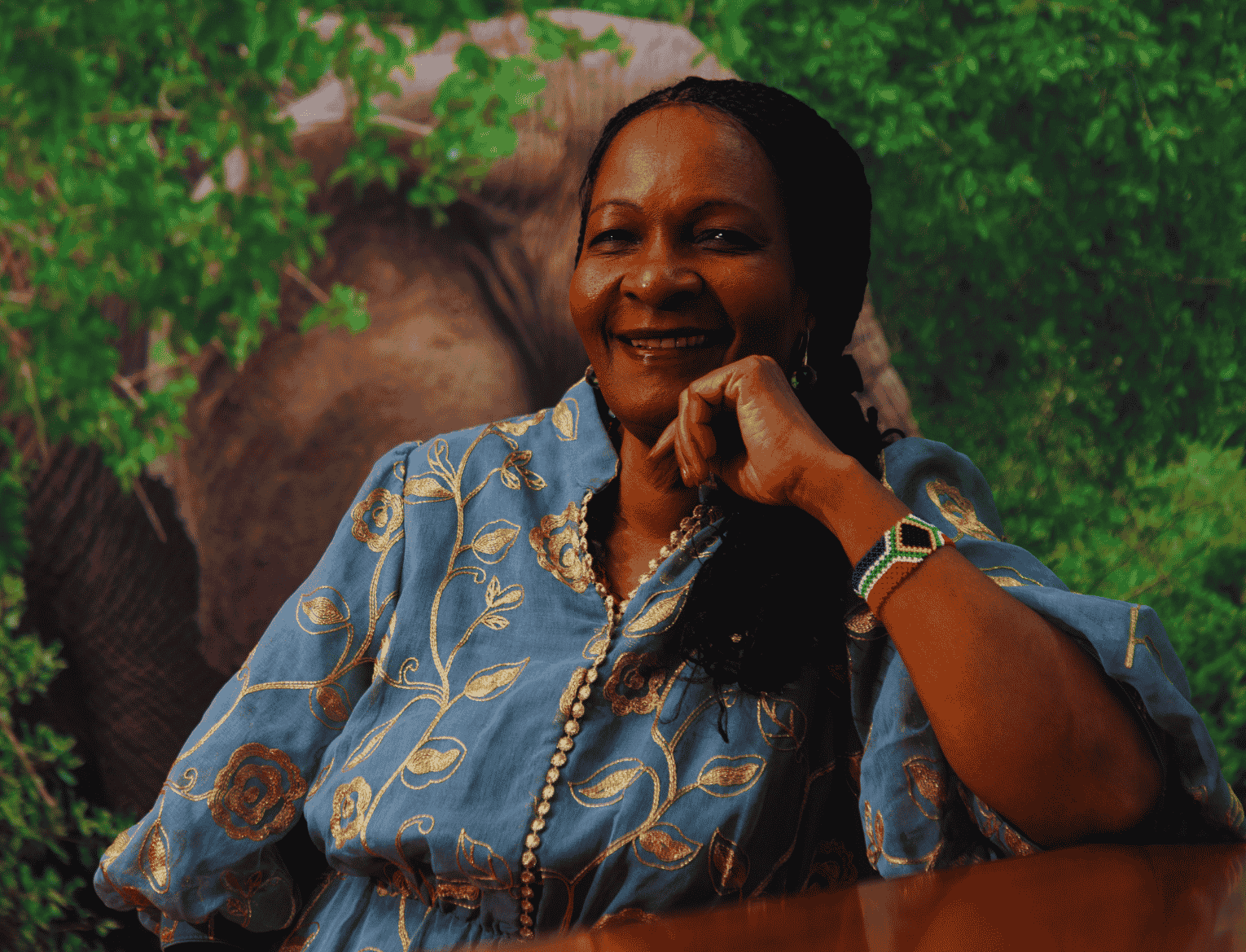
Dr Hlamalani Nelly Manzini, High Commissioner of South Africa to Mauritius
She arrived in Mauritius aboard a cargo flight at the height of the Covid-19 pandemic. She leaves after helping restore one of Southern Africa’s most important bilateral relationships. In her final interview before retiring from the diplomatic service, granted exclusively to Bizweek, South Africa’s High Commissioner to Mauritius, Dr Hlamalani Nelly Manzini, reflects on diplomacy under pressure, rebuilding trust, deepening economic ties and the lessons she will carry from Mauritius throughout the rest of her life.
Rudy Veeramundar and Klyven Veeramundar
As you approach the end of your tenure as High Commissioner to Mauritius, how would you describe this chapter of your diplomatic journey?
Well, as this curtain closes, I am very anxious to hear the reactions of Mauritians about my stay with them. But it is also a time for reflection. You sit down and think about the first day when you stepped into Mauritius.
For me, it was remarkable because I arrived during the Covid period on a cargo flight and had to go through all those protocols before ultimately finding myself where I am today. It took some time to get to know people because of the lockdowns and so on. So, you reflect on all those things. As somebody who has been schooled in proper planning, implementation, monitoring and evaluation from my previous work in government, when you are confronted with Covid-19, you do not know where to start. It means you must plan as you go on a daily basis.
“There was a point where I genuinely thought: ‘My God, I am going to be recalled, and the relationship between Mauritius and South Africa will collapse on my watch.’”
Those are the reflections one needs to capture. But, most importantly, one asks: was your posting in Mauritius worth it? Did ordinary Mauritians feel any difference because you were posted here? For me, those are the deeper questions on which I am reflecting. And when you have done your best, you must leave what you could not do for others to continue.
These are the times when one reflects on that. There are also lessons learned from working with ambassadors from other countries, working with the Government of Mauritius and, most importantly, working with ordinary Mauritians.
As I close this chapter, I want to make sure that all the loose ends are properly tied up, so that I can say: this is the package I brought to Mauritius, and I leave it intact.
As you said, you came to Mauritius during very difficult times. The world was facing tremendous challenges, and accepting a posting away from home during that period cannot have been an obvious decision.
It was indeed a testing moment for me because it was not only a question of not knowing where I was going, but also of understanding the risks I was taking. Particularly because I was bringing along my disabled daughter. I could not leave her at home, so I had to bring her to Mauritius. Taking that risk was a tall order.
But I trusted my Creator to pave the way for me. I also trusted the Mauritian Government. They arranged for me to get on a cargo flight to come here. It meant a great deal because it signalled that Mauritius valued its relationship with South Africa.
I took confidence from all of those things.
I would imagine that it was the first time you travelled on a cargo flight.
Yes, it was my first experience on a cargo flight, where you are alone in that cubicle while everything else around you is cargo. It was quite an experience. But I was happy that, when I arrived here, I received such a warm welcome from everyone that I almost forgot I had travelled on a cargo flight.
What would you say were the most defining moments during your time in Mauritius?
My defining moment was actually the banning of flights from Southern Africa. I was new in Mauritius, Covid was threatening everybody, including South Africans living here, and then there was the decision to suspend flights from Southern Africa. Unfortunately, all the countries grouped together in that decision used South Africa as a departure point for Mauritius. Now, in a diplomatic environment, what do you do?
I was new in Mauritius. We already had Covid. Then came this additional problem. South Africans in Mauritius were angry and impatient. They were asking why they could not return home and how they were expected to take longer routes back to South Africa. At the same time, families in South Africa were anxiously waiting for their relatives who were stranded here. You are new in the environment, and you have to manage the situation.
There were louder and louder voices among South Africans in Mauritius asking why we should not terminate the relationship with Mauritius, without necessarily understanding the deeper reasons behind the decision. That sentiment grew stronger every day. I became concerned that, if a decision were taken for me to return home, I would have to pack my bags, board another cargo flight or take a complicated route through several countries, and that would be the end of my posting in Mauritius.
Fortunately, I maintained good communication with the Prime Minister in order to understand the reasons behind the decision. I then tried to convey that message as diplomatically as possible to South Africans in Mauritius and to my government back home.
President Ramaphosa is also a diplomat in his own right. He said: “No, we are not going to terminate the relationship. This is an emergency for all of us.”
He decided instead to use diplomatic channels to understand why Mauritius had acted in that way, especially because Omicron was not a South African virus. South Africans were the ones who discovered it. So, the question was: why were we being punished?
That ultimately led to President Ramaphosa sending an envoy to Mauritius to meet the Prime Minister.
In the end, the feeling was that perhaps the Prime Minister could simply have picked up the phone beforehand and informed President Ramaphosa that this was going to happen, so that he could prepare his own public accordingly. However, through diplomatic negotiations and engagement, the matter was resolved.
The responsibility then fell on me to rebuild the relationship with Mauritius.
So that became a lesson in the power of diplomacy?
Absolutely. That experience taught me how diplomatic channels can resolve major problems. It is a lesson I will carry with me throughout my life. Today, when people speak about diplomatic solutions to geopolitical challenges, I understand exactly where that comes from. Diplomacy can resolve problems. That was my defining moment.
This chapter of your career is a case study in the importance of diplomacy.
I learned it firsthand. There was a point where I genuinely thought: “My God, I am going to be recalled, and the relationship between Mauritius and South Africa will collapse on my watch.” I became extremely anxious. But through diplomatic communication and negotiation, a way forward emerged.
“The Mauritian economic miracle is one of the reasons why prestigious South African universities regularly send MBA students to Mauritius on exposure visits.”
Today, we are good friends again. My task was to rebuild trust and strengthen the relationship, and I believe that effort has been successful. I am now smiling and saying to my successor: “You will be received warmly in Mauritius because of the groundwork that has been done to improve relations.”
Can you tell us a bit about your journey before coming to Mauritius?
I have been in public administration throughout my life, starting with the management of the smallest health unit in South Africa, then progressing to the management of a provincial health department and, ultimately, becoming the administrator of an entire province with a population of about 5.6 million people at the time. In that role, I oversaw all programmes and activities across the province.
Thereafter, the Department of International Relations approached me and said: “You have managed the risks of an entire province; come and do risk management for the Department.” That is how I eventually found myself being posted abroad.
Would it be correct to say that public administration is a difficult profession?
It is a difficult profession because you are positioned between the people and the politicians. When politicians are frustrated, it comes to you. When communities are frustrated, it also comes to you. You are sandwiched in between. But I became accustomed to that environment and learned how to avoid situations where tensions arise between politicians and communities.
How would you assess the evolution of bilateral relations between South Africa and Mauritius over the past years?
For me, the relationship between South Africa and Mauritius has grown tremendously. Before I arrived, my predecessor left in 2019, and there was no High Commissioner between 2019 and 2020. When I arrived, I had to return to South Africa to fetch my daughter, but I was then caught in the lockdown. I only managed to return to Mauritius in 2021. So, for two to three years, the relationship was not as active as it should have been.
Back to square one?
Yes, back to square one. We had to start rebuilding the relationship from scratch. When I look back at what we have achieved, I believe the relationship has deepened tremendously, particularly in terms of trust.
You will remember that trust was damaged by the banning of flights. We then had years of work ahead of us to rebuild that trust. Today, I am very confident that the level of trust is such that the Prime Minister can pick up the phone and speak directly with President Ramaphosa at any time. Likewise, the Minister of Foreign Affairs can casually call his counterpart in South Africa and matters will move forward. Both leaders are very fond of Mauritius. In fact, some of their private holidays are spent here.
For me, another indicator of the strengthening relationship is the increasing level of South African investment in Mauritius. South Africans have confidence in investing their money here, and that confidence continues to grow. The growth has been significant enough to support a thriving South African Chamber of Commerce and Industry in Mauritius, which plays an important role in nurturing relationships with new investors coming to the island.
Trade has also improved considerably, which I will discuss later. For me, these are all signs of a growing relationship. However, perhaps the most important achievement was the signing of the General Cooperation Agreement. That agreement did not exist previously, despite the longstanding relationship between our countries. Once such a document is in place, it means the relationship has matured sufficiently to be formalised and cemented in writing. It provides a framework through which diplomatic relations and Memoranda of Understanding can be properly channelled.
For me, the signing of the General Cooperation Agreement is a clear indication of the maturity of the relationship between South Africa and Mauritius. Overall, I believe the relationship has deepened significantly.
Much to your satisfaction…
Yes.
Where have you observed the most tangible progress? In trade, investment, or elsewhere?
Above and beyond trust, I would say the greatest progress has been in investment. The number of South African companies investing in Mauritius has increased from approximately 100-105 to close to 200 today, including both large corporations and smaller businesses. The number has almost doubled. For me, that demonstrates that South Africans continue to view Mauritius as an attractive investment destination.
Trade has also grown. South Africa consistently remains Mauritius’ second-largest trading partner after the European Union, or France, depending on the measurement used. The challenge is that, in absolute terms, the values appear relatively small because Mauritius is a small country while South Africa is a large economy. When viewed proportionally, however, trade between the two countries continues to grow steadily.
Another important area is education. A significant number of Mauritian students study in South Africa, while we currently have approximately 80 South African students studying in Mauritius. When I first arrived, there were virtually no South African students here. We have grown that student population. For me, that is significant because it demonstrates that South Africans recognise value in Mauritian educational institutions. Despite the many educational opportunities available in South Africa, students are choosing Mauritius as a place where they can learn and develop. That is another useful indicator of the strength of the relationship between our countries.
The South African Chamber of Commerce in Mauritius is very active. Its members regularly interact with the local business community. I imagine that has been very encouraging for you.
It has been very encouraging. I attend almost all of their events. In fact, that is where we met. What impresses me most is the number of people attending these events, including representatives from other chambers of commerce. The level of interaction taking place is remarkable. The message is simple: business is business, so let us do business together.
Mauritius offers a unique geographic location and many other advantages. It is also a safe and stable environment. Another interesting development is the growing number of non-South Africans who wish to join the South African Chamber of Commerce in Mauritius. That number continues to increase.
South Africa is a diverse country with a complex history. You may still encounter one or two individuals whose attitudes remain rooted in the past, while many others have embraced change and moved forward. You find that same diversity reflected within the Chamber itself.
According to you, what role has Mauritius played in South Africa’s broader engagement strategy within the Indian Ocean?
Firstly, the mere fact that Mauritius agreed to host the Indian Ocean Rim Association (IORA) sends a strong signal that the country is genuinely committed to bringing together the nations of the Indian Ocean region.
What is even more significant is that the idea behind IORA originated with a South African, Nelson Mandela, and Mauritius immediately accepted the responsibility of hosting it. For me, that means a great deal in terms of Mauritius helping to unite countries around the Indian Ocean.
Mauritius, small as people may think it is, is taken very seriously internationally because of what is often referred to as the “Mauritian economic miracle.” In South Africa, that economic miracle is studied very closely. It is one of the reasons why prestigious South African universities regularly send MBA students to Mauritius on exposure visits.
The central question is always: How did Mauritius achieve this transformation? What happened? How were things organised in such a way that the country moved from its previous circumstances to become a recognised success story within such a relatively short period?
For many South Africans, Mauritius serves as a flagship example of economic development. It is also important because those MBA students return home carrying the lessons they have learned. The seed is planted and continues to grow. That is one of the reasons Mauritius has played such an important role in South Africa’s engagement strategy.
Another concept that is sometimes underestimated is the model of investing into Africa through Mauritius. The country has created a platform through which international investors can establish themselves in Mauritius and then use it as a gateway for investments across Africa. It is a unique and innovative concept.
For me, it is something quite remarkable. Even though Mauritius is a small country, its influence is felt in multilateral institutions. A sovereign state remains a sovereign state, regardless of its size. When Mauritius raises its hand in international forums, that hand carries the same weight as those of the other 195 countries represented there. For me, that is extremely important.
We have already touched on trade and investment, but would you like to add anything on that matter?
What I can add is that, when I arrived, trade had been severely disrupted by Covid-19. We had to rebuild. Today, I am both happy and proud that trade, investment and economic activity have largely recovered from the effects of the pandemic.
In many respects, we are now approaching pre-Covid levels. Trade between our countries stood at approximately R9.7 billion and has now reached around R15.7 billion. For me, that represents a significant improvement, particularly given the circumstances following Covid.
The same applies to investment. As I indicated earlier, South African investors have continued to invest in Mauritius despite the disruptions caused by the pandemic. They have moved beyond Covid and have continued expanding their investments here.
For me, that is quite remarkable. The tourism sector has also recovered strongly. We have almost returned to the number of South African tourists visiting Mauritius before Covid. You will also have noticed that the number of flights between South Africa and Mauritius has increased from two to four.
For me, these are all indicators that something positive is happening between our two countries.
Where would you most like to see future progress? Would it be in financial services, ICT, the ocean economy, or other sectors?
For me, the greatest opportunities remain in areas that are still underexploited, particularly the ocean economy. South Africa borders both the Atlantic Ocean and the Indian Ocean. The country’s experience in the blue economy is extensive because it deals with a wide variety of marine environments, ranging from cold-water to warmer-water ecosystems.
If Mauritius can partner more closely with South Africa and benefit from the technological advances that have been made in this field, it can achieve remarkable results. That is one area where I believe we need to do much more.
The second area is financial services. The model Mauritius has developed to attract financial services headquarters is highly impressive. South Africa also has a significant financial services sector, but Mauritius has approached the sector differently.
If the strengths of both systems could be combined, particularly at the ecosystem level, we could create something very powerful. Rather than competing against one another, we should be complementing each other, because our approaches are different. That creates opportunities for mutually beneficial partnerships.
South Africa is also encouraging its businesses to invest internationally. You cannot place all your eggs in one basket and expect growth to continue indefinitely. Many South African companies have already established themselves in Mauritius. The innovations they gain here can be shared with South Africa, just as South African expertise can contribute to Mauritius. That exchange benefits both countries.
Another promising area is advanced information and communication technologies. Today, both Mauritius and South Africa are investing heavily in fields such as artificial intelligence. If the two countries can align their efforts and collaborate in this space, they could produce something truly remarkable. Both countries already have programmes in place. Combining those strengths could lead to exceptional outcomes.
How can we better leverage regional frameworks such as SADC and the African Continental Free Trade Area (AfCFTA)?
Regional frameworks are extremely important because they expand the reach of both South Africa and Mauritius in terms of trade, investment and economic activity. These frameworks allow countries to benefit from incentives, preferential tariffs and other advantages. Participation also creates opportunities for learning and cooperation among member states.
When it comes to the African Continental Free Trade Area, I am not sure whether we fully appreciate its transformative potential. Africa has the ability to take intra-African trade to an entirely different level. The continent is rich in resources. Sixty-five per cent of the world’s arable land is found in Africa. The question is: where is the technology needed to fully utilise that resource?
Mauritius should not see itself as confined to the island. Too often, people say: “We are an island nation; we cannot do much.” I disagree. Mauritius should engage actively with Africa and make use of the opportunities available through agreements such as AfCFTA. There is land across Africa that can be utilised to support food production and economic development.
Africa is also rich in minerals. I often ask why there are not more Mauritian companies holding mining licences in South Africa or elsewhere on the continent. Those opportunities exist. If Mauritius wants to maximise value-added manufacturing, for example in jewellery production, then secure access to raw materials becomes increasingly important. At some point, simply importing raw materials may no longer be sufficient. Ownership of the means of production becomes critical. This is the moment when such opportunities are still available. Countries and businesses should position themselves now in order to secure future supply chains.
As Africans, we must support one another. What I have should be accessible to you, and what you have should be accessible to me. That is how true continental integration can be achieved.
How do you see the role of Small Island Developing States (SIDS), such as Mauritius, within the African economic landscape?
In this regard, I often hear people referring to small islands as being particularly vulnerable to climate change, external shocks and other challenges. That is true.
However, the experience that small islands gain from dealing with these challenges is something that larger countries can learn from and utilise on a much broader scale. Mauritius has had to confront many of these issues directly and develop practical solutions. Those solutions can often be adapted and applied elsewhere.
As I have already indicated, small island states carry the same diplomatic weight as larger countries. Their voice matters in international forums. In addition, Mauritius has developed considerable expertise in areas such as the blue economy and maritime governance. Those experiences are highly valuable because they are based on practical implementation rather than theory.
There is much that larger countries can learn from small island states. Another important point is that small islands are often able to pioneer innovation more rapidly. Because they are smaller and more manageable environments, new ideas can be tested, refined and implemented more easily.
Once those innovations mature, they can then be exported to larger countries. In that sense, Mauritius can serve as an incubation platform for ideas and solutions that can benefit Africa as a whole. When a country develops and incubates successful innovations, it also retains the intellectual property associated with them. That is an important advantage.
Small island states are also particularly effective in supporting small and medium-sized enterprises. In larger economies, export opportunities are often dominated by major corporations. In smaller markets such as Mauritius, SMEs can thrive because they do not necessarily require very large volumes to succeed. A smaller producer can satisfy market demand and build a sustainable business.
What do you see as the main challenges and opportunities for regional integration in Southern and Eastern Africa?
Let me start with the challenges. The primary challenge remains infrastructure development. Many countries simply do not have the infrastructure required to support regional integration effectively. Developing that infrastructure is a major undertaking, and member states often disagree on questions such as who should fund projects, who should lead them and how responsibilities should be shared.
This challenge is further compounded by funding constraints and rising levels of foreign debt. Many smaller countries are struggling under substantial debt burdens. As a result, very little money remains available for infrastructure development. Governments are often forced to focus on immediate priorities such as feeding their populations rather than investing in long-term infrastructure projects that would stimulate economic growth.
Even when funding is available, many countries lack the technical capacity needed to utilise those resources efficiently. There may not be enough engineers, planners or technical specialists to implement projects effectively.
Political instability also presents a major challenge. Whenever instability emerges in a country, infrastructure development tends to suffer. Resources are diverted elsewhere, priorities change and development projects are delayed or abandoned.
These are some of the principal challenges we face.
And what opportunities do you see?
Opportunities certainly exist. If infrastructure is lacking, that itself creates an investment opportunity. Private companies can participate in infrastructure development as part of broader investment projects. In that sense, infrastructure represents both a challenge and an opportunity. The need is there, and therefore the opportunity is there as well.
How can African countries strengthen collaboration in addressing shared challenges such as climate change, food security and the energy transition?
We can strengthen collaboration through strategic partnerships. Take food security as an example. Mauritius has limited land available for large-scale agricultural production. However, there are vast areas of fertile land elsewhere on the African continent. Why not establish strategic partnerships that allow those resources to be utilised for mutual benefit? That is one possibility.
A second area is cross-border infrastructure development. We should not wait indefinitely for a single actor to build infrastructure across entire regions. One country can build a section of a road, another country can continue from there, and so on. Through that type of partnership, it is entirely possible to create major continental infrastructure projects. For example, one could imagine completing a transport corridor from Cape Town to Cairo using such an approach. Countries can each contribute their part.
Another important issue is policy alignment. Too often, countries focus exclusively on their own national interests when developing policies. While that is understandable, it sometimes overlooks the reality that no country exists in isolation. We are neighbours. What one country does inevitably affects another. If policies were better aligned across countries, many challenges could be addressed more effectively. Policy coordination would create a more integrated and efficient regional environment.
Collective bargaining is another powerful tool. When countries negotiate individually, their influence may be limited. When they negotiate collectively, their bargaining power increases substantially. For example, when tariff-related issues arise internationally, a collective African position could provide greater leverage. Rather than approaching negotiations separately, countries could present a unified proposal and advocate for mutually beneficial outcomes. That approach would strengthen Africa’s voice considerably.
Unfortunately, we are not making full use of collective bargaining at present.
Another area where collaboration is essential is digital integration. Each country is currently developing its own digital systems and frameworks. If those systems were harmonised, it would create enormous benefits.
Let me give you an example. South Africa faces challenges related to illegal immigration and associated criminal activity. When individuals move across borders without proper documentation, tracking them becomes extremely difficult.
However, if neighbouring countries had integrated digital systems, it would become much easier to identify individuals and share information when necessary. Digital integration therefore has significant implications not only for economic development, but also for security and governance.
For me, this is an area that deserves much greater attention.
South Africa has often been regarded as a pioneer in technological advancement, whether in healthcare or other sectors. Would you agree?
Yes. South Africa has a strong track record in innovation and technological development across a number of sectors. This experience can be leveraged further through partnerships with countries such as Mauritius. The opportunities are substantial, particularly when technology is combined with regional cooperation and knowledge sharing.
Beyond formal diplomacy, how important are cultural exchanges and people-to-people relations in strengthening ties between countries?
In South Africa, we have a concept known as the “people’s contract.” The idea behind the people’s contract is that citizens should participate in decision-making processes and implementation programmes, and that governments should listen to their views and concerns.
For me, this principle remains equally important in diplomacy. When serving in Mauritius, I had to listen carefully to what Mauritians were saying about South Africa. I had to understand their concerns, their expectations and the issues they felt strongly about.
Those perspectives should then be taken into account when developing policies, agreements and Memoranda of Understanding between governments. That is why people-to-people relations are so important.
It was for this reason, for example, that we organised programmes bringing together elderly citizens so that they could interact, share experiences and learn from one another. If such initiatives continue, the people’s contract will continue to grow, and ordinary citizens will develop a better understanding of diplomacy and how it benefits them directly.
Public diplomacy programmes also play an important role. Whether it is Nelson Mandela Day, Heritage Day or the commemoration of Indentured Labourers Day, these initiatives help ordinary people feel that they are part of a shared history and have shared values.
Do these initiatives have a lasting impact?
Certainly. One of the most important is the relationship between Le Morne and Robben Island. That programme helps preserve the shared history of our two countries. It reminds us where we come from and the experiences that have shaped both our nations. That is extremely powerful. In addition, institutions such as the Nelson Mandela Centre for African Culture play a very important role in strengthening ties between our countries.
Over the years, we have also organised numerous cultural exchange programmes. We have brought groups such as Ladysmith Black Mambazo, the Soweto Gospel Choir and participants in the Granny Soccer Match to Mauritius. Today, young people and children are also travelling to South Africa to interact with their counterparts and share experiences.
For me, these programmes have a lasting impact because they invest in future generations. When young people engage with one another, they develop relationships that can endure for decades.
What has been the most rewarding, and perhaps the most challenging, aspect of serving in Mauritius?
The most challenging aspect was serving as a diplomat without access to development funds. Many diplomats from European countries arrive with substantial development budgets that can be used to support projects and programmes.
From an African perspective, that is often not possible. South Africa must use much of its available resources to deal with the challenges associated with migration and economic pressures at home.
To address some of these issues, South Africa established the African Renaissance Fund. The purpose of the Fund is to identify the root causes that drive migration into South Africa and then support development projects in those countries to address those challenges directly.
Mauritius, however, does not fall into the category of countries that would typically qualify for that type of assistance. As a result, one focuses primarily on diplomatic work at the political, economic and people-to-people levels rather than on development funding.
That does not mean that cooperation cannot take place. Skills and expertise can also be shared. As we speak, a team appointed by South Africa’s Auditor-General is working with the Auditor-General’s Office in Mauritius to strengthen governance and improve the management of public funds. Through this type of cooperation, Mauritius can continue enhancing its governance systems and strengthening its standing within Africa. We do not want to keep that expertise to ourselves.
Another particularly rewarding aspect was serving as Dean of the Diplomatic Corps. That experience was very special. Over the years, I have witnessed diplomats arrive and depart, relationships evolve and the diplomatic community grow stronger. Serving as Dean provided me with a unique perspective on how the Diplomatic Corps interacts with the country of accreditation. It gave me an opportunity to understand diplomacy at a deeper level and to contribute to strengthening relationships among diplomats themselves.
For me, that was a truly special experience.
How has this posting influenced your perspective on diplomacy and international cooperation?
One of the most important lessons I am taking with me relates to conflict resolution. In South Africa, we often hear slogans such as “silence the guns” and calls for peace. Before coming here, I understood those ideas in theory.
However, during the tensions surrounding the flight restrictions, I experienced firsthand how diplomacy can ease tensions and resolve disagreements. That experience reinforced my belief that conflicts should always be addressed through diplomatic means whenever possible.
Another lesson is that no nation is small. Mauritius has demonstrated to me how influential a small country can be in international affairs.
I am also taking inspiration from Mauritius’ motto of “One Nation, One People.” In South Africa, we often speak of the “Rainbow Nation.” There are important lessons in both concepts.
Finally, I have been impressed by Mauritius’ approach to comprehensive economic partnerships. Rather than relying on numerous small Memoranda of Understanding, Mauritius has focused on broader, more integrated partnerships. I believe that approach offers significant advantages and is something worth promoting elsewhere.
What are you taking back home with you?
I am taking back all the experiences I have gathered during my time here. One concept that has particularly impressed me is the idea of investing through Mauritius. It is a powerful model and one that I will continue speaking about when I return home.
I am also taking valuable lessons from Mauritius’ success as a business and financial hub. The ability of Mauritius to attract international companies and encourage them to establish headquarters here is remarkable. There are lessons in that for South Africa.
Finally, there is the issue of safety. Many Mauritians often tell me that South Africa is a difficult environment. Some people argue that Mauritius is safe simply because it is an island with controlled borders, while South Africa faces different realities. However, I believe there is also a deeper human element. Mauritians have learned to live together with mutual respect and consideration. That social cohesion is something worth reflecting upon and perhaps emulating elsewhere.
What advice would you offer your successor?
The advice I would give my successor is simple. He must learn to listen, conduct research, engage with people, remain humble and always treat others with respect. Those qualities will provide a solid foundation for whatever programmes he wishes to pursue and for the continuation of the work already undertaken.
On a more personal note, what will you miss most about Mauritius?
I will miss many things. I come from a landlocked province in South Africa, so seeing the sea is not something one experiences every day. One must travel a considerable distance to reach the coast. I will certainly miss my official beachfront residence. The view was extraordinary.
You were based in the North?
No, in the West. I could watch aircraft approaching and departing, and the scenery was simply magnificent.
I will also miss the friends I have made here. Of course, I have friends within the diplomatic community and the business sector, but I have also developed close friendships with ordinary Mauritians in villages across the country. Through them, I came to understand Mauritius much better. I will miss them greatly. If I had the means, I would buy them tickets to visit South Africa, but unfortunately, I do not.
I will also miss Mauritian food.
Mauritian food?
Absolutely.
How would you like to be remembered?
As a relationship builder. That is what I have tried to do throughout my time here. I have built friendships with many people and worked to strengthen relationships wherever possible.
Even within the diplomatic community, whenever situations become difficult, I am often called upon to help find common ground and bring people together. Diplomats have disagreements too.
When those situations arise, I try to provide calm solutions and encourage dialogue. That is how I would like my fellow diplomats to remember me. Among Mauritians, I would like to be remembered for the relationships I have built and the friendships we have shared.
And, ultimately, I would simply like to be remembered for who I am.