Back to Bizweek
SEARCH AND PRESS ENTER
Latest News

“Hainan: China’s Financial Super-Island”

By Dr Hans Seesaghur | International Affairs Specialist 

“Hainan did not emerge from improvisation or political intuition. It was engineered.”


Hainan, previously known as a tropical province, has been engineered into one of the most ambitious economic projects of the 21st century: a fully fledged Free Trade Port designed to become China’s next global financial and commercial hub. What Shenzhen was to manufacturing in the 1980s and Shanghai to trade and finance in the 2000s, Hainan is intended to be for China’s next phase of opening-up. Geographically, Hainan is an island province in the South China Sea roughly the size of Belgium, with a land area of about 35,000 square kilometres and a population of just over 10 million, comparable to Portugal. Economically, however, it already punches far above its weight. Hainan’s GDP now exceeds USD 100 billion, placing it on par with mid-sized European economies such as Croatia or African economies such as Ghana. On 18 December 2025, Hainan began operating as an independent customs territory. The date is symbolic since it marked the anniversary of China’s 1978 “Reform and Opening-up,” signalling that Hainan represents the next generational leap in China’s economic reform agenda.

Designed by Policy, Anchored in Reform

Hainan did not emerge from improvisation or political intuition. It was engineered. The island’s transformation into China’s most ambitious Free Trade Port and future global financial centre is the product of years of market research by China’s most influential economists, planners, and policy designers. Long before the world paid attention, Chinese strategic teams had already dissected the mechanics of Dubai’s logistics empire, Singapore’s hyper-efficient regulatory state, Luxembourg’s sophisticated financial ecosystem, Mauritius’ offshore and arbitration model, and the Cayman Islands’ specialised financial architecture. They studied what worked, what collapsed, what scaled, and what could be adapted to China’s own geopolitical and economic realities. Hainan is the result of this intellectual excavation: a hybrid system designed to surpass the very models it was built upon.

Hainan Was Never Just About Finance

To reduce Hainan to a financial experiment is to fundamentally misunderstand Beijing’s ambition. Hainan is not being built merely as a tax-efficient marketplace, but as a reconfiguration of connectivity across the entire Indo-Pacific. China is deliberately designing the island as a maritime, logistics, and digital nerve centre, linking East Asia to Africa and the Indian Ocean world. It is in Hainan that smart port technologies, customs-free transshipment corridors, advanced cold-chain logistics, fisheries value-chain platforms, and specialised maritime arbitration mechanisms are being tested, refined, and scaled.

From Field Visits to Lost Opportunities

Mauritius should have recognised itself in this blueprint. An island state at the crossroads of Asia–Africa trade, with a vast EEZ and blue-economy ambitions, had every reason to anchor itself early in Hainan’s ecosystem. Instead, we treated Hainan as a curiosity, something to visit, admire, and leave. For instance, former Prime Minister Paul Raymond Bérenger visited Hainan on 27 January 2005, touring Nantian Farm and a mango demonstration base when the island was still testing early development models. On 10 July 2011, former President Sir Anerood Jugnauth travelled to Sanya, engaging Hainan’s provincial leadership as China launched its International Tourism Island strategy. In December 2019, former Minister of Agro-Industry and Food Security Maneesh Gobin led a Mauritian delegation to Sanya, at a time when Beijing was consolidating the legal and operational foundations of the Hainan Free Trade Port. Yet these high-level visits remained largely symbolic rather than strategic. They were not followed by sustained policy engagement with Hainan’s rapidly evolving institutions.


“The Chinese dissected the mechanics of Dubai’s logistics empire, Singapore’s hyper-efficient regulatory state, Luxembourg’s sophisticated financial ecosystem, Mauritius’ offshore and arbitration model, and the Cayman Islands’ specialised financial architecture.”


Anchoring the World, While Mauritius Watched

Hainan did not wait for partnerships to materialise. It engineered them deliberately, city by city, year by year. Its record of Friendly CitiesSister Cities, and Sister Provinces shows how Haikou, Sanya, Danzhou, Qionghai, Wenchang, and Wanning methodically locked in formal ties across Asia, Africa, Europe, North America, and Oceania. These were not ceremonial gestures or photo opportunities. They were instruments of connectivity: platforms for logistics cooperation, tourism circuits, investment facilitation, maritime exchange, and institutional learning, quietly embedding Hainan into global networks long before the Free Trade Port was officially launched.

On an African perspective, at the provincial level, Hainan has formal sister-province partnerships with Egypt, Mozambique, and Ethiopia. At the city level, its urban centres are twinned with African cities in Tanzania (Zanzibar), Seychelles (Victoria), Cabo Verde (Sal), and Uganda (Mbarara). Through its Friendly Cities framework, Haikou alone has established additional formal links with Egypt and Algeria. In total, Hainan has institutionalised structured partnerships with at least eight African countries, spanning North, East and Southern Africa. Mauritius appears nowhere in this architecture. The contrast is brutal: Hainan built anchors while Mauritius left footprints in the sand.

What Mauritius Must Do in 2026

If 2025 exposed what Mauritius could not anchor, 2026, declared the “China–Africa Year” by Beijing, offers a narrow but decisive window to correct course. But this will require abandoning ad-hoc and cocktail diplomacy by replacing it with deliberate institutional embedding.

First, Hainan is where China is testing smart ports, customs-free transshipment, fisheries logistics, digital trade platforms, and maritime arbitration mechanisms. Mauritius does not need to reinvent these systems; it needs to plug into them early and position itself as the Indian Ocean extension of Hainan’s Asia–Africa corridor.

Second, 2026 should deliver at least one formal Hainan–Mauritius institutional anchor that is a sister-port arrangement, a fisheries logistics MoU, or a joint cold-chain and seafood processing platform linking Hainan to Port Louis. Symbolic agreements must give way to operational partnerships with timelines, pilots, and co-financing. The China–Africa Year will flood the calendar with forums. Mauritius should arrive with pre-negotiated projects, not the usual speeches with motherhood statements.

Finally, city-to-city and port-to-port diplomacy must be activated immediately. Hainan’s playbook is clear: anchoring happens locally before it scales nationally. A Haikou–Port Louis or Sanya–Port Louis partnership focused on logistics, fisheries, or cruise tourism would do more for Mauritius’ positioning than another high-level visit.

China–Africa Year 2026 will reward countries that arrive anchored, prepared, and operational. Mauritius cannot afford another year of observation. This time, it must stay, sign, and scale, or accept strategic irrelevance in the “Large Ocean State” announced.

 About the Author

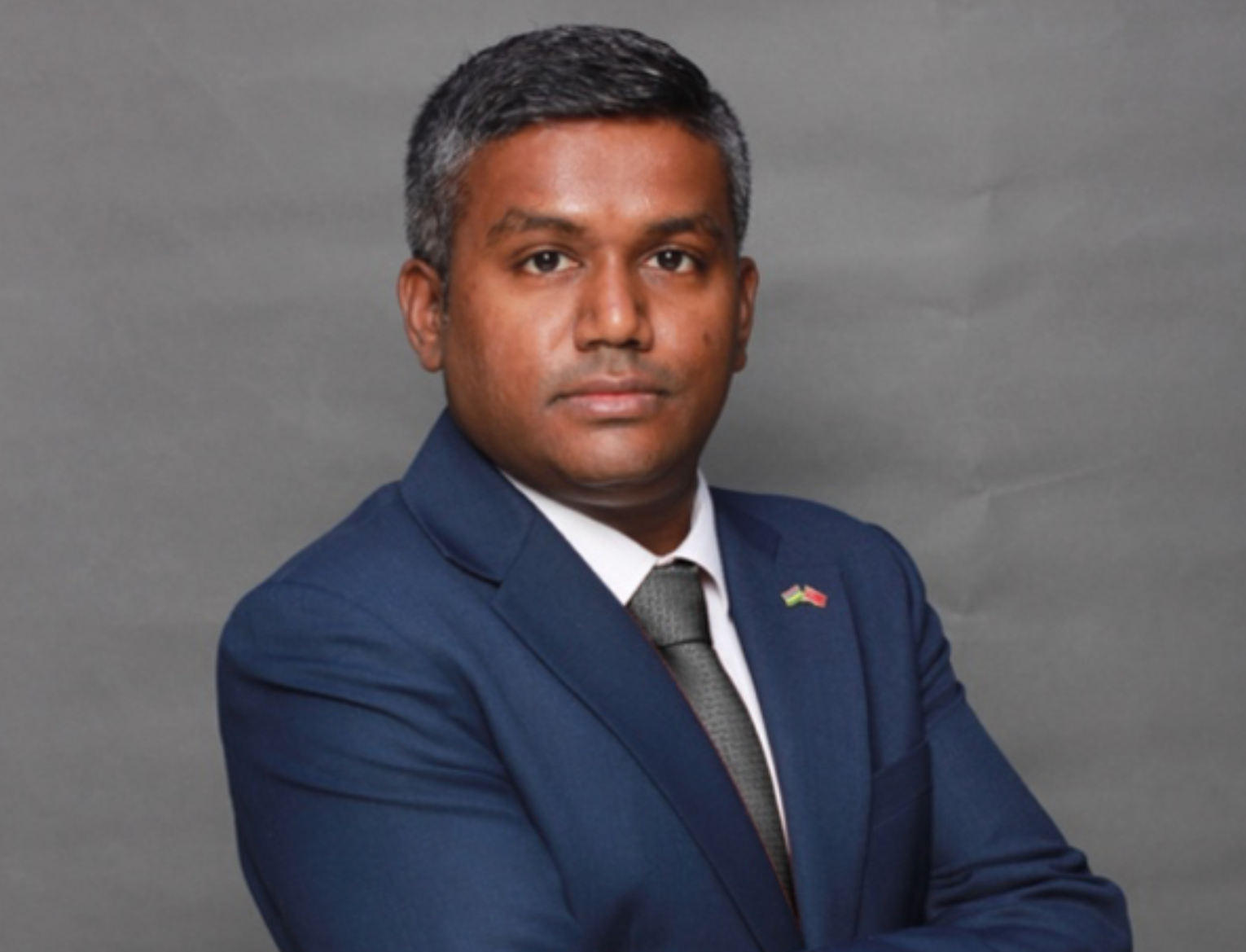
 Dr Hans Seesaghur is an International Affairs Specialist and Sinologist. He formerly served as China Chief Representative of the Mauritius EDB Representative Office China in Shanghai. He previously also held the position of Economic and Commercial Counsellor at the Embassy of Mauritius in Beijing. 

Skip to content