Back to Bizweek
SEARCH AND PRESS ENTER
Latest News

Criminals innovate continuously, and so must Mauritius

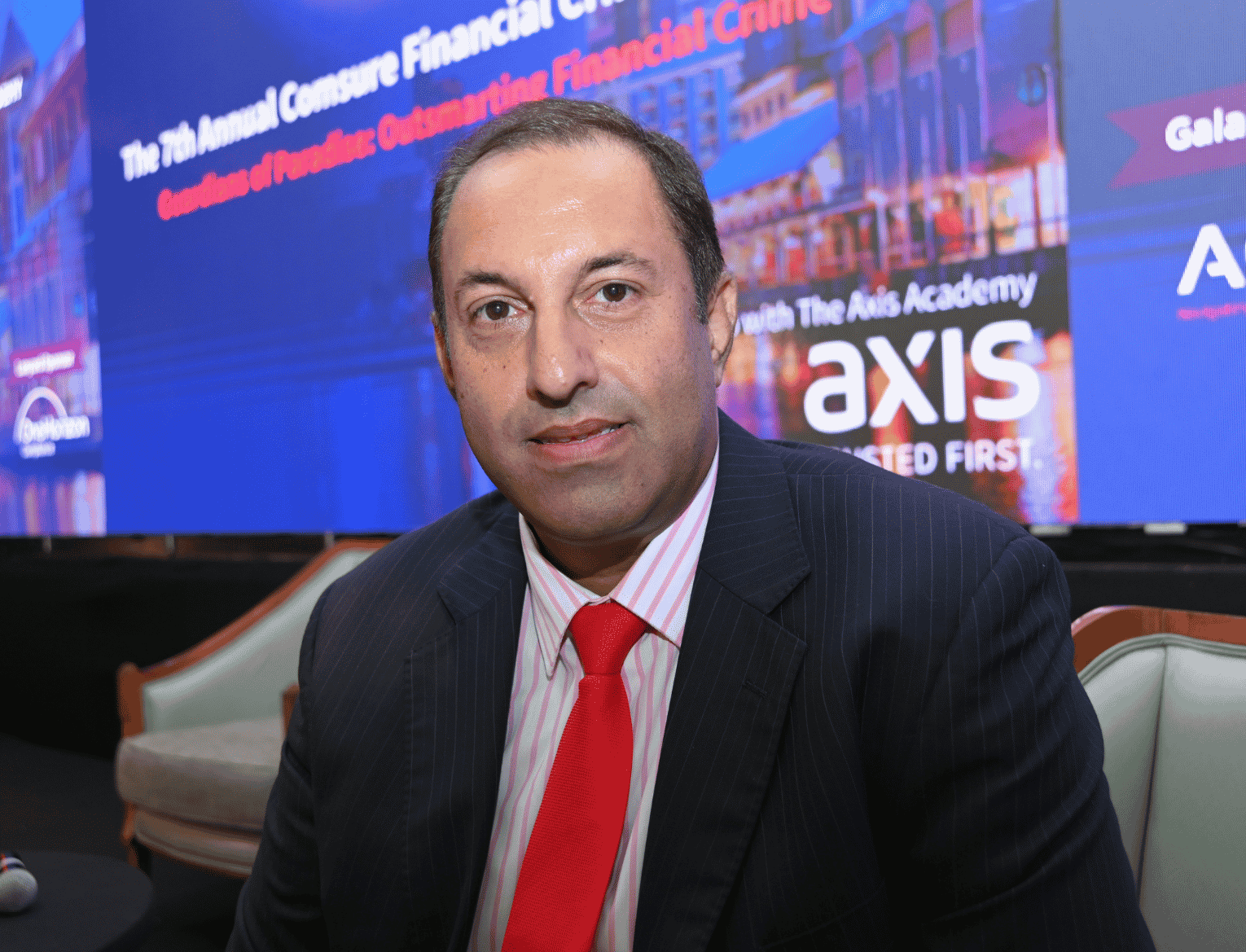
Shameem Abdoolakhan, Director of Talent & Technical Development – Axis Eruditio Ltd

Shameem Abdoolakhan, Director of Talent & Technical Development – Axis Eruditio Ltd 

As financial crime evolves at unprecedented speed, Mauritius faces a new challenge: turning a stronger AML/CFT framework into demonstrable effectiveness. Speaking to us at the 8th Financial Crime Conference at Hilton Resort & Spa on September 2 and 3, Shameem Abdoolakhan stresses that the focus must now shift beyond policies and regulatory compliance towards risk ownership, better-quality information, smarter technology and stronger governance. With AI, digital assets, complex structures and sophisticated fraud reshaping the threat landscape, he argues that Mauritius must ensure its defences evolve as quickly as the criminals seeking to exploit them.

Financial crime is becoming more sophisticated. From your perspective, what are the biggest emerging threats that financial institutions and fiduciary businesses in Mauritius need to prepare for today?

The biggest threat today is not simply the sophistication of criminals—it is the speed at which criminal methodologies evolve. We are seeing greater use of technology, artificial intelligence, digital assets, increasingly complex corporate structures, trade-based money laundering and sophisticated fraud schemes.

For fiduciary businesses in particular, the risk is that legitimate structures and professional services can be misused to obscure ownership, move illicit funds or create an appearance of legitimacy.

We therefore need to move beyond asking, “Are we compliant?” and ask, “Do we genuinely understand the risks to which our business, our clients and our structures are exposed?”

Mauritius has invested heavily in strengthening its AML/CFT framework. How confident are you that the country has moved from regulatory compliance to a genuine risk-based culture within businesses?

Mauritius has made significant progress in strengthening its legislative and regulatory framework earlier this year. But legislation is only one part of the equation.

The real test is whether AML/CFT has become embedded in the decision-making culture of businesses—from the boardroom to the front line.

A genuine risk-based culture means that businesses are prepared to say no to a client or transaction when the risk cannot be adequately managed, even where that decision may have a commercial cost.

I would say Mauritius has moved considerably in that direction, but the journey is not complete. The next stage is about demonstrating effectiveness, consistency and ownership of financial crime risk—not simply producing policies and procedures.


 Technology and AI are transforming financial crime. Are Mauritian institutions sufficiently equipped to detect increasingly sophisticated fraud, money laundering and other forms of financial crime, or are criminals still one step ahead?

Technology is both an opportunity and a threat. AI can significantly improve transaction monitoring, customer-risk assessment, anomaly detection and investigative capabilities. But criminals have access to the same technology.

We are already seeing how technology can make fraud more convincing, identities easier to manipulate and financial crime networks more difficult to detect.

The answer is therefore not simply to buy more technology. Institutions need quality data, appropriately trained people and intelligent use of technology.

Ultimately, technology should augment human judgement, not replace it. The institutions that will be most effective are those that combine technology with experienced compliance professionals who understand the underlying risks.

 The quality of beneficial ownership information remains critical to financial crime prevention. What are the main challenges fiduciary companies face in establishing the true beneficial owner behind complex corporate structures?

Beneficial ownership remains one of the most difficult areas because the legal owner is not necessarily the person who ultimately controls or benefits from a structure. The challenge becomes greater when we have multiple jurisdictions, layers of companies, trusts or other legal arrangements.

The key is to avoid treating beneficial ownership as a box-ticking exercise. A fiduciary should be able to explain, in practical terms: Who ultimately owns this structure? Who controls it? Who benefits from it? And does the explanation make commercial and economic sense?

The law in Mauritius has been amended so that a register of beneficial owners is maintained (not a public register) but based on a strict definition of BO/UBO, we may be the real person/individual behind the structure.

 The cost of compliance continues to rise. How can fiduciary and corporate service providers strike the right balance between robust AML/CFT controls and maintaining Mauritius’ competitiveness as an international financial centre?

Compliance is undoubtedly expensive, but the cost of inadequate compliance is potentially much greater—not only in terms of regulatory sanctions, but also in terms of reputational damage and loss of confidence in the jurisdiction.

The answer is not to reduce standards in order to remain competitive. Mauritius should compete on quality, integrity, transparency and professionalism.

At the same time, regulation must remain proportionate and genuinely risk-based. We should not create unnecessary compliance burdens where they do not address a meaningful risk.

The objective should be smarter compliance, not simply more effective compliance.

International scrutiny of Mauritius remains intense, particularly ahead of future AML/CFT assessments. What are the areas where you believe Mauritius still needs to demonstrate tangible progress?

I think the emphasis now has to be on demonstrating effectiveness rather than simply demonstrating that legislation exists. 

We need to demonstrate that suspicious activity is being identified and acted upon, that beneficial ownership information is reliable, that enforcement is effective and proportionate, and that sanctions and other measures have a genuine deterrent effect.

We also need continued consistency across the different sectors of the financial services industry. International assessors will ultimately be interested not only in what our laws say, but in what happens in practice.

There should be synergy between the various regulatory authorities to ensure we are not leaving any room for any aspect of supervision to fall through the cracks.

The message should therefore be: Mauritius has built a stronger framework; now we must demonstrate that the framework works.

 What should be the priority for the financial services industry over the next three years? Should the focus be on stronger regulation, better technology, greater enforcement—or fundamentally changing the culture around financial crime risk?

I would not choose between regulation, technology, enforcement and culture. We need all four—but culture should sit at the centre.

Regulation establishes the standards. Technology gives us better tools. Enforcement provides deterrence. But culture determines how seriously financial crime risk is actually treated.

Over the next three years, I would prioritise three things: better quality information, smarter use of technology and stronger ownership of financial crime risk at board and senior-management level (i.e good and strong governance in relation to AML/CFT/CPF).

Ultimately, our objective should be to reach a point where AML/CFT is not viewed as a compliance function sitting alongside the business, but as an integral part of how a responsible financial services business operates.

The question for Mauritius is no longer whether we have the laws, regulations and frameworks. The real question is whether we are using them effectively to identify, prevent and disrupt financial crime. In the digital age, compliance cannot stand still. Criminals innovate continuously, and so must we.

Skip to content