Back to Bizweek
SEARCH AND PRESS ENTER
Latest News

Companies investing in Africa must understand the regulatory environment

James Kamau, SC, Chairperson of DLA Piper Africa & Managing Partner of IKM Advocates (Kenya)

As investment corridors, regional integration and legal reforms reshape the continent’s business landscape, Africa, argues James Kamau, SC, Chairperson of DLA Piper Africa & Managing Partner of IKM Advocates (Kenya), is moving from promise to delivery. In this interview with Bizweek, he discusses how the African Continental Free Trade Area is accelerating cross-border opportunities, why Mauritius and Kenya play complementary roles in attracting and deploying capital, the sectors offering the greatest potential for investors, and the importance of legal certainty, industrialisation and strong professional partnerships in unlocking Africa’s next phase of growth. 

As Chairperson of DLA Piper Africa, how do you assess the trajectory of Africa’s legal and business landscape?

Africa’s story is changing from one of potential to one of delivery. For a very long time, people have been talking about the Africa opportunity. But now, Africa is increasingly becoming a place where there is actual delivery.

The opportunity is being translated into action. The investment landscape is maturing, and maturing quite quickly. As people shift towards delivery, governance and execution, we are seeing bankable projects emerging across Africa.


“African countries that want to attract capital are changing their legal frameworks”


This is being driven by several factors. One of them is the African Continental Free Trade Area (AfCFTA), which is driving regional integration. We are also seeing the energy transition becoming a very significant factor, not just because of climate requirements but also as an engine for industrialisation.

This is where African countries that want to attract capital are changing their legal frameworks. They are using those frameworks to manage risk, which is an important consideration for companies seeking to invest in Africa.

What I am seeing now is the emergence of investment corridors. Multinationals are no longer looking solely at specific countries. Instead, they are looking at the infrastructure that connects countries and enables efficient deployment of capital. That is why regional integration and a regional approach have become so important.

When you speak of African countries that are changing their legal frameworks to attract capital, is this happening across the continent or only in specific regions?

I think you will find examples across various parts of the continent. Take a small country like Rwanda. You can see how resourceful it has been in its efforts to attract investment. Look at Ethiopia, which for a very long time was relatively closed, but is now opening up to investors.

Then, of course, there is Kenya, which benefits from strong infrastructure, a highly educated workforce and a favourable climate. It has become an investment hub because it is implementing policies that are capable of attracting capital.

Mauritius often serves as a bridge between East Africa and the Indian Ocean. How do you see the relationship between Mauritius and Kenya evolving in the legal and business spheres?

Being in Mauritius, it is a particularly relevant one. As I was driving this morning and looking at the beautiful landscape, I was thinking that I should probably visit Mauritius more often, enjoy the scenery, meet the very friendly people and strengthen the people-to-people connections in addition to the business links.


“Africa’s story is changing from one of potential to one of delivery”


For a long time, Mauritius has been an important source of capital for Africa. It has positioned itself very effectively in that regard. If one were to summarise the Mauritius-Kenya connection, one would say that the two countries are highly complementary. Mauritius is where structuring and capital origination often take place, while Kenya serves as a gateway for execution and delivery.

Kenya opens access to the wider East African region. Therefore, when investors look at Kenya, they are often looking at it within the context of East Africa as a whole. That is a very significant aspect of the relationship between the two countries.

Kenya also provides execution at scale. It offers highly educated people, strong infrastructure, excellent internet connectivity, reliable air links and access to the ocean. All of these factors contribute to its role as a gateway.

Innovation is also a major part of Africa’s story. The continent has one of the world’s youngest populations, and with young people comes innovation. That innovation is increasingly attracting multinational investment.

The Mauritius-Kenya relationship reflects exactly what the African Continental Free Trade Area was designed to achieve: creating corridors that support regional integration and growth. It is therefore a powerful story and a powerful partnership.

A few weeks ago, I spoke to a management company in Kenya, and the first thing the manager told me was that Kenya is the gateway to Africa, not Mauritius.

They are complementary. Mauritius is where capital is structured. It is where many multinational investors choose to establish structures because of the regulatory environment and the network of treaties that Mauritius has developed across Africa.

Kenya is where that capital is deployed at scale. It opens access to the wider region and offers a strong pool of professionals capable of executing transactions efficiently.

Could you provide some examples?

One of the biggest examples is a transaction that is currently taking place and in which we are involved. Asahi, one of Japan’s largest companies, is making its first major investment in Africa through Kenya. It is acquiring Diageo assets in Kenya through a multi-billion-dollar transaction. What is particularly significant is that the company has stated very clearly that it sees Kenya as the platform through which it intends to expand across the African continent.

Another example comes from the financial services sector. Many major South African banks are entering the Kenyan market as a way of expanding into the broader region. We are also involved in another significant transaction in which Nedbank is acquiring a majority stake in NCBA. NCBA is a Kenyan institution that has expanded across the region. Nedbank sees that platform as a means of increasing its presence across Africa.

These are examples of major multi-billion-dollar transactions that are taking place in Kenya, not simply because of Kenya itself, but because investors see Kenya as a gateway into the wider East African market.

Next month, there will be a major summit in Nairobi. How significant is this for investment in the region?

We are looking forward to welcoming international leaders and investors to Nairobi and to exploring how we can strengthen ties between Africa and Europe. It presents an important opportunity to tap into Europe’s appetite for investment in the region.

When one looks at the bigger picture, Africa remains a continent of execution and transactions. That is increasingly how investors see it. Kenya serves as a gateway into this part of the continent, while Mauritius provides a trusted platform through which DFIs and multinational corporations can structure and deploy capital.

Based on your experience advising multinational clients, which sectors currently present the most promising opportunities for investors?

Naturally, Africa’s story is about demographics. Africa is about young people. Africa is about the translation of ambition into reality. To achieve that, the sectors that naturally lend themselves to growth are infrastructure, energy, transport, digital services and financial services.

These sectors power economies and enable growth. Technology, whether through artificial intelligence or other innovations, has become increasingly important for businesses. We are therefore seeing a combination of investments aimed at transforming Africa’s infrastructure while ensuring that the continent can compete effectively in the new global order.

These are the sectors attracting significant investment.

What proportion would you attribute to digital services and innovation compared with infrastructure and energy?

When one looks at digital services as part of the broader technology ecosystem, and when one considers the role technology plays across the services sector, including financial services and many other industries, it becomes clear that technology underpins almost everything that is happening today. I would therefore say that there is significant investment in technology because virtually every sector is now being driven by technological advancement.

Investors often cite challenges when investing in Africa. How can legal systems across the continent provide greater certainty and support for investment?

Like investors everywhere else, investors in Africa seek certainty and predictability. The issue is not the absence of laws. Legal frameworks generally exist. The challenge is how those laws are interpreted, implemented and used to manage risk.

Most African countries have legal frameworks in place. However, investors often point to issues such as regulatory delays, difficulties in obtaining approvals, overlapping authorities and inadequate project preparation.

From my perspective, companies that want to invest in Africa must take the time to understand the regulatory environment. They must incorporate legal considerations into their project planning from the outset. This enables smoother execution because Africa is not a single country. It is a continent of 54 countries, each with its own regulatory framework. Projects sometimes encounter difficulties when investors assume that the legal environment will be similar across jurisdictions. The reality is that each market is different.

However, investors who prepare properly and build realistic timelines into their project plans are generally able to execute successfully. One common factor in successful projects is sustained political commitment. Another is careful planning. When investors take the time to engage the right advisers, understand the regulatory framework and incorporate those realities into their planning, projects tend to proceed effectively.

The African Continental Free Trade Area will certainly help, but it will not solve every challenge facing the continent. Operational considerations remain critically important.

How does DLA Piper Africa help clients navigate multiple African jurisdictions?

One of the fundamental reasons DLA Piper Africa was established was to ensure that clients operating across multiple jurisdictions receive consistent support and service. We achieve this by ensuring that our professionals are properly trained and capable of executing mandates according to the highest international standards while maintaining deep local knowledge.

We have also embraced a sector-focused approach. Increasingly, clients want connectivity. They want the ability to execute transactions seamlessly across borders. The ability to navigate complex regulatory environments across multiple countries and deliver a coordinated solution from a single platform creates tremendous value for clients.

The rationale behind DLA Piper Africa was therefore to respond directly to client needs. Clients expect the same standards they receive in Europe, North America and other developed markets. Our role is to ensure that those standards are delivered consistently across Africa.

What value do you place on the Mauritius-Kenya corridor within this context?

The connection between Mauritius, Kenya and the wider African region is extremely strong. We are fortunate to work with a highly respected legal services provider in Mauritius that supports us whenever clients require structuring solutions in the jurisdiction.

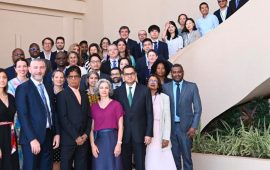
Likewise, our colleagues in Mauritius benefit from having access to resources across Africa that can support their clients’ needs. It is therefore a genuinely symbiotic relationship between Juristconsult in Mauritius and the DLA Piper Africa network across more than 20 African jurisdictions. They have been wonderful partners. I was delighted to meet many of the lawyers whom we work with daily and who support our clients on a regular basis.

I was equally pleased to host representatives from Juristconsult in Nairobi just a month ago, where they participated in joint training programmes. Training and professional development are critical because they enable us to continue delivering services at the standard clients have come to expect from the DLA Piper brand.

Their contribution has been instrumental in helping us build a sustainable practice while also training, mentoring and empowering younger professionals to become not only excellent lawyers but also trusted advisers and future business leaders.

What have been the most significant changes in client expectations over the past 30 years?

When I started practising more than 30 years ago, clients primarily came to lawyers because they expected legal advice. That has changed significantly. Today, clients increasingly see lawyers as business advisers.

Legal advice remains important, but it is no longer the sole value proposition. Clients are looking for advisers who can help them execute transactions, understand their businesses, identify risks and support growth.

The multi-jurisdictional transactions that I work on today require extensive coordination, project management, risk identification and the ability to bring together diverse teams capable of delivering at scale. 

That goes far beyond legal knowledge. It requires business acumen, financial understanding, psychology, leadership skills and the ability to manage complex stakeholder relationships.

How is Africa positioning itself within the global investment landscape?

While Africa’s challenges are real, they can be managed effectively. Africa continues to offer investors significant opportunities and attractive returns.

One of the reasons is the continent’s substantial infrastructure deficit. It is often estimated that Africa requires close to US$200 billion annually simply to begin closing the infrastructure gap with the rest of the world. For investors, this represents a tremendous opportunity.

My message is that investors should work with experienced professional advisers who understand the continent and can help identify, mitigate and manage risk.

If you had to identify one sector offering the greatest opportunity in Africa today, what would it be?

If Africa’s objective is industrialisation and if the continent seeks to transform its natural resources into greater economic value, then industrialisation presents one of the most significant opportunities.

Africa possesses abundant natural resources, but too often those resources leave the continent without being fully processed or transformed. Industrialisation creates the opportunity to add value locally, retain more economic benefits within Africa and accelerate economic development.

For that reason, I believe industrialisation offers one of the most compelling investment opportunities available today.

What are your priorities for DLA Piper Africa over the next few years, and how do you see the Mauritius-Africa corridor evolving?

Mauritius occupies a particularly important position within this vision. It is one of the key jurisdictions connecting Africa to international capital. Its regulatory framework, extensive treaty network and strong reputation continue to make it an attractive platform for investment into Africa.

As the African Continental Free Trade Area continues to develop, I believe Mauritius will play an increasingly important role in bringing its objectives to life. Technology, digitalisation and data regulation are areas that will become increasingly important as businesses continue to evolve.

Finally, we remain focused on quality: the quality of our work, our people, our transactions, our delivery and the sustainable outcomes we help create. These are the factors that build investor confidence and support long-term investment into Africa.

Given the complex geopolitical situation in the Middle East, do you see any implications for Africa and Mauritius?

First and foremost, I hope the situation in the Middle East is resolved as quickly as possible and without further loss of life or destruction. Whenever lives are lost or infrastructure is destroyed, it is a tragedy. At the same time, the situation does send a message to global investors. 

Traditionally, many African investment flows have moved through centres such as South Africa, Mauritius and Dubai. If investors begin reassessing geopolitical risk, Mauritius may attract even greater attention as an alternative platform for structuring and deploying capital into Africa. Its regulatory environment, stability and established investment infrastructure position it well to benefit from any shift in global capital flows.

As a result, Mauritius could see increased opportunities to serve as a gateway for investment into Africa on an even larger scale than in the past.

Skip to content