Back to Bizweek
SEARCH AND PRESS ENTER
Latest News

Beyond the travel advisory: Why Mauritius must turn caution into credibility

By Dr Hans Seesaghur | International Affairs Specialist 

The recent decision by the United States to classify Mauritius under a Level 2 travel advisory on December 8, 2025 has generated disproportionate concern locally. It is essential to put such advisories into proper perspective.

U.S. travel advisories are first and foremost instruments designed for American citizens. They do not represent an international consensus, nor do they constitute a definitive judgment on the overall security conditions of any country. Rather, they form part of an internal risk-communication framework intended to inform U.S. travellers of potential concerns and to support individual decision-making abroad.

Understanding the U.S. Travel Advisory System

The U.S. Department of State’s advisory system spans several levels, ranging from the exercise of normal precautions to an outright recommendation not to travel. A Level 2 designation, which calls for increased vigilance, remains relatively moderate and applies to a wide range of countries, including major global destinations and advanced economies. Notably, countries such as China, the United Kingdom, Sweden, Denmark, Germany, the Netherlands, Belgium, France, Italy, and Spain are currently classified under Level 2. This illustrates that the designation is neither exceptional nor unusual, even among some of the world’s most developed and frequently visited destinations. Within Africa, nineteen African countries are presently subject to a Level 2 travel advisory, while only Seychelles, Senegal, and Zambia fall under Level 1. 

Crucially, these advisories also reflect the operational capacity of U.S. embassies to assist their nationals in the event of a crisis. They indicate the extent to which consular support can realistically be provided, whether evacuation is feasible, or whether assistance would be limited. In this sense, the system is as much about risk management and prevention as it is about the objective security situation on the ground.

A Legal Obligation

From a legal standpoint, U.S. authorities are under a statutory duty to inform their citizens of potential risks associated with travel abroad. Travel advisories are therefore not discretionary signals of political confidence, but formal instruments of public administration. By issuing such advisories, the U.S. government demonstrates that it has exercised due diligence and fulfilled its duty of care toward its nationals. This framework significantly reduces the administration’s exposure to legal and political liability in the event that an American citizen encounters serious difficulties overseas. In practice, it provides a clear record that risks were identified, assessed, and communicated in advance.

Viewed through this lens, a travel advisory should not be interpreted as a hostile gesture or a withdrawal of confidence in Mauritius. Rather, it reflects a standardised, precautionary approach embedded in U.S. consular practice and applied consistently across the globe, including to close allies and advanced economies. 

How Travel Advisories Are Formed

Travel advisories do not emerge in isolation, nor are they reactive instruments triggered by a single event. Every diplomatic mission maintains consular services whose role is to continuously monitor security conditions in the host country. This monitoring is systematic and draws on a wide range of sources, including local and international media, social networks such as Facebook, TikTok and X, direct feedback from their own nationals on the ground, as well as regular exchanges with host-country authorities and other diplomatic missions.

These observations are analysed, consolidated, and transmitted to the respective capitals, often on a periodic basis. On the strength of this information, central authorities determine the appropriate level of travel advisory in line with their national legal frameworks, risk thresholds, and duty-of-care obligations. Each country applies its own methodology and communicates with its citizens in its official language or languages.

In this context, an advisory issued in English or French naturally attracts far greater public attention in Mauritius than similar notices published in languages less accessible to the local audience. The underlying assessment may be longstanding; it is the amplification, rather than the content itself, that creates the perception of novelty.

Russian Context

Russia, through its Embassy, raised its travel advisory for Russian citizens travelling to Mauritius last year, following a very regrettable incident in which a Russian national lost her life. The advisory was reiterated in September 2025, well ahead of the recent U.S. travel advisory concerning Mauritius, and was initially communicated in Russian, in line with standard Russian consular practice. Ordinarily, Russian travel advisories are issued exclusively in Russian and circulated through official Russian platforms. 

However, the recent travel advisory of December 2025 issued by the Russian Embassy in Mauritius was released in English and disseminated via its official Facebook page, representing a notable departure from established practice. This broader communication approach suggests a deliberate effort to reach a wider audience beyond Russian-speaking nationals, while reinforcing the principle that the safety and protection of Russian citizens in Mauritius is also treated as a serious matter of concern. 

Preparing the Ground for the 18th U.S.–Africa Trade and Investment Summit

The travel advisories of US and Canada become even more relevant in light of the anticipated large-scale U.S. presence at the 18th U.S.–Africa Trade and Investment Summit, scheduled to take place in Mauritius in July 2026. Such summits bring together senior government officials, business leaders, investors, development finance institutions, and security personnel, often involving thousands of participants and extensive logistical planning.

Issuing travel advisories well in advance of an event of this magnitude enables U.S. and Canadian authorities to clearly demonstrate that their duty of care toward their citizens has been fully discharged. It ensures that potential risks, even if moderate, have been formally identified and communicated ahead of time, thereby limiting legal exposure and avoiding last-minute uncertainty as the event approaches.


“Hosting the 18th U.S.–Africa Trade and Investment Summit represents an opportunity to showcase institutional maturity, security preparedness, and economic ambition.”


For Mauritius, hosting the 18th U.S.–Africa Trade and Investment Summit represents a significant opportunity to showcase institutional maturity, security preparedness, and economic ambition. The five months leading up to the summit provide a valuable window to strengthen coordination across public agencies, reinforce security arrangements, and align communication strategies to international expectations. Handled strategically, the summit can serve not only as a diplomatic milestone, but as a catalyst to reposition Mauritius as a very safe destination.

When others warn their citizens, who warns ours?

It is also worth reflecting on the absence of a formalised travel-advisory system for Mauritian citizens travelling abroad. In 2024 alone, an estimated 370,000 Mauritians travelled overseas, whether for tourism, education, business, medical purposes, or family reasons. Yet, unlike many countries, Mauritius does not operate a structured, publicly accessible framework to assess and communicate security risks faced by its own nationals abroad.

If Mauritius were to apply a methodology comparable to that used by the United States or other major countries, based on objective indicators such as armed violence, gun crime, public-security incidents, political unrest, or emergency-response capacity, the results might prove instructive. Several destinations, including advanced economies that are popular with Mauritian travellers, could plausibly be classified under high-vigilance categories, purely on the basis of crime statistics and public-safety risks.

This perspective highlights an important asymmetry in how travel risk is perceived. Advisories issued by foreign governments are often viewed emotionally or politically when they concern Mauritius, yet similar assessments are rarely considered from the standpoint of Mauritian citizens abroad. Recognising this gap is not about deflection, but about realism: travel advisories are tools of risk communication and consular responsibility, not moral judgments on a country’s standing. 

From Warning to Opportunity

Rather than reacting defensively, Mauritius should treat recent travel advisories as a strategic moment. This is not about cosmetic reassurance or narrative control. It is about demonstrating seriousness, preparedness, and governance capacity. At the same time, denying or minimising rising incidents would be both counterproductive and irresponsible. The challenge is not to contest the facts, but to respond to them decisively.

Safeguarding Mauritius’ tourism industry and international standing requires visible action and not rhetoric, more effective deterrence, and a renewed focus on public safety in areas frequented by residents and visitors alike. Confidence is built not by denying risk, but by showing the capacity to manage it.

This moment should also prompt serious reflection on the absence of a formal travel-advisory system for Mauritian citizens abroad. With 23 Mauritian missions overseas, the country has the diplomatic infrastructure to issue clear, timely, and standardised travel guidance to its nationals, yet no such framework currently exists. Protecting citizens abroad is as much a responsibility of the state as managing perceptions at home.

At the same time, the reality on the ground remains far more nuanced than headline narratives suggest. It is not uncommon to see foreign ambassadors moving around Port Louis with minimal security arrangements, an everyday signal of the country’s underlying safety. Taken together, this moment should serve as a catalyst, not a crisis, for Mauritius to reinforce its credibility and assert itself as a safe, well-governed, and responsible actor—both at home and abroad.

About the author 

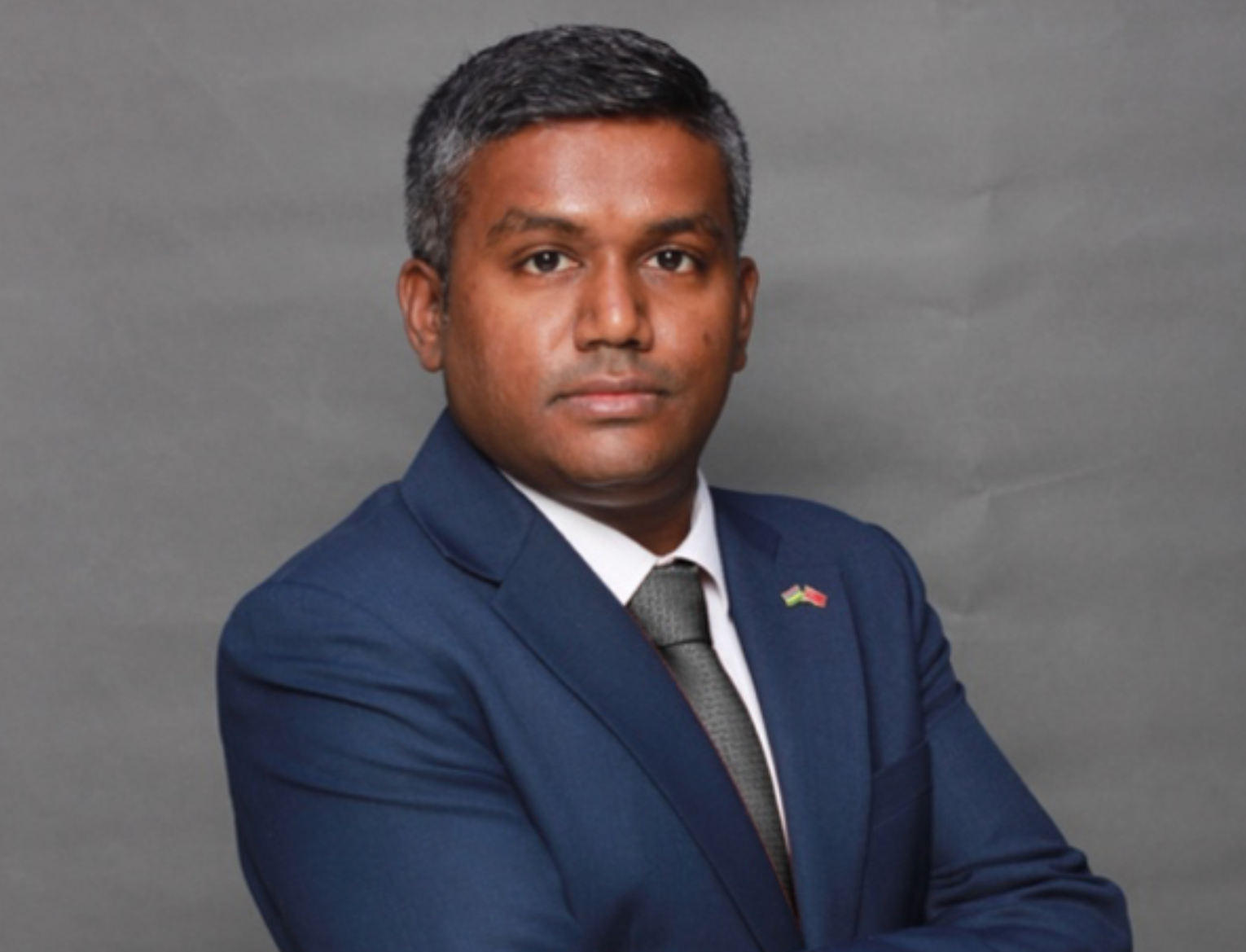
Dr Hans Seesaghur is an International Affairs Specialist and Sinologist. He formerly served as China Chief Representative of the Mauritius EDB Representative Office China in Shanghai. He previously also held the position of Economic and Commercial Counsellor at the Embassy of Mauritius in Beijing. 

Skip to content