Back to Bizweek
SEARCH AND PRESS ENTER
Latest News

“Talent now belongs firmly on the boardroom agenda”

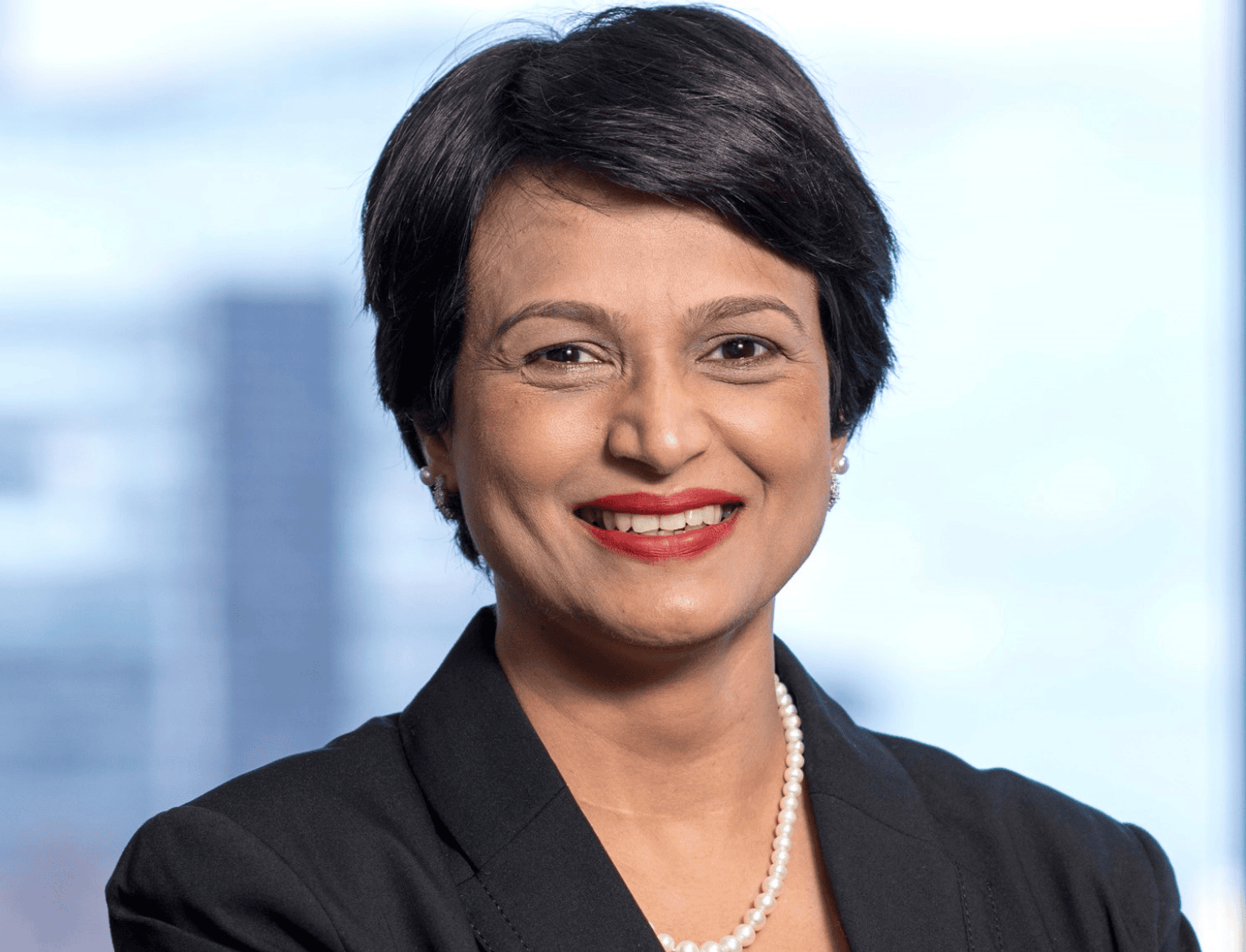
Sheila Ujoodha, CEO, Mauritius Institute of Directors

As Mauritius navigates a future shaped by digital disruption, climate vulnerability, talent shortages and global competitiveness, Sheila Ujoodha, Chief Executive Officer of the Mauritius Institute of Directors (MIoD), insists that “corporate governance in Mauritius cannot remain static. In this wide-ranging conversation, she explains how governance has evolved from compliance to leadership discipline, why boards must embrace AI and climate strategy, and how talent, diversity and continuous director development are now central to resilience and trust in the country’s institutions.

As Mauritius marks another year of independence, how has corporate governance evolved in shaping leadership and decision-making in organisations across the country?

If independence is about the ability of a country to stand on strong institutions, then corporate governance is part of what allows its organisations to stand on strong foundations. In the earlier stages of Mauritius’ corporate landscape, a significant part of business activity was driven by family-owned organisations, where oversight was often more informal and governance had not yet fully emerged as a strategic discipline in its own right. As the economy became more sophisticated and more exposed to investor expectations, regulatory scrutiny and broader stakeholder demands, there was the need to put stronger discipline around leadership. A major turning point came with the Code of Corporate Governance for Mauritius in 2003, which marked an important step in bringing greater structure, accountability and board discipline into the local corporate environment.

That shift also created the need for a stronger institutional platform to support directors and senior leaders in practice. That is precisely the context in which the Mauritius Institute of Directors (MIoD) was set up and incorporated in January 2008, following work commissioned by the National Committee on Corporate Governance to create a professional forum capable of strengthening directorship and corporate governance standards in the country. The governance agenda continued to mature, and in 2016, the National Code of Corporate Governance was introduced, aligning Mauritius more closely with evolving international thinking, including the OECD Principles of Corporate Governance and the governance approach reflected in the King Reports in South Africa. This helped move the conversation beyond board structure and financial transparency toward ethical leadership, sustainability, stakeholder confidence and long-term value creation, with corporate governance gradually shifting from a compliance framework to a more demanding leadership discipline.


“Boards are expected to interpret complexity, test assumptions and guide organisations through a far more fluid environment.”


Today, that evolution is even more visible. Boards are no longer expected simply to oversee; they are expected to interpret complexity, test assumptions and guide organisations through a far more fluid environment. That is where the move toward mindful governance becomes essential, as an approach that is not only more rigorous, but also more alert to context, consequence and the long term. For Mauritius, this matters because the quality of governance now increasingly shapes the quality of leadership, the credibility of institutions and the confidence that organisations inspire in a highly interconnected economy.

What does digital leadership now require from Mauritian boards and executives in an era shaped by technology and AI?

The real mistake is to treat this era of digital transformation as only a technology conversation. It is, first and foremost, a leadership conversation. The rapid emergence of AI technologies is increasingly compressing time. It is shortening decision cycles, raising the cost of hesitation, and exposing organisations much more quickly when they are unclear on strategy, weak on data, or behind on capabilities. For Mauritian boards and executives, the issue is not only whether technology is moving fast but also whether leadership is moving with enough clarity, discipline and courage. That means knowing where digital transformation is genuinely strengthening the business, where new risks are building, and whether an organisation is governing this shift with the seriousness it deserves. It also means recognising that digital acceleration is not only changing systems and operating models; it is also reshaping people’s expectations, workplace culture and the way leadership is experienced across teams.

At the MIoD, we have been very deliberate in bringing the governance implications of digital transformation and AI closer to the boardroom through a number of advocacy initiatives. In 2025, through our Audit Committee Forum in collaboration with KPMG Mauritius, we issued Position Paper No. 12, “Ethical Considerations around Data Management,” to help leaders think more carefully about data integrity, oversight and accountability in an environment increasingly shaped by automation and AI. In parallel, through the Directors Forum in collaboration with PwC Mauritius, we also released Publication No. 10, “Artificial Intelligence Promotion and Governance,” to give directors a clearer lens on AI adoption, organisational responsibility, risk and compliance. Both pieces were designed with the objective of helping board members and the broader business community move from a vague approach to AI to a more disciplined governance approach around it.

We are now taking that conversation further this month with the return of Ernie Fernandez, former Vice-President at Microsoft, who will be engaging with the Mauritian business community through a series of strategic sessions on AI, technological disruption, innovation agility and future-ready organisations. He will also join us for The Digital Leadership Conversation 2026 on 26 March, a flagship event being hosted by the MIoD in collaboration with our Founder Mauritius Telecom, our Patrons Dayforce Mauritius and Axiz Mauritius, with the support of Lenovo. The event will bring together senior leaders from the public and private sectors to examine how AI, digital infrastructure, workforce transformation and corporate governance are reshaping the country’s competitive landscape, while also featuring a live “AI in Action” demonstration powered by Nutanix. For us, the point is to help leaders see in more concrete terms what digital leadership now demands — better questions, sharper judgment, and a much clearer understanding of how AI is beginning to affect competitiveness, execution and trust in Mauritius.

Has climate become a corporate governance issue in Mauritius rather than only a sustainability issue?

For Mauritius, climate has already become a board issue. As a Small Island Developing State, the exposure is too direct, and the economic implications are too real. We are already feeling the effects of climate change while also dealing with increasing concerns regarding vulnerability across infrastructure, tourism, supply chains, insurance and financing. In such a context, climate stops being just an environmental discussion, and becomes much more a question of resilience, judgment, adaptation and long-term stewardship.

Boardroom expectations are also becoming much more defined with IFRS S1 and IFRS S2, issued by the ISSB in June 2023. In the Mauritian context, their anticipated introduction matters because they raise the bar on credibility, comparability and accountability. Added to that, Mauritius’ NDC 3.0 commitments — including a 40% reduction in greenhouse-gas emissions compared with business-as-usual and a target of 60% renewable energy in our electricity production mix by 2035 — have direct implications for capital allocation, operational choices and risk oversight. Climate strategy is therefore no longer only a question of intent, but increasingly a question of governance quality.

That is precisely why we launched the Climate Governance Pathway under the Climate Governance Initiative Mauritius, an advocacy forum of the MIoD in collaboration with our Founder HSBC Mauritius and a local chapter of Chapter Zero Alliance. With the first cohort planned for April 2026, the programme has been designed as a practical solution for directors, senior leaders and managers. It provides a clearer framework for climate governance, helps participants better understand the policy and regulatory landscape, facilitates the identification of business risks and opportunities, and enables directors to ask stronger questions at board level. More importantly, it helps organisations connect climate more coherently to strategy, risk management, targets and reporting, so that climate governance moves from intention to execution.


“Digital acceleration is also reshaping people’s expectations, workplace culture and the way leadership is experienced across teams.”


The next step came with the formalised agreement signed in November 2025 with the UK Government’s Foreign, Commonwealth & Development Office (FCDO), supported by the British High Commission in Mauritius. This partnership moves the work into a more practical next phase through the development of sector-specific toolkits and the setting up of a progress-tracking Corporate NDC Pledges Platform for organisations. The aim is to improve the quality, comparability and visibility of the contributions made by companies and institutions to national priorities, especially the NDC, while giving organisations a more practical basis for structuring credible transition plans and reporting progress more consistently.

Talent shortages and brain drain are often raised as concerns for Mauritius. What role should corporate governance and leadership play in strengthening talent development and retention?

Mauritius is now dealing with a workforce equation that boards can no longer afford to treat as a back-office issue. The labour pool is tightening, skills are shifting, and too many organisations are still trying to solve a long-term capability problem with short-term fixes. This creates significant risks for organisations around weaker execution, thinner succession benches, slower transformation and, ultimately, reduced resilience. That is why talent now belongs firmly on the boardroom agenda, because it goes directly to continuity, competitiveness and leadership quality.

That shift becomes even harder to ignore when we look at both global and local workforce trends. The World Economic Forum’s Future of Jobs Report 2025 estimates that 39% of workers’ core skills will change by 2030, while Mauritius’ 2025 Labour Market Survey points to a persistent skills mismatch intensified by digital adoption, demographic change and sectoral shifts. In practical terms, boards need to go beyond headcount discussions and ask harder questions: Is the organisation building the capabilities it will actually need? Is it reskilling fast enough? Is succession being treated seriously? And is the culture strong enough to retain people who have options? That is where corporate governance matters, because human capital is no longer just about workforce management; it is about whether an organisation will still have the talent depth and capability to perform tomorrow.

Recognising this, the MIoD is taking deliberate steps to elevate the conversation at the boardroom level. We launched the HCNext Series last September, bringing together HR leaders and experts to dive into important questions around the future of work, leadership and capability. The next step is the Human Capital Governance Forum, which is being shaped as a more focused platform for boards, executives, business leaders and HR professionals to engage with the strategic corporate governance dimensions of talent: succession, leadership readiness, workforce transformation, retention and long-term capability-building. For Mauritius, that is the level at which this issue also needs to be addressed. It is no longer only about finding people. It is about governing talent with enough seriousness and strategic execution to protect the future of organisations.

How does diversity, equity and inclusion translate into real strategic value for Mauritian organisations?

When leadership is confined to a narrow pool, organisations lose range. They lose perspective, challenge, and very often, potential. That is where DEI matters as it goes beyond just fairness and is about leadership quality. Research conducted by McKinsey & Co. substantiates this by highlighting how companies with more women in leadership tend to benefit from greater innovation, healthier organisational cultures and stronger performance. 

But recognising the value of DEI is one thing, while building the conditions for it is another. And that becomes clear very quickly once we look at where the barriers actually sit. Some are still deeply traditional: unequal expectations around caregiving, disproportionate personal responsibilities, and the lack of strong support systems at home. Others are organisational: unconscious bias, lower visibility, limited sponsorship, lack of structure and support that contribute to a drop in representation as roles become more senior. That is why DEI is also a corporate governance issue. Boards and leadership teams shape culture, succession and opportunity, and those choices influence whether talent is properly recognised, developed and retained.

At the MIoD, the Women Directors Forum was revamped in 2021 in response to that reality — to help build a more enabling ecosystem around women’s leadership and to support stronger representation at C-Suite and board level. This year, the MIoD also carried a series of initiatives on the occasion of the International Women’s Day 2026 under the theme “Give to Gain,” inviting the business community to think differently about DEI — as a strategic lever in a context marked by talent shortages, leadership pipeline constraints and brain drain, together with external shifts such as digital acceleration, climate pressure and wider uncertainty. 

Among our initiatives was the launch of UNMUTE – Episode 1: Leading Across Generations, a new Women Directors Forum conversation series released with the support of our Founder Mauritius Telecom and Patron Medine Group. Released last week on the MIoD’s social media channels, UNMUTE is designed to bring more candid and relevant leadership discussions closer to the business community — not only on DEI and women in leadership, but also on the leadership choices that shape trust, performance and continuity. And that is ultimately where the strategic value of DEI becomes clearest: when organisations widen who is heard, trusted and developed, they do not only improve representation; they strengthen the quality of leadership and the resilience of the organisation itself.

In this evolving environment, how important is continuous leadership and director development for organisations today?

What has changed is not only the range of issues boards now face, but the level of judgment now expected of them. Directors are increasingly being tested on multiple complex issues at once, in ways that demand more connected and more forward-looking decision-making. They are expected to challenge more deeply, read interdependencies more clearly, and exercise sound judgment in areas that are moving quickly and carrying real strategic consequences. At the same time, the risk environment itself is becoming more complex. Economic volatility, geopolitical uncertainty, cyber threats and climate-related risks are intersecting in ways that challenge traditional governance tools. In that kind of environment, continuous development becomes central to what keeps leadership relevant, credible and effective.

That is why the MIoD has been placing growing emphasis on risk governance. Through the Risk Governance Forum, an advocacy forum of the Institute in collaboration with EY Mauritius, and with the support of its Founding Members, the Institute has been helping directors and risk leaders engage more seriously with an environment where risks are not only evolving but also increasingly overlapping. The objective is to strengthen how boards think about uncertainty, preparedness and resilience, especially at a time when crises that once felt remote can now have immediate strategic consequences. More broadly, the MIoD also continues to refine its leadership development architecture through a mix of workshops, webinars and specialised board development programmes. Alongside current and emerging themes such as AI, ESG, data protection and governance risk, the Institute offers more specialised board development pathways, including the Director Development Programme, the Applied Directorship Programme in partnership with the Sirdar Group, the ecoDa programme launched in 2024, and the recently launched Climate Governance Pathway. Each programme responds to a different dimension of modern leadership and board responsibility, but all are grounded in the same reality: the role has expanded, and capability must expand with it.

We are also pleased to be launching shortly The Elevate Executive Leadership Experience in collaboration with Excelerate Consulting Ltd. With the first cohort beginning in April 2026, this programme has been designed as a cohort-based experiential learning journey for directors, senior leaders and aspiring leaders. What makes it distinctive is its format: it combines business simulations, practical leadership frameworks, peer dialogue and immediate application between sessions. The programme is structured around four integrated clusters — Leading Innovation, Building Sustainable Organisations, Strategic Decision Making, and Inclusive Leadership & Driving Change — which together help leaders strengthen decision-making under uncertainty, lead transformation with greater confidence, and translate leadership development into stronger execution and long-term value creation.

Looking ahead, how can strong corporate governance become a competitive advantage for Mauritius as a business and investment destination?

Mauritius’ strength will increasingly rest on credibility, trust and the quality of its institutions. That is where corporate governance becomes a genuine competitive advantage. In an open and interconnected economy, confidence in boards, in leadership, and in the discipline behind decision-making matters enormously. Strong governance sends a powerful signal about seriousness, resilience and long-term value.

That advantage becomes even more important in today’s complex environment with high stakes in technology, climate, human capital, DEI and risk — which can no longer be treated as parallel agendas and must converge in boardrooms. The organisations that will stand out are the ones whose boards and leadership can connect those issues, exercise sound judgment across them, and respond in ways that align global expectations with local realities. That is what builds resilience. And in Mauritius, resilience is not only an internal strength; it also affects how organisations and the jurisdiction itself are seen by investors, partners and markets.

That is why corporate governance in Mauritius cannot remain static. With the 2027 ESAAMLG mutual evaluation on the horizon, the country is entering a period where governance discipline, accountability and institutional preparedness will come under sharper scrutiny. At the MIoD, we have already reinforced learning opportunities for organisations in this space, including through AML/CFT-focused workshops aimed at helping boards, senior management and compliance leaders engage more seriously with what regulatory readiness now requires in practice.

Underlying this is a broader shift in how corporate governance needs to be approached: not as a narrow compliance exercise, but as a driver of trust, preparedness and long-term competitiveness. That is precisely why the MIoD’s upcoming 5th edition of the Annual Corporate Governance Conference this October will be held under the theme “Beyond Compliance: Corporate Governance as a Catalyst for Competitive Advantage.” It captures a shift that is becoming increasingly important for Mauritius: that corporate governance must be understood as an enabler of credibility, confidence and long-term competitiveness.

Seen in that light, governance quality can help Mauritius strengthen its position as a credible and trusted International Financial Centre. But that will depend on leadership. Directors will need strategic discipline, foresight and an outward-looking perspective. They will need to keep investing in capability, not only compliance. That is also why the MIoD will continue to invest deliberately in promoting future-ready leadership, corporate governance excellence and stronger board competence. In the end, corporate governance is not just about protecting organisations from downside risk. Done properly, it becomes part of how a country earns confidence, attracts investment and competes with greater substance.

Skip to content