Back to Bizweek
SEARCH AND PRESS ENTER
Latest News

“New compliance firm Acrion introduces pioneering whistle-blowing services”

Innovative Solutions for Regulatory Compliance

As Mauritius continues to strengthen its regulatory framework following its FATF grey listing in 2020 and subsequent removal from the list in 2021, businesses are facing increasing compliance challenges. Enter Acrion, a new advisory firm offering comprehensive solutions ranging from AML audits to whistle-blowing systems to help organizations navigate this complex landscape with confidence and integrity.

Mauritius has officially welcomed its first full-service whistle-blowing provider with Acrion. This newly established compliance advisory firm was officially launched on the first day of the Financial Crime Conference organized by Comsure at the Hilton Mauritius Resort & Spa. The launch comes at a pivotal moment, as financial institutions and professionals in Mauritius seek guidance to navigate increasingly complex regulations.

Acrion positions itself as a one-stop solution for all compliance needs. The firm offers a wide range of services, including AML audits, due diligence, screening, risk assessments, file reviews, and outsourcing.

A standout offering is Acrion’s whistle-blowing service, one of the first of its kind in Mauritius. Whistle-blowing systems are widely recognized as critical tools for promoting transparency, integrity, and good governance within organizations. They allow employees and stakeholders to confidentially report misconduct, corruption, or unethical practices, while providing strong protections against retaliation.

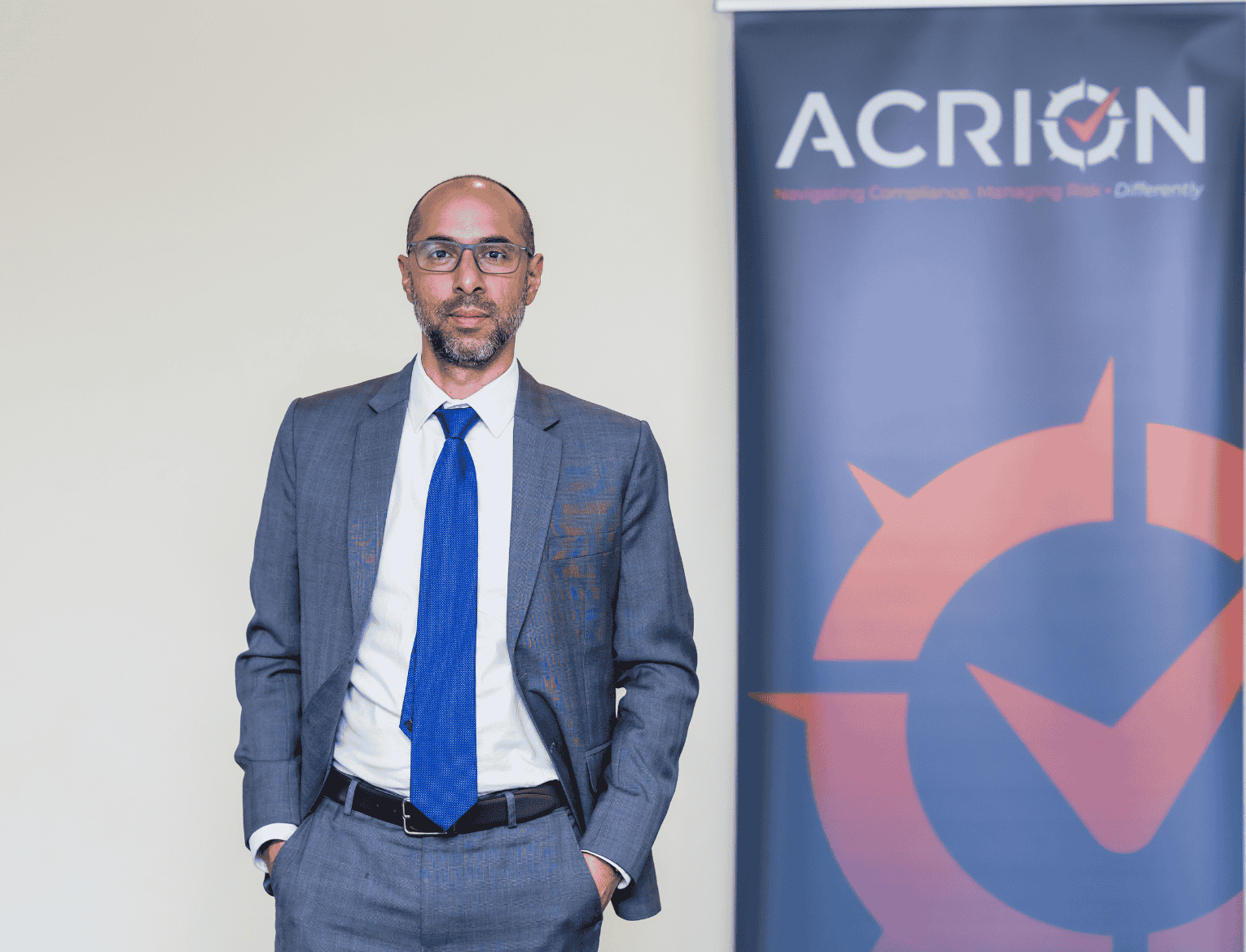
Our process includes anonymous and confidential reporting channels, secure data handling, objective review and escalation, and full protection for whistle-blowers,” said Ameer Caunhye, Chief Executive Officer of Acrion. “We are here to support any organization looking to implement a whistle-blowing system professionally and securely.”

The launch aligns with the Financial Crimes Commission’s 2025 guidelines, which highlight the importance of whistle-blowing systems as a way to comply with Section 52 of the Financial Crimes Commission Act (FCCA). Many organizations may lack the resources or expertise to establish such systems on their own, making Acrion’s services particularly timely.

With its broad range of compliance solutions and pioneering whistle-blowing services, Acrion is set to play a crucial role in helping Mauritian businesses uphold regulatory standards, integrity, and transparency.

We are very proud to be one of the first companies in Mauritius to actually launch a whistle-blowing service and offer it to all financial institutions,” CEO Ameer Caunhye stated in his speech at the launching ceremony.


Ameer Caunhye at a glance 

With over 15 years of professional experience in compliance and risk, Ameer Caunhye has built a career at the forefront of AML/CFT advisory, regulatory strategy and corporate governance.

He began his career at Axis Fiduciary Ltd, one of Mauritius’s leading management companies, where he rose to lead the compliance department, acting as Compliance Officer, MLRO, and Deputy MLRO across a diverse portfolio of entities including investment funds, insurance companies, investment dealers, leasing businesses, and corporate service providers. He later served as Associate Director – Compliance and Risk, where he also oversaw international operations in Seychelles, India and Dubai.

Ameer Caunhye’s expertise spans the full compliance spectrum from building and leading high-performing compliance teams to drafting and implementing AML/CFT policies, conducting risk assessments across sectors, advising on client onboarding frameworks and guiding businesses through complex regulatory challenges. He has attended and successfully navigated more than a hundred onsite regulatory inspections from supervisory authorities, earning a reputation for diligence, precision and results. Notably, he also assisted one of Mauritius’s leading banks in reviewing and drafting its client onboarding policies, reflecting his capacity to deliver solutions in highly regulated and complex environments.

Holding an LLB (Hons) from the University of Northumbria and a Postgraduate Diploma in Financial Crime Compliance, Ameer Caunhye combines legal training with specialist knowledge of financial crime regulation.

Today, he is extending his practice into whistle-blowing services, reflecting his commitment to strengthening governance and fostering a culture of integrity within businesses.


Dual Use Goods

The next compliance frontier for Mauritius 

In his presentation entitled “Understanding Dual Use Goods: Compliance Challenges and Enforcement Trends,” Ameer Caunhye, Chief Executive Officer of Acrion, highlights the importance, challenges and future direction of regulating Dual Use Goods in Mauritius. The expert warns that Mauritius risks falling behind in the global fight against proliferation financing if a clear framework to regulate these goods is not established. 

By definition, they are items that can be used for both civilian and military purposes. That is why Dual Use Goods (DUGs) pose such a challenge. As Ameer Caunhye explained in his presentation on day 2 of the Conference, DUGs, which include pumps, electronics, and microchips, “while they may appear harmless, can be diverted for use in Weapons of Mass Destruction (WMD) programs.

Understanding the end use and the end users of such goods is therefore critical in preventing proliferation financing, which is the funding of activities linked to the spread of nuclear, chemical, or biological weapons.

Regulatory and control mechanisms in Mauritius

For the Chief Executive Officer of Acrion, talking about this subject is timely because Mauritius will be assessed by the Financial Action Task Force (FATF) in 2027 on its efforts to combat proliferation financing.

Currently, DUGs are not explicitly covered under Mauritian law. The Financial Intelligence and Anti-Money Laundering Act (FIAMLA) and the United Nations Sanctions Act 2019 define proliferation financing, but do not mention DUGs specifically,” Mr Caunhye shared with the audience. He explained that, as such, local compliance officers rely on FATF guidance and international frameworks to deal with proliferation financing.

He also pointed out that updates to domestic laws are expected to introduce clearer definitions and controls for DUGs, especially following the country’s National Risk Assessment (NRA) on proliferation financing.

Awareness among Mauritian companies

According to Ameer Caunhye, awareness of DUG-related obligations remains very limited in Mauritius due to the absence of a dedicated framework. He anticipates that awareness and compliance measures will improve once the NRA findings are implemented and new regulations introduced.

Talking about the identification of red flags in transactions involving DUGs, the compliance expert pointed out that banks and trade finance institutions can mitigate risks by maintaining a comprehensive list of DUG items for reference.

They can also assess the jurisdictions involved, especially if they are high-risk, sanctioned, or even conducting an enhanced due diligence to ensure transactions align with the client’s known business activities,” Mr Caunhye stated.

Any unusual trade routes, inconsistent product descriptions, or dual-use items shipped to sensitive regions should also trigger red flags.

The role of international cooperation

The Chief Executive Officer of Acrion also stressed that Mauritius cannot act in isolation. Referring to the Wassenaar Arrangement, an international export control regime that maintains a consolidated list of DUGs, he explained that “the European Union and Switzerland have already aligned their frameworks with Wassenaar’s standards an approach Mauritius may need to emulate through international cooperation and intelligence sharing.

As for the use of AI, which could potentially be useful for tracking and monitoring DUG-related trade, Ameer Caunhye stressed that a legal and regulatory foundation must come first. “Only then can these technologies be effectively integrated into compliance systems,” he said.

A call for urgency

Concluding his presentation, Ameer Caunhye stressed that DUGs represent a critical blind spot in global compliance – one that Mauritius must address swiftly to align with international best practices and protect its reputation as a trusted financial centre.

Mauritius has taken initial steps by defining proliferation financing and conducting its first national assessment, but there is an urgent need for explicit DUG controls,” Ameer Caunhye stated.


Skip to content